

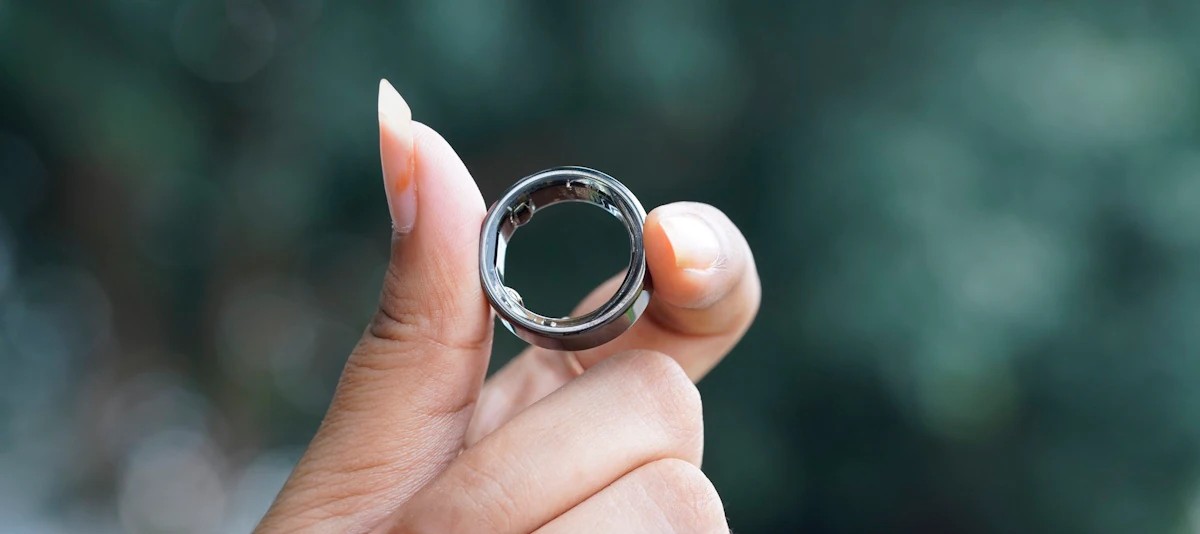
One of the most powerful sensors on a smart ring is also one of the smallest – the temperature sensor. It does not get the headlines that heart rate and sleep do, but what it quietly reveals about your body is genuinely useful. So what does a temperature ring actually measure, what can it tell you, and how accurate is it? Here is the full picture. If you are new to the category, our guide to what a smart ring is covers how these wearables work. Here we zoom in on the temperature sensor specifically.
How a Temperature Ring Works
Inside the band sits a tiny thermistor that rests against the skin of your finger and reads your skin temperature, most usefully overnight while you sleep. A single reading on its own means little; the magic is in the baseline. Over the first week or two, the ring learns your personal normal, and from then on it tracks how far each night deviates from that baseline – and those deviations are where the insight lives.
What Temperature Tracking Reveals
A small shift in your overnight temperature trend can say a lot. Here are the main things a temperature ring helps you spot.
Early Signs of Illness
A rise in your overnight temperature trend, often alongside a lower HRV and a higher resting heart rate, can appear a day or two before you consciously feel run down. It is not a diagnosis, but it is a useful nudge to rest, hydrate and ease off training before a bug takes hold.
Recovery and Overtraining
Temperature is one piece of the recovery puzzle. Combined with HRV and resting heart rate, an elevated temperature trend can signal that your body is still under load and not ready for another hard session – exactly the kind of early flag that helps you avoid burnout and injury.
Menstrual Cycle Insights
For women, the temperature sensor is especially valuable: skin temperature rises slightly after ovulation, so tracking it across weeks lets a ring estimate cycle phases and predict periods. Persistently irregular cycles can also be an early sign of conditions such as PCOS, and a ring’s long-term data gives you something concrete to discuss with a doctor – our article on whether PCOS causes weight gain explains the hormonal background.
Sleep and Circadian Rhythm
Your body temperature naturally dips at night as part of your circadian rhythm, and the temperature sensor helps a ring refine its sleep analysis around that curve. Our explainer on why sleep matters for your whole body shows how temperature combines with movement and heart rate to map your sleep.
How Accurate Is Temperature Tracking?
Here is the important caveat: a ring reads skin temperature, not core body temperature. Skin temperature is influenced by your room, your bedding and your circulation, so a ring will not give you a clinical fever reading like a thermometer. What it does well is track relative change from your own baseline – and for spotting illness, recovery and cycle patterns, that relative trend is exactly what matters. Treat the numbers as wellness signals, not medical measurements.
Temperature Plus Other Metrics Equals Readiness
Temperature is most powerful when it is not read alone. The best rings fold it together with HRV, resting heart rate and sleep to produce a single daily sense of how ready your body is. For a full breakdown of how these signals combine, see HRV and long-term health.
Example: The FITTR HART
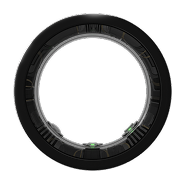
The FITTR HART includes a skin-temperature sensor alongside its HRV, sleep and recovery tracking, and with about 8 days of battery it stays on your finger long enough to build the reliable baseline that makes temperature insights meaningful.
Why Temperature Is the Underrated Metric
Heart rate and sleep get the attention, but temperature is arguably the most quietly powerful signal a ring collects. It changes for meaningful reasons – illness, recovery, hormones, even alcohol and travel – and it often moves before you consciously feel anything. That early, honest read on what your body is doing is exactly why the temperature sensor deserves more credit than it usually gets.
Reading Your Temperature Trend
The number that matters is not your absolute temperature but how far it sits from your personal baseline. After the ring learns your normal over the first week or two, it plots each night as a deviation, a little above or below your usual. A flat, stable trend generally means business as usual. A sustained rise of even a fraction of a degree, especially alongside a lower HRV and higher resting heart rate, is the pattern worth noticing: it is the body’s early signal that something – a virus, hard training, poor sleep or stress – is taxing it. The skill is learning to read the shape of your own curve rather than any single night’s figure.
What Else Moves Your Temperature
Plenty of everyday things nudge your overnight temperature, and knowing them helps you interpret the data. Alcohol close to bedtime tends to raise it and disrupt sleep. A hot bedroom or heavy bedding pushes it up. Intense late training, travel across time zones and high stress can all shift it too. None of these are problems with the ring – they are real physiological responses – but they are worth keeping in mind before reading too much into a single warm night.
Limitations to Keep in Mind
Temperature tracking is useful, but it is not magic. Keep these limits in view:
- It reads skin temperature, not core body temperature, so it is not a clinical thermometer.
- Room temperature and bedding influence the readings.
- It works on deviation from your baseline, so it needs a week or two to be useful.
- It flags patterns, it does not diagnose – confirm any health concern with a doctor.
Getting Reliable Temperature Data
To get readings you can trust, a few habits help:
- Wear the ring snugly and consistently, especially overnight.
- Give it a week or two to establish your baseline before judging trends.
- Keep your sleep environment reasonably consistent night to night.
- Read the weekly trend, not a single warm or cool night.
Temperature for Everyone, Not Just Athletes
It is easy to assume temperature tracking is only for serious trainees or women tracking a cycle, but its value is broad. Anyone can benefit from an early heads-up that illness may be coming, a nudge that they are under-recovered, or simply a better understanding of how alcohol, stress and late nights affect their body. As a passive, always-on signal that asks nothing of you, it is one of the most universally useful things a ring quietly does.
Temperature and Illness: A Closer Look
The illness use case is the one most people notice first. Because your body often begins mounting a response before you feel symptoms, a rise in your overnight temperature trend can be among the earliest hints that something is brewing – frequently a day or so ahead of the obvious signs. Paired with a drop in HRV, it is a fairly reliable early flag. It will not tell you what you have, and it is no substitute for a thermometer or a doctor, but it can buy you the rest and caution that helps you recover faster.
Temperature and Recovery in Detail
Recovery is the other everyday payoff. After a hard training block, a stressful stretch or a few short nights, an elevated temperature baseline is one way your body signals that it is still catching up. Reading alongside recovery and HRV, it helps you distinguish a genuine need for rest from simple lack of motivation – and that distinction is exactly what keeps consistent trainees healthy and progressing rather than overreaching into injury or illness.
Temperature Across Seasons and Travel
Your environment leaves its mark on the data, and that is worth expecting rather than fearing. Hot summer nights, a warmer bedroom or heavy winter bedding all shift skin temperature, as does crossing time zones, which scrambles the natural overnight curve for a few days. A good ring focuses on deviation from your baseline to filter out some of this, but knowing that seasons and travel move the numbers helps you interpret a run of warmer or cooler nights sensibly.
The Future of Temperature Sensing
Temperature is still a young feature compared with heart rate, and it is improving quickly. As algorithms get better at separating real physiological change from environmental noise, expect sharper illness prediction, more confident cycle insights and tighter integration with recovery scores. The small thermistor on your finger is likely to become one of the more valuable sensors a ring carries – quietly doing more with each software update.
Building Temperature Into Your Routine
In practice, temperature is a metric you mostly let work in the background. You do not need to check it daily; the value comes from glancing at the trend when something feels off or when the ring flags an unusual shift. Waking up with a raised temperature and a low recovery score is a sensible day to ease off training, hydrate and rest. The rest of the time, it simply accumulates quietly, building the baseline that makes those occasional alerts meaningful when they matter.
A Realistic Picture of What It Can Do
It is worth setting expectations honestly. A temperature ring will not diagnose an illness, replace a thermometer, or predict your cycle with perfect precision. What it will do is give you a consistent, personal record of how your overnight temperature moves – and, read alongside HRV, sleep and heart rate, that record becomes a genuinely useful early-warning and recovery tool. Treated as one helpful signal among several rather than a medical oracle, it more than earns its place on your finger.
One Sensor, Many Uses
What makes the temperature sensor stand out is its versatility. The same quiet stream of overnight readings serves an athlete watching recovery, a woman tracking her cycle, and anyone who simply wants a heads-up before a cold takes hold. Few sensors do so much for so many different goals from a single measurement – and because it runs entirely on its own, you get all of that without lifting a finger beyond wearing the ring. That combination of low effort and broad payoff is exactly what makes it such a quietly rewarding part of a smart ring.
Frequently Asked Questions
What does a temperature ring measure?
It measures your skin temperature, usually overnight, and tracks how it deviates from your personal baseline rather than giving a clinical body temperature.
Can a smart ring detect fever or illness?
It can flag an unusual rise in your temperature trend that sometimes precedes feeling unwell, but it is not a thermometer or a diagnosis. Confirm a fever with a medical thermometer.
Is skin temperature the same as body temperature?
No. A ring reads skin temperature at the finger, which is influenced by your environment, so it is best used for tracking changes from your baseline, not absolute core temperature.
How does temperature help cycle tracking?
Skin temperature rises slightly after ovulation, so tracking it over weeks helps a ring estimate cycle phases and predict periods.
Which smart rings track temperature?
Most leading rings, including the FITTR HART, Oura, Ultrahuman, Samsung and Evie, include a skin-temperature sensor.
Monitor Smarter with a Smart Ring
The temperature ring, health monitor ring, or ring body monitor sensor may be the quietest feature on a smart ring, but it is one of the most insightful – an early-warning system for illness, a recovery check, and a window into your cycle, all from a few grams on your finger. It asks nothing of you and works entirely in the background, yet the patterns it reveals are some of the most genuinely useful a ring produces. Read it as a trend against your own baseline rather than an absolute number, and a sensor most people overlook becomes one of the most valuable reasons to wear a ring at all.