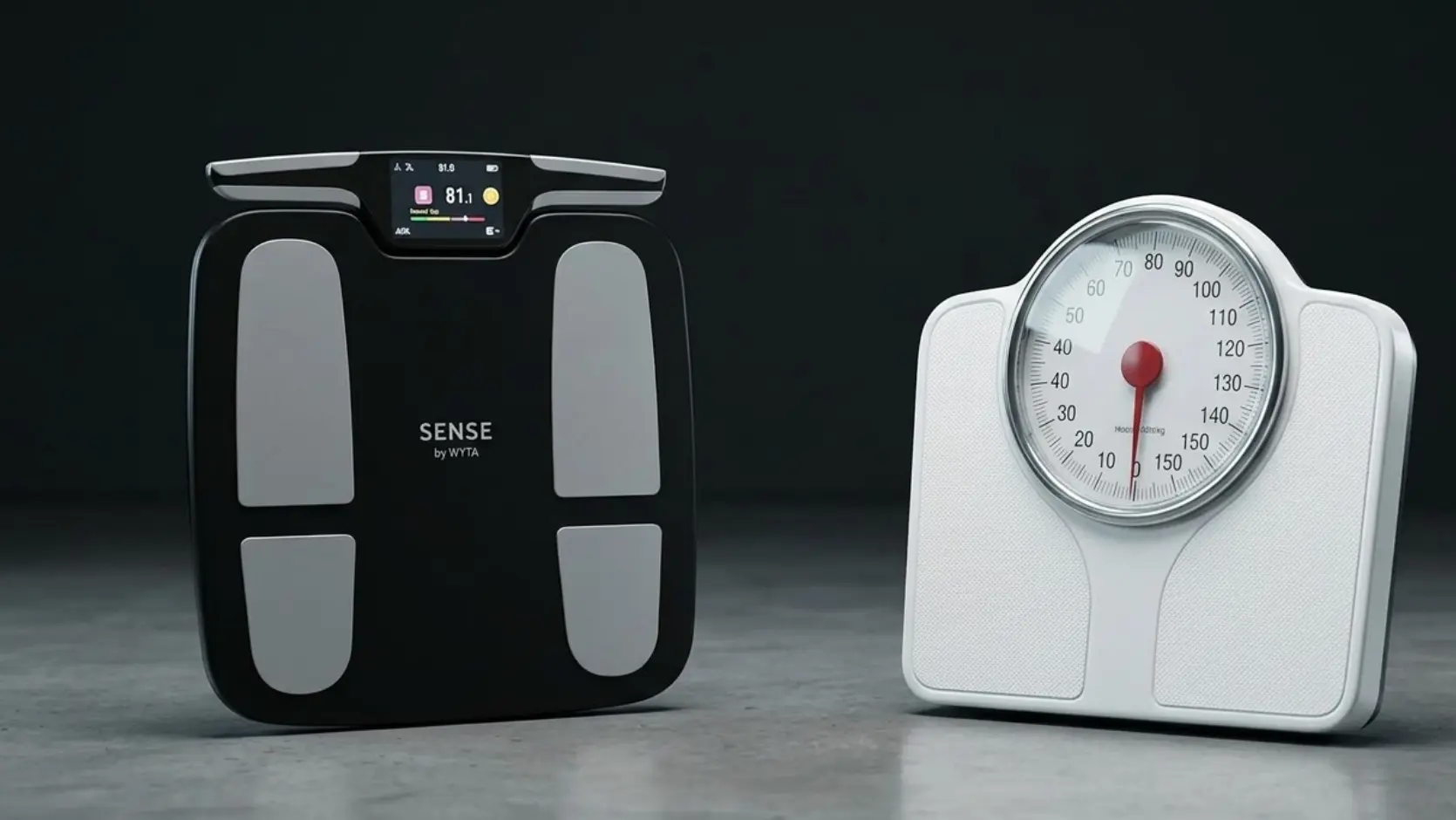







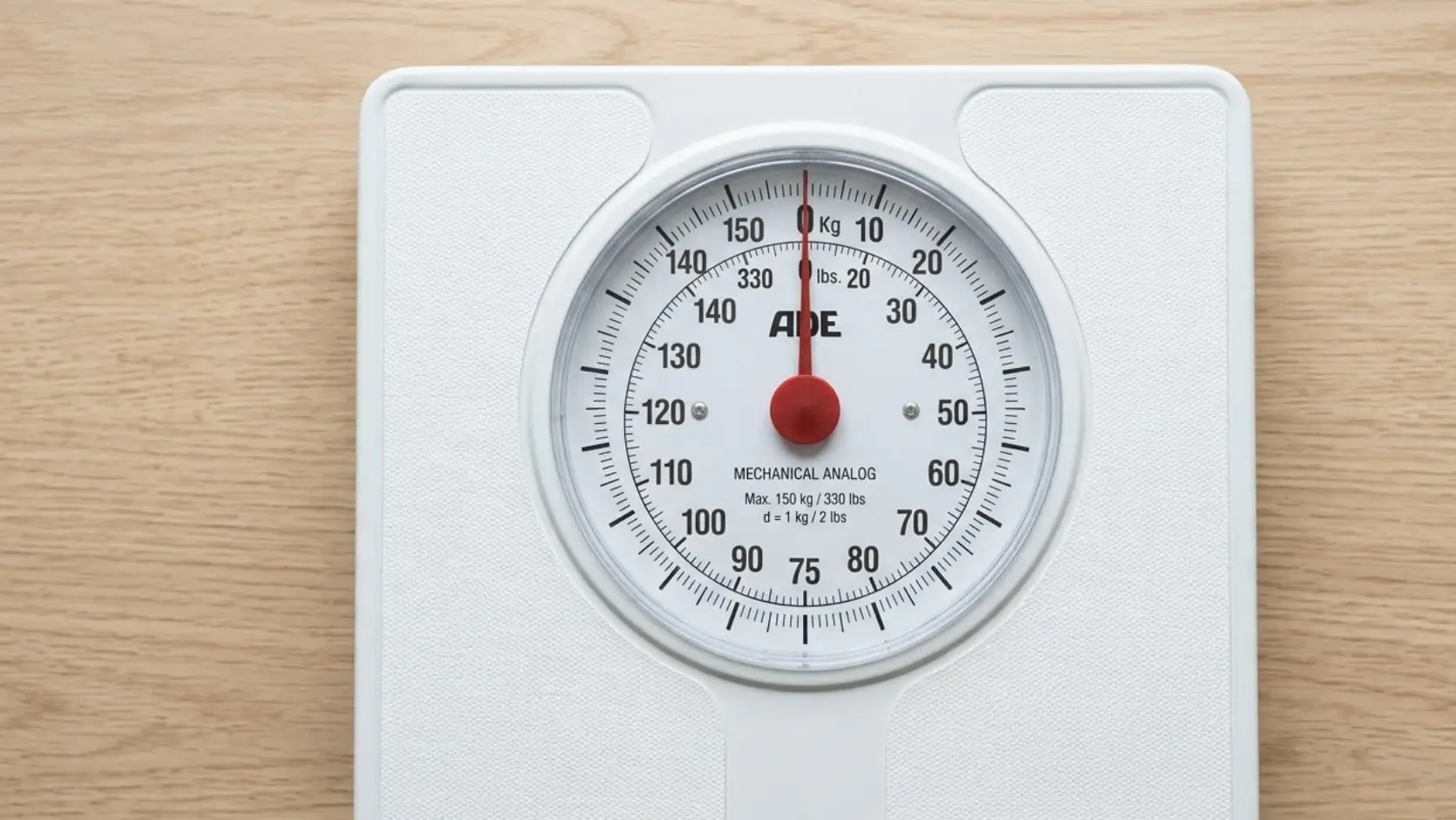
An analog weight machine measures weight using a purely mechanical system – a spring or a balance beam – that moves a needle across a printed dial to show your reading. There are no batteries, no digital display, and no electronics involved anywhere in the process. This guide takes a genuine, balanced look at the pros and cons of an analog weight scale, and the specific situations where an analog scale still makes practical sense today, despite digital alternatives being widely available.
How an Analog Scale Works
Inside an analog weight machine, your weight compresses a calibrated spring or shifts a balance beam by an amount proportional to your mass. That physical movement is mechanically linked to a needle, which sweeps across a printed dial calibrated in kilograms or pounds. This is the same basic mechanical principle that weighing scales have used for over a century, refined over time but fundamentally unchanged.
The Pros
Pro: No Batteries Required
The single biggest practical advantage of an analog weight scale is that it never needs a battery. There’s no risk of a dead battery giving you an inaccurate or blank reading at the worst possible moment, and no ongoing cost or waste from battery replacement over its lifetime. For anyone who finds battery management annoying, this is a genuine and lasting benefit.
Pro: Mechanical Simplicity
An analog scale has fewer components that can fail electronically – no circuit board, no display screen, no sensors to short out. This mechanical simplicity means there is simply less that can go wrong in day-to-day use compared to a more complex digital alternative. For some users, this simplicity also brings a sense of straightforward trust.
The Cons
Con: Lower Precision and Harder to Read
An analog weight machine typically shows weight in larger increments than a digital scale, and reading the exact position of a needle on a dial is inherently less precise than a clear digital number. In dim lighting or with smaller print, this becomes a genuine practical drawback. For anyone tracking small week-to-week changes, this reduced precision matters.
Con: Calibration Drift Over Time
The spring or beam mechanism inside an analog scale wears with age and use, gradually losing calibration accuracy in a way that is often difficult to notice without comparing against a known reference weight. Periodic recalibration is possible for some analog scale designs but is rarely something the average household actually does.
Con: No Body Composition or Tracking Features
An analog weight machine can only ever show one thing: total weight. There is no possibility of adding body composition tracking, app connectivity, or multi-user memory to a purely mechanical design, regardless of how well-made the scale is.
Where an Analog Scale Still Makes Sense
Despite digital’s advantages, an analog weight scale still has genuine, specific use cases. It works well as a reliable backup scale that never needs charging, in environments where battery access is genuinely inconvenient, or for anyone who simply prefers a mechanical interface without any electronics at all.
Analog vs Digital: A Direct Comparison
Digital scales generally win on precision, readability, and feature potential, while an analog weight machine wins on simplicity, no battery dependency, and often a lower upfront cost. Neither is universally “better” – the right choice depends entirely on what you actually value in daily use.
Maintaining an Analog Weight Machine
An analog scale still benefits from basic care: keep it on a hard, flat surface for consistent readings, avoid dropping or overloading it beyond its rated capacity, and store it flat rather than propped on its side, which can stress the internal spring mechanism over time.
Buying Considerations for an Analog Scale
If you’ve decided an analog weight scale suits your needs, prioritize a sturdy platform, a large and clearly marked dial for easier reading, and a reputable brand with decent build quality, since cheaper analog scales are more prone to both imprecise dials and faster calibration drift.
The Environmental Angle
An analog scale generates less electronic waste over its lifetime than a digital equivalent, since there are no batteries to dispose of and no circuit boards involved in its construction. For environmentally conscious buyers, this is a genuine, if secondary, point in favour of choosing analog.
A Brief History of the Analog Scale
Analog weighing goes back over a century, evolving from simple balance beams used in markets and apothecaries to the spring-based bathroom scales that became a household staple through much of the twentieth century. Older generations in particular often grew up with an analog weight machine as the only option.
Repair and Servicing an Analog Scale
An analog weight machine, being purely mechanical, is sometimes easier for a mechanically inclined person to understand and occasionally service. Finding replacement parts for an older analog scale can be genuinely difficult, however, since manufacturers rarely stock parts for discontinued mechanical models.
Analog Scales in Commercial and Vintage Contexts
Beyond home use, analog weighing mechanisms are still found in some commercial and vintage contexts – old-style market scales, certain gym equipment, and antique or collectible balance-beam designs prized for their mechanical craftsmanship rather than practical accuracy.
Choosing Between Spring and Balance-Beam Designs
Not all analog scales work identically – spring-based designs are more common and generally cheaper, while balance-beam designs, familiar from doctor’s offices, use counterweights sliding along a calibrated bar and tend to hold their accuracy for longer. If precision matters within the analog category specifically, a balance-beam analog weight machine is generally the better choice.
Analog Scales for Specific Household Situations
An analog weight machine can be a genuinely sensible choice for specific household situations beyond a simple backup role – a guest bathroom where occasional visitors might want a quick weight check without needing to navigate an app, or a household where an older family member finds a dial genuinely simpler to interpret than a flashing digital number. In these contexts, the mechanical simplicity that reads as a limitation for serious fitness tracking becomes a genuine practical advantage instead.
Is an Analog Scale Ever Worth Buying New Today?
Given how affordable basic digital scales have become, it is worth asking whether buying a new analog weight machine still makes sense at all. For most buyers with any interest in tracking their health over time, the answer leans toward digital, simply because entry-level digital scales now cost little more than a decent analog model while offering meaningfully better precision. That said, analog retains a small, genuine niche for buyers who have thought it through and specifically want mechanical simplicity over precision – a legitimate preference, not a mistake, provided it is a deliberate choice rather than a default born of not knowing digital alternatives exist.
Common Myths About Analog Scales
A few misconceptions deserve a direct correction.
- Analog scales are not inherently “more honest” or accurate than digital; mechanical wear affects them just as digital sensors can drift.
- A cheap analog scale is not automatically more reliable simply because it lacks electronics – build quality still varies significantly between models.
- Analog scales do need occasional care and correct surface placement, the same as any digital scale, to stay accurate.
- Not all analog scales are equally imprecise; balance-beam designs generally read more precisely than basic spring mechanisms.
- Choosing analog over digital is a legitimate preference, not a step backward, provided it matches what you actually need from a scale.
Frequently Asked Questions
What are the main pros of an analog weight machine?
No battery dependency, mechanical simplicity with fewer electronic failure points, and often a lower upfront cost compared to digital scales.
What are the main cons of an analog scale?
Lower precision, calibration drift over time, and no ability to add body composition tracking or app connectivity.
Is an analog weight scale accurate?
It can be reasonably accurate when well-maintained, but it typically requires more frequent recalibration than a digital scale to stay that way.
When does an analog scale still make sense today?
As a reliable no-battery backup scale, in settings where battery access is inconvenient, or for users who prefer a purely mechanical interface.
How do I keep my analog weight machine accurate?
Use it on a hard, flat surface, avoid overloading it beyond its rated capacity, and store it flat to protect the internal spring mechanism.
Simple Scale, Lasting Value
An analog weight machine, analog weight scale, or simple analog scale earns its place through mechanical simplicity and zero battery dependency, not through superior precision or features – understanding that trade-off is the key to deciding if it’s right for you. If body composition and tracking matter to your goals, Fittr’s body fat calculator can help you decide whether it’s time to move to a digital alternative instead.