

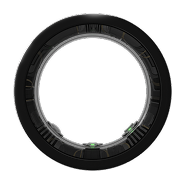




A smart ring is a wearable health tracker shrunk down to the size of an ordinary band you slip onto your finger. It has no screen, weighs only a few grams, and looks almost identical to a regular ring – yet inside that slim titanium shell sits the same family of sensors you would find in a fitness watch. For something so small, a smart ring can tell you a surprising amount about how you sleep, how your heart is doing, how active you have been, and how well your body is recovering.
Smart rings have quietly become one of the fastest-growing categories in wearable tech, and it is easy to see why. They are comfortable enough to wear to bed, discreet enough for the office, and they last days on a single charge. In this guide we will explain exactly what a smart ring is, how it works, what it can and cannot track, how it compares with a smartwatch, and how to choose the right one for you.
What is a smart ring?
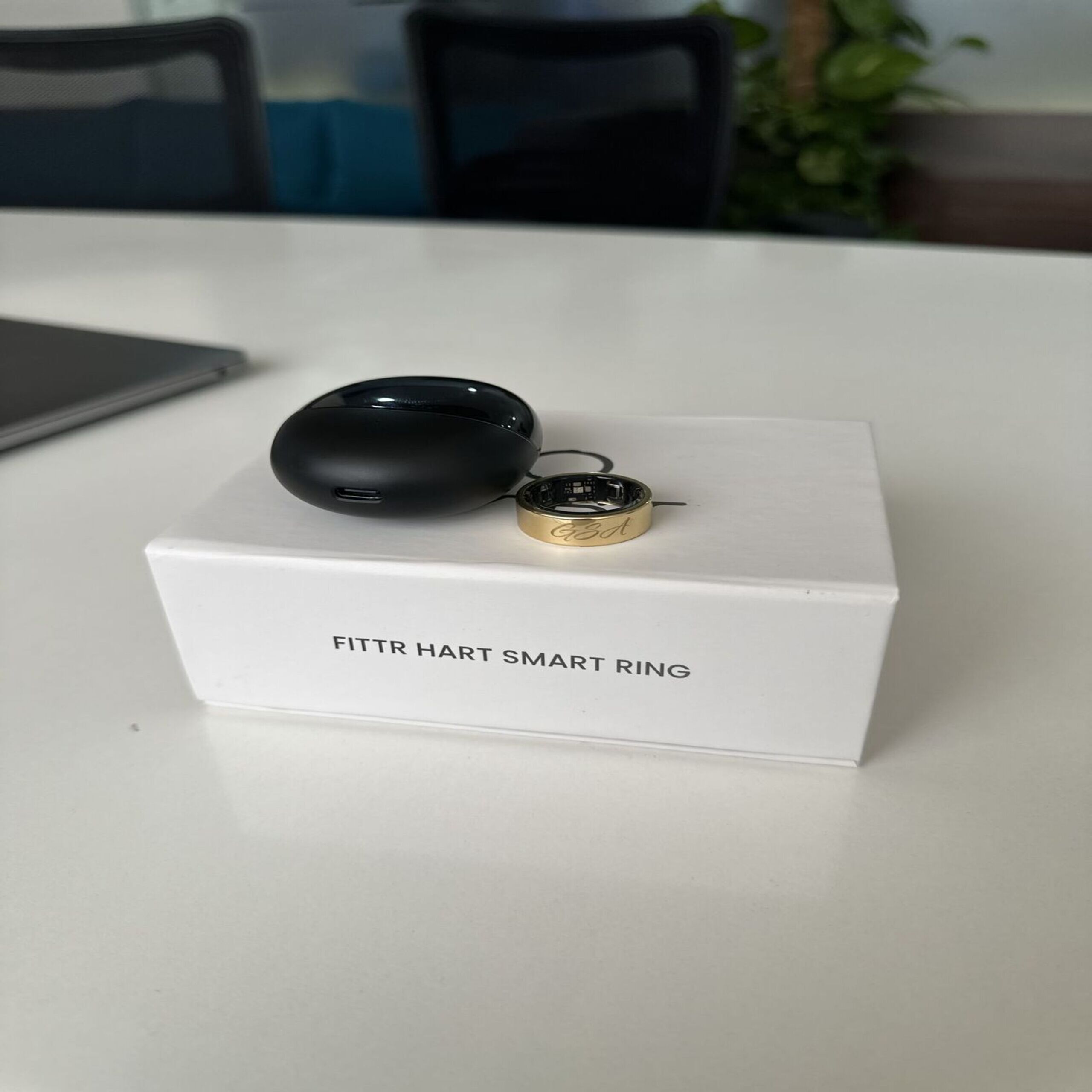
A smart ring is a screenless wearable device built into a finger ring. Where a smartwatch puts a display and a battery on your wrist, a smart ring hides everything – sensors, processor, battery and a Bluetooth radio – inside a band usually made of titanium, ceramic or surgical-grade metal. The sensors sit on the inner surface, resting against the skin of your finger, where they continuously read signals from the small arteries that run close to the surfaces.
Because it sits on your finger rather than your wrist, a smart ring is one of the most comfortable wearables to keep on around the clock. There is no screen to distract you, no strap to loosen overnight, and most models run for four to seven days between charges. That combination – comfort, long battery life and continuous tracking – is what makes the smart ring so well suited to the one job many people struggle to do with a watch: wearing something to bed, every night, without thinking about it.
A smart ring is also a connected ring. On its own it simply collects raw data; the real intelligence lives in the companion app on your phone. The ring syncs over Bluetooth, and the app turns those raw signals into the scores and trends you actually read – your sleep quality, your resting heart rate, your recovery, and so on. Without the app, the ring is just a beautiful piece of hardware; together, they become a personal health tracker you barely notice you are wearing.
How does a smart ring work? The sensors inside
At its heart, a smart ring is a ring with sensors – several of them, packed into a space smaller than a coin. Each sensor measures a different signal, and the app combines them to build a picture of your health. Here is what is doing the work inside the band.
Optical heart-rate sensor (PPG). Tiny LEDs shine green, red or infrared light into your skin, and a photodiode measures how much light bounces back. As blood pulses through the arteries in your finger, the amount of reflected light changes with every beat. This technique, called photoplethysmography or PPG, lets the ring measure your heart rate, your heart-rate variability, and in many models your blood-oxygen level.
Skin-temperature sensor. A small thermistor tracks the temperature of your skin throughout the night. On its own a single reading is not very useful, but tracked over days and weeks it reveals patterns – the natural dip and rise across your sleep, the shift around a menstrual cycle, or the subtle increase that can show up when you are coming down with something.
Accelerometer. A 3-axis motion sensor detects movement and orientation. It counts your steps, estimates activity, and – crucially – works out when you are lying still, tossing and turning, or deeply asleep. Much of the sleep analysis a smart ring produces comes from combining this motion data with your heart rate.
Processor, battery and Bluetooth. A low-power chip does the first round of number-crunching on the ring itself, a slim curved battery keeps it running for days, and a Bluetooth radio sends everything to your phone. Because the finger gives clean, consistent contact with the skin, many of these readings – especially overnight heart rate and temperature – can be more stable than the same measurements taken at the wrist.
What can a smart ring track?
This is where a smart ring earns its place. Despite its size, a modern smart ring monitors a broad set of health and fitness signals, around the clock. Here are the main metrics and what each one tells you.
Sleep and sleep stages
Sleep tracking is the standout strength of the smart ring. By combining motion, heart rate and temperature, the ring estimates how long you slept, how often you woke, and roughly how much time you spent in light, deep and REM sleep. Over time it shows you patterns you would never notice on your own – how a late dinner, a hard workout or a glass of wine changes the quality of your rest. Because the ring is so comfortable, you are far more likely to actually wear it to bed, which is exactly when this data matters most.
Heart rate and heart-rate variability (HRV)
The ring measures your heart rate continuously, including your resting heart rate overnight – one of the clearest signals of your overall fitness and stress. It also tracks heart-rate variability, the tiny variation in time between beats. A higher HRV generally points to a well-rested, recovered body, while a sudden drop can be an early sign of fatigue, stress or illness. Many rings roll these signals into a single daily readiness or recovery score.
Activity, steps and calories
Like any fitness tracker, a smart ring counts your steps, estimates the calories you burn, and logs periods of movement through the day. It will not replace a dedicated sports watch for detailed workout metrics, but for everyday activity and general movement goals it does the job quietly in the background.
Body temperature and recovery
Continuous skin-temperature tracking helps the ring understand your recovery and flag changes in your body. A rise in your overnight temperature trend, combined with a lower HRV and a higher resting heart rate, is often the body’s way of telling you to take it easy – sometimes a day or two before you feel run down.
Blood oxygen (SpO2)
Many smart rings estimate your blood-oxygen saturation overnight using the same optical sensor. Consistent dips can be worth discussing with a doctor, though it is important to treat these readings as wellness indicators rather than medical diagnoses.
Stress, readiness and cycle tracking
By reading your heart rate and HRV through the day, a smart ring can estimate periods of stress and recovery, helping you see when your body is under load. For women, the temperature sensor also enables menstrual-cycle insights and period predictions. The headline feature across most rings, though, is the daily readiness score – a single number that blends sleep, recovery and activity to tell you, at a glance, how ready your body is to take on the day.
Smart ring vs smartwatch vs fitness band
If a smartwatch already does all this, why choose a connected ring? The honest answer is that they are built around different priorities. A smartwatch is a screen-first device for notifications, apps, GPS and real-time stats. A smart ring is a sensor-first device for quiet, continuous health tracking – especially sleep and recovery.
| What matters | Smart ring | Smartwatch / band |
| Comfort in bed | Excellent – barely noticeable | Bulkier on the wrist |
| Battery life | 4–7 days typical | 1–2 days typical |
| Sleep tracking | A core strength | Good, but worn less often |
| Screen & notifications | None | Full display |
| GPS & workouts | Limited or none | Detailed |
| Discretion | Looks like jewellery | Clearly a gadget |
For many people the two are complementary rather than rival choices: a watch on the wrist by day for workouts and notifications, and a smart ring overnight for sleep and recovery. If you only want one device that you will genuinely wear every night, the ring usually wins on comfort and battery life.
The benefits of wearing a smart ring
The real value of a smart ring is not any single reading – it is the long-term trends. Because you wear it continuously, it builds a personal baseline and then shows you when something changes.
- Better sleep understanding: see how your habits affect your rest, night after night.
- Smarter recovery: a daily readiness score helps you decide when to push and when to rest.
- Early warning signs: shifts in temperature, HRV and resting heart rate can flag stress or illness early.
- All-day comfort: light, screenless and easy to forget you are wearing it.
- Long battery life: days of tracking between charges, so the data rarely has gaps.
Used consistently, a smart ring nudges you toward better habits – earlier nights, easier training days, more attention to recovery – simply by making the invisible visible.
How to choose the best wearable smart ring
Not all rings are equal, and the best wearable ring for you depends on what you want to track and how you plan to use it. If you would rather start from a shortlist, our roundup of the best smart rings is a useful starting point. Otherwise, here is a practical checklist to weigh up before you buy.
- Sensor set: confirm it tracks the metrics you care about – sleep, heart rate, HRV, temperature and SpO2 are the common ones.
- App quality: the app is where you live with the data, so look for clear scores, useful trends and an interface you enjoy.
- Subscription or not: some rings lock their best insights behind a monthly fee. Decide whether you want a no-subscription model.
- Battery life: four days is acceptable, but longer means fewer gaps in your data.
- Build and comfort: titanium is light and durable; check water resistance if you want to wear it in the shower or pool.
- Sizing: a smart ring must fit snugly for accurate readings, so choose a brand that sends a sizing kit before shipping the ring.
- Local support and price: in India, factor in warranty, after-sales support and price when comparing options.
Work through that list and the choice usually narrows quickly. The best wearable ring is simply the one whose sensors, app and price match the way you actually live.
Smart rings in India: what to know
Smart rings have arrived in India at a range of prices, and the category is maturing fast. When buying locally, pay close attention to sizing support, warranty and price, and check whether key features sit behind a subscription, since these vary widely between brands.
The Fittr Hart Ring is one option built with Indian users in mind, pairing continuous health tracking – sleep, heart rate, HRV, activity and recovery – with the Fittr app and coaching ecosystem. Whichever brand you choose, the principles are the same: get the right size, wear it consistently, and give it a couple of weeks to learn your baseline before you read too much into a single day’s numbers.
What a smart ring can’t do
A smart ring is a powerful wellness tool, but it has real limits, and it helps to know them before you buy.
- It is not a medical device: readings are for general wellness, not diagnosis. Always speak to a doctor about health concerns.
- Blood pressure and glucose tracking are still emerging: where offered, treat them as experimental rather than reliable.
- No screen: you check everything in the app, so there are no glanceable stats on your hand.
- Limited workout detail: for GPS routes and serious training metrics, a sports watch is still better.
- Accuracy varies: finger placement, fit and skin tone can all affect optical readings, so trends matter more than any single number.
Frequently asked questions
Is a smart ring better than a smartwatch?
Neither is strictly better – they are built for different jobs. A smart ring excels at comfortable, continuous sleep and recovery tracking with long battery life, while a smartwatch offers a screen, notifications, GPS and detailed workout data. Many people happily use both.
How accurate are smart rings?
For resting heart rate, sleep duration and temperature trends, smart rings are generally reliable, and the finger often gives cleaner readings than the wrist. As with any wearable, focus on trends over time rather than treating a single reading as exact.
Do smart rings need a subscription?
Some do and some do not. Certain brands put their advanced insights behind a monthly fee, while others include everything in the purchase price. If you would rather pay once, look specifically for a no-subscription smart ring.
Can a smart ring track blood pressure?
A few rings are beginning to estimate blood pressure, but this feature is still emerging and should not be relied on for medical decisions. For accurate blood-pressure readings, use a validated monitor and consult a doctor.
How long does a smart ring battery last?
Most smart rings last around four to seven days on a single charge, depending on the model and how many sensors are active. They typically recharge fully in an hour or two on a small dock.
Conclusion
A smart ring proves that you do not need a screen on your wrist to understand your body. By packing optical, temperature and motion sensors into a comfortable band you can wear day and night, a connected ring turns your sleep, heart rate and recovery into insights you can actually act on. It will not replace your doctor or your sports watch, but as a quiet, always-on window into your health, the smart ring is one of the most genuinely useful wearables you can own – provided you choose the right one, wear it consistently, and read the trends rather than chasing every number.