






Why Make Masala Oats at Home?
Masala oats are one of India’s favourite quick breakfasts – savoury, spiced, ready in minutes and far more familiar than a sweet bowl of porridge. Packet masala oats made the dish popular, but a homemade masala oats recipe gives you control over three things packets cannot: sodium, vegetables and protein.
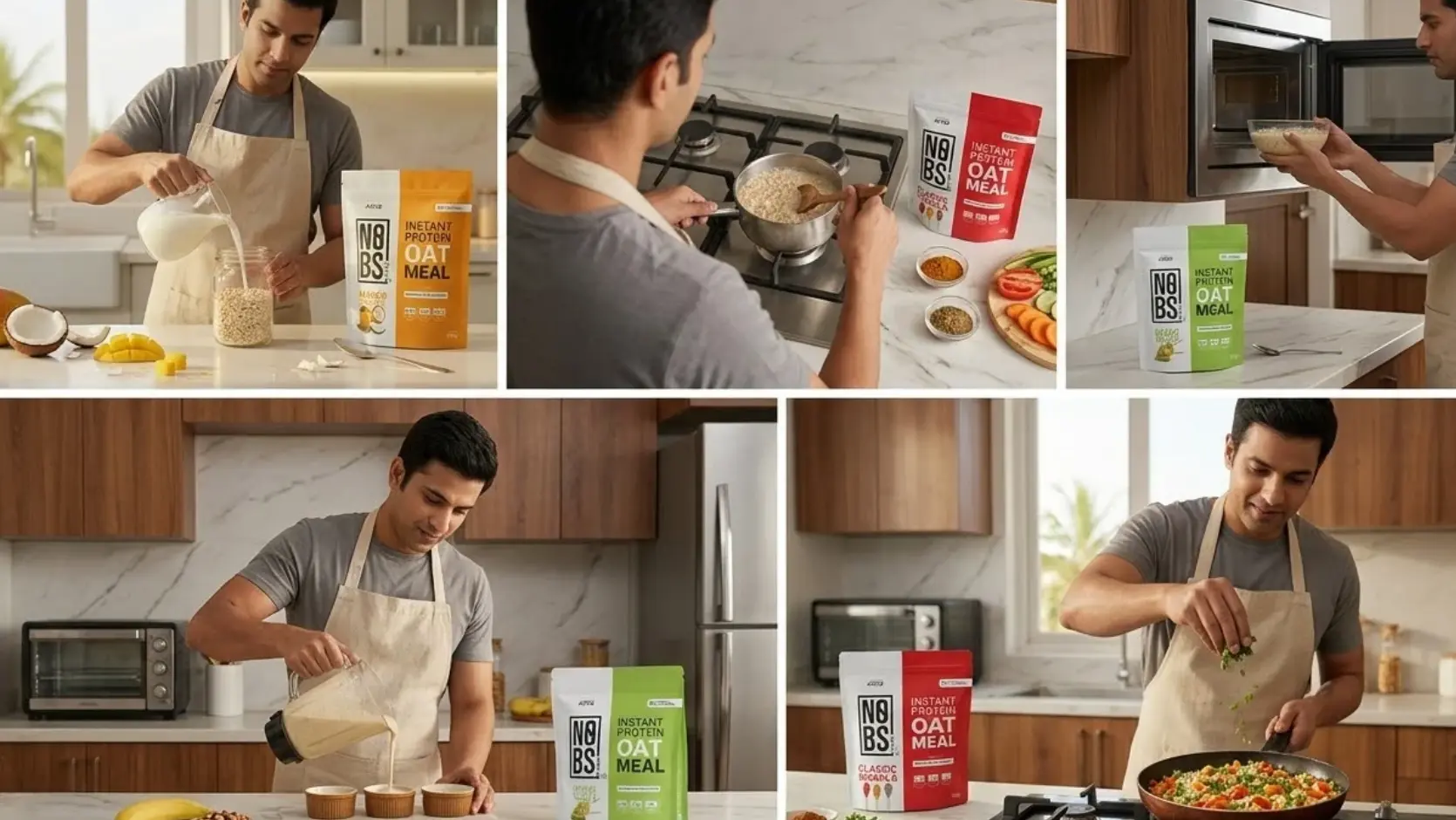
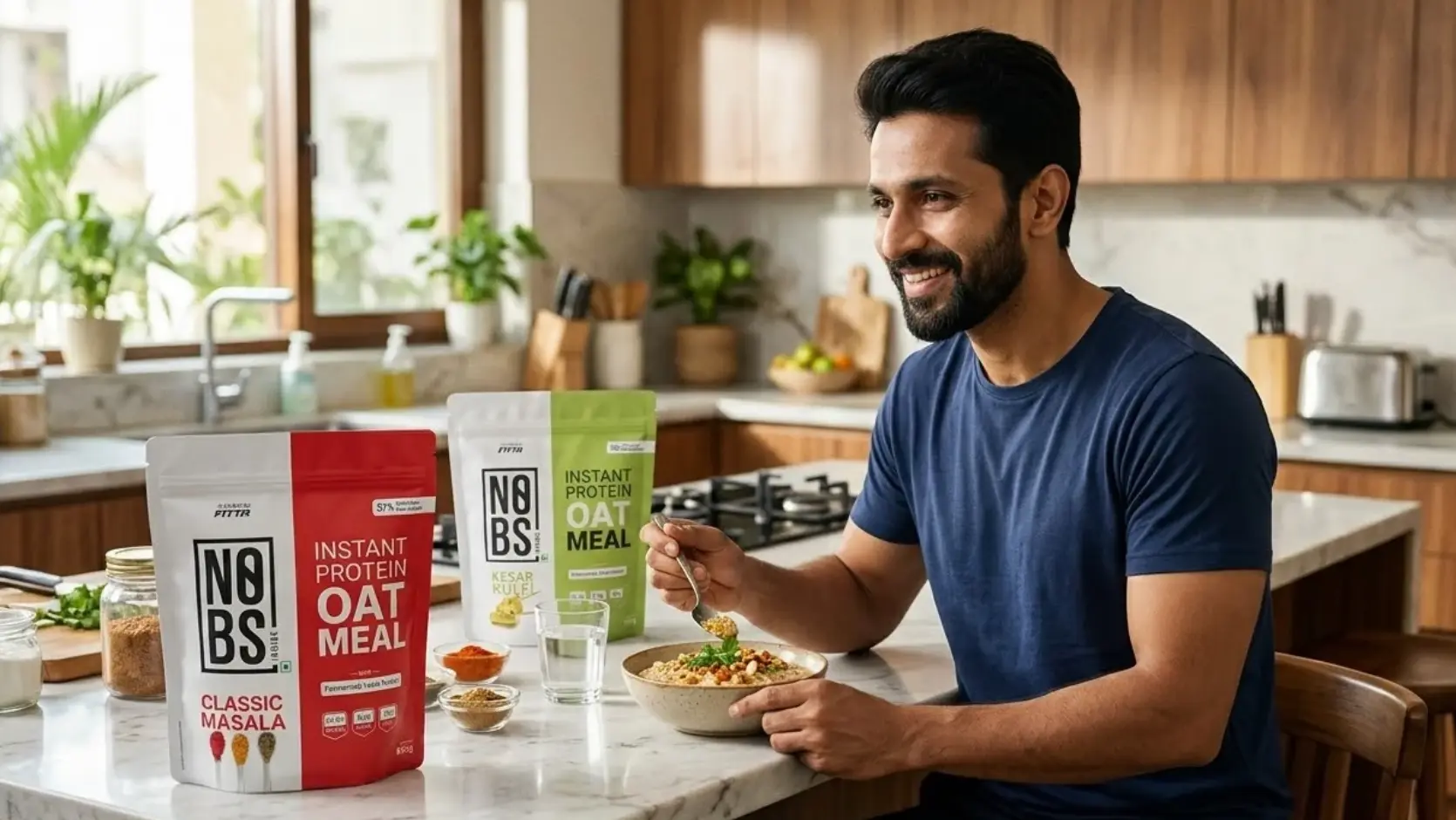
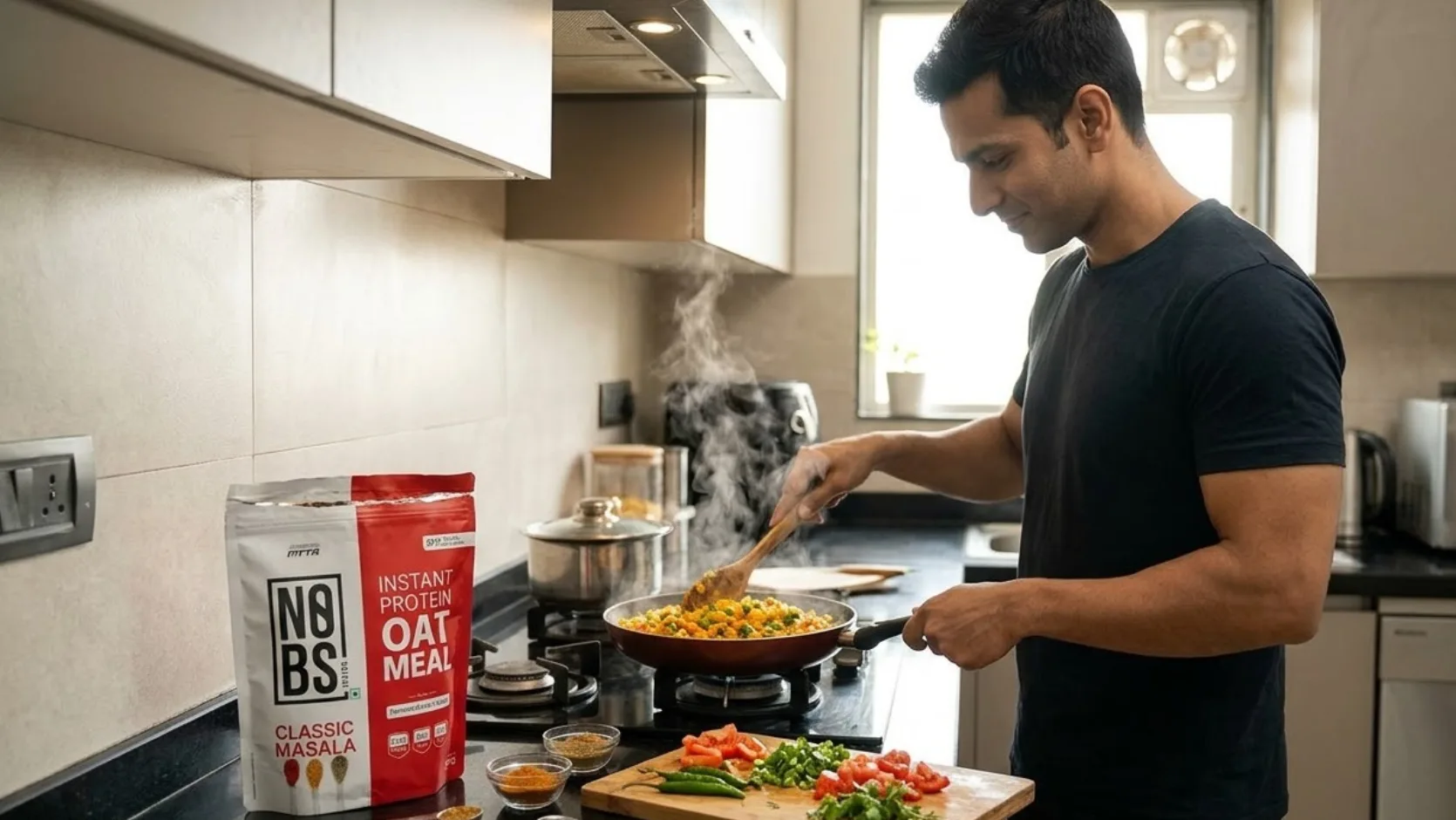
This version takes about 15 minutes, comes in at roughly 280 kcal per bowl, and uses soya chunks to lift protein to around 16 g – more than double a plain packet bowl. Below you will find the step-by-step method, calorie breakdown, protein upgrades and variations. If you want the same savoury flavour with even more protein and no chopping, the Classic Masala flavour of No BS Protein Oats delivers 26-32 g protein per serving.
Packet Masala Oats vs Homemade
Packet masala oats are convenient, but they are a different product from plain oats with spices. Most sachets combine oats with salt, seasoning, dehydrated vegetables, flavour enhancers and sometimes added starch or oil.
| Factor | Typical packet masala oats | Homemade masala oats (this recipe) |
| Prep time | 3-4 min | 15 min |
| Sodium | Often high – check label | You control the salt |
| Vegetables | Small dehydrated pieces | 100 g fresh vegetables |
| Protein per bowl | Usually under 8 g | ~16 g |
| Added flavour enhancers | Often present | None |
| Fiber | Moderate | ~9 g |
What About Packet Brand Calories?
If you have searched for saffola masala oats calories or the calories in any other sachet, the answer is on the pack. Values differ by brand and flavour, and the label lists calories per sachet as well as sodium. Compare sodium and protein, not just calories – that is where homemade versions pull ahead. Our guide to plain vs flavoured oats explains how to read these labels.
Masala Oats Calories Per Bowl
Here is where the calories in this homemade bowl come from:
| Ingredient | Calories | Protein |
| 40 g oats | 156 kcal | 6.8 g |
| 15 g dry soya chunks | ~52 kcal | ~7.8 g |
| 100 g mixed vegetables | ~30 kcal | ~1.5 g |
| 1 tsp oil | ~40 kcal | 0 g |
| Total | ~280 kcal | ~16 g |
Macros Per Serving
| Calories | Protein | Carbs | Fiber | Fat |
| ~280 kcal | ~16 g | ~38 g | ~9 g | ~7 g |
Values are approximate and change with portion size, oil and vegetables. Keeping oil to 1 teaspoon is the easiest way to stay under 300 calories. For the full nutrient profile of oats themselves, see our oats nutrition guide.
Ingredients
- 40 g rolled or quick oats
- 15 g dry mini soya chunks
- 100 g mixed vegetables – onion, tomato, carrot, peas, capsicum
- 1 tsp oil
- 1/2 tsp mustard seeds and 1/2 tsp jeera
- 1 green chilli and 1/2 tsp grated ginger
- 1/4 tsp turmeric, 1/2 tsp red chilli powder, 1/4 tsp garam masala
- Salt to taste
- 200-250 ml water
- Lemon juice and coriander to finish
Step-by-Step Masala Oats Recipe
- Soak the soya: cover soya chunks with hot water for 5 minutes, squeeze well and chop roughly.
- Temper: heat oil, add mustard seeds and jeera and let them splutter.
- Sauté aromatics: add chilli, ginger and onion; cook until the onion turns translucent.
- Cook the vegetables: add tomato and the rest of the vegetables; cook for 3 minutes.
- Spice it: add turmeric, chilli powder, garam masala, salt and soya; mix for a minute.
- Add oats and water: pour in 200-250 ml water, add oats and cook for 3-4 minutes, stirring.
- Finish: squeeze in lemon, add coriander and serve hot.
Texture Tips
- Use less water (about 150 ml) for an upma-like, drier dish – see our oats upma recipe.
- Use more water (about 300 ml) for a soupy, porridge-style bowl.
- Quick oats give a smoother texture; rolled oats hold more bite.
How to Add More Protein to Masala Oats
A plain masala oats bowl is low in protein. These swaps lift it without changing the flavour much:
| Add-on | Extra calories | Extra protein |
| 40 g crumbled paneer (instead of soya) | ~104 kcal | ~7 g |
| 1 egg, scrambled in | ~70 kcal | ~6 g |
| 100 g curd on the side | ~60 kcal | ~3.5 g |
| A serving of protein oats in place of plain oats | varies | bowl reaches 26-32 g+ |
For a full high-protein approach, see our high protein oats guide.
Variations to Keep It Interesting
Vegetable Oats With Paneer
Replace soya chunks with 40 g crumbled paneer and add spinach for a creamier, iron-rich bowl. About 330 kcal and 15 g protein.
Egg Masala Oats
Scramble one egg in the pan before adding the vegetables. About 300 kcal and 15 g protein without soya, more if you keep both.
South Indian Style
Swap garam masala for curry leaves, urad dal and a hint of hing in the tempering, and finish with grated coconut.
Masala Oats Soup
Use 300 ml water or vegetable stock and add extra tomato and pepper for a warming evening bowl.
Masala Oats by Goal
| Goal | Oats | Protein add-on | Approx. bowl |
| Fat loss | 30-40 g | Soya chunks or egg | 240-290 kcal |
| Maintenance | 40-50 g | Soya + curd on the side | 300-360 kcal |
| Muscle gain | 60 g | Paneer + egg + 1 tsp ghee | 500+ kcal |
Use the Fittr macro calculator to check where your bowl fits in your daily targets. For fat-loss specifics, read our guide to masala oats for weight loss.
What to Serve With Masala Oats
- A bowl of plain curd or raita for extra protein and a cooling contrast.
- A boiled egg or a small paneer tikka on the side.
- Green chutney or a little homemade tomato chutney instead of ketchup.
- A cup of unsweetened tea or coffee – avoid sugary drinks that undo the low-calorie bowl.
Meal-Prep and Lunchbox Tips
Make the Masala Mix Ahead
Dry-roast 200 g oats lightly, cool, and mix with your spices (turmeric, chilli, garam masala, a little salt) in a jar. Each morning, sauté vegetables, add 40 g of the mix and water, and breakfast is ready in 6-7 minutes.
Packing for Work
Masala oats thicken as they cool. Pack a slightly looser bowl in an insulated container, or carry the dry mix and add hot water at work. Store any cooked leftovers in the fridge and eat within 24 hours.
Can You Eat Masala Oats Every Day?
Yes – a homemade masala oats bowl is balanced enough to be a regular breakfast. The key is to keep it from becoming repetitive and to watch the parts that quietly add up.
Keep It Balanced Across the Week
- Rotate the protein: soya one day, paneer the next, egg or curd on others.
- Change the vegetables with the season – spinach and methi in winter, lauki and beans in summer.
- Alternate with a sweet bowl or overnight oats two or three days a week.
- If you use packet masala oats on busy days, balance the extra sodium with fresh, low-salt meals later in the day.
Eating oats daily is fine for most people; our guide to the disadvantages of eating oats daily covers the few things to watch, like bloating when fiber goes up too fast.
Masala Oats for the Whole Family
Masala oats are an easy way to bring whole grains into a family breakfast, because the flavour feels familiar.
Making It Family-Friendly
- For kids: skip the green chilli, reduce red chilli powder and add grated carrot, corn and a little cheese on top.
- For elders: cook slightly softer with extra water and add moong sprouts for easy-to-digest protein.
- For a crowd: multiply the recipe in a kadai; oats cook in the same 4-5 minutes regardless of batch size if you add enough water.
Myths vs Facts About Masala Oats
| Myth | Fact |
| Masala oats are always unhealthy | Homemade versions with vegetables and protein are a balanced, high-fiber meal |
| All masala oats are low in calories | Oil, cheese and extra toppings can push a bowl past 400 kcal |
| Masala oats have the same protein as dal | A plain bowl has under 8 g protein; you need to add soya, paneer, egg or curd |
| Packet and homemade versions are identical | Packets often carry more sodium and fewer real vegetables |
Common Mistakes When Making Masala Oats
- Too much oil: each extra teaspoon adds about 40 kcal.
- Over-salting: spices already carry a lot of flavour; add salt at the end and taste.
- Skipping vegetables: they add volume, fiber and micronutrients for very few calories.
- Overcooking: oats turn gluey after 5-6 minutes; take them off the heat a little loose.
- No protein: a bowl with only oats and spices leaves you hungry quickly.
The Bottom Line
Homemade masala oats give you everything you like about the packet version – spice, speed and a savoury Indian flavour – with more vegetables, more protein and less sodium. This recipe comes in at about 280 kcal and 16 g protein per bowl, takes 15 minutes, and adapts easily for fat loss or muscle gain.
Keep oil measured, load up on vegetables and always add a protein source, and masala oats become a breakfast you can enjoy almost every day.
Frequently Asked Questions
How many calories are in masala oats?
This homemade high-protein masala oats bowl has about 280 kcal. Packet masala oats vary by brand, so check the calories per sachet on the label.
Are masala oats healthy?
Homemade masala oats with vegetables and a protein source are a healthy, high-fiber breakfast. Packet versions can be high in sodium, so read labels and pair them with protein.
How do you make masala oats high in protein?
Add soya chunks, paneer, an egg or curd, or swap part of the oats for a protein oatmeal. This easily lifts a bowl to 15-25 g protein.
Can I eat masala oats for weight loss?
Yes. Keep oats to 30-40 g, use 1 tsp oil, add plenty of vegetables and include protein to stay full on fewer calories.
Which oats are best for masala oats?
Quick oats give a smoother texture and rolled oats a little more bite. Both work; steel cut oats need much longer cooking.
Can I make masala oats without onion and garlic?
Yes. Skip onion and garlic, add a pinch of hing to the tempering and use tomato, capsicum, peas and carrot for flavour and volume.
Spice Up Your Protein, Not Your Effort
Masala oats, masala oats recipe, masala oats calories or vegetable oats – whatever you searched, the winning formula is the same: oats, vegetables, measured oil and a real protein source.
When you want that savoury bowl in minutes, try No BS Protein Oats in Classic Masala with 26-32 g complete yeast protein per serving, or stock up with the combo pack and keep both sweet and savoury options at hand.