



What Are Steel Cut Oats?
Steel cut oats are whole oat groats – the de-husked kernel of the oat grain – chopped into two or three small pieces with steel blades. They are not rolled or flattened, which is why they look like tiny, pinhead-sized nuggets rather than flakes. You will also see them sold as steel-cut oats, pinhead oats or Irish oats.
Because they are the least processed common form of oats after whole groats, steel cut oats take longer to cook and give a chewy, nutty texture that many people prefer once they try it. They also digest a little more slowly than rolled or instant oats, which is a big reason they are popular with people managing hunger or blood sugar.
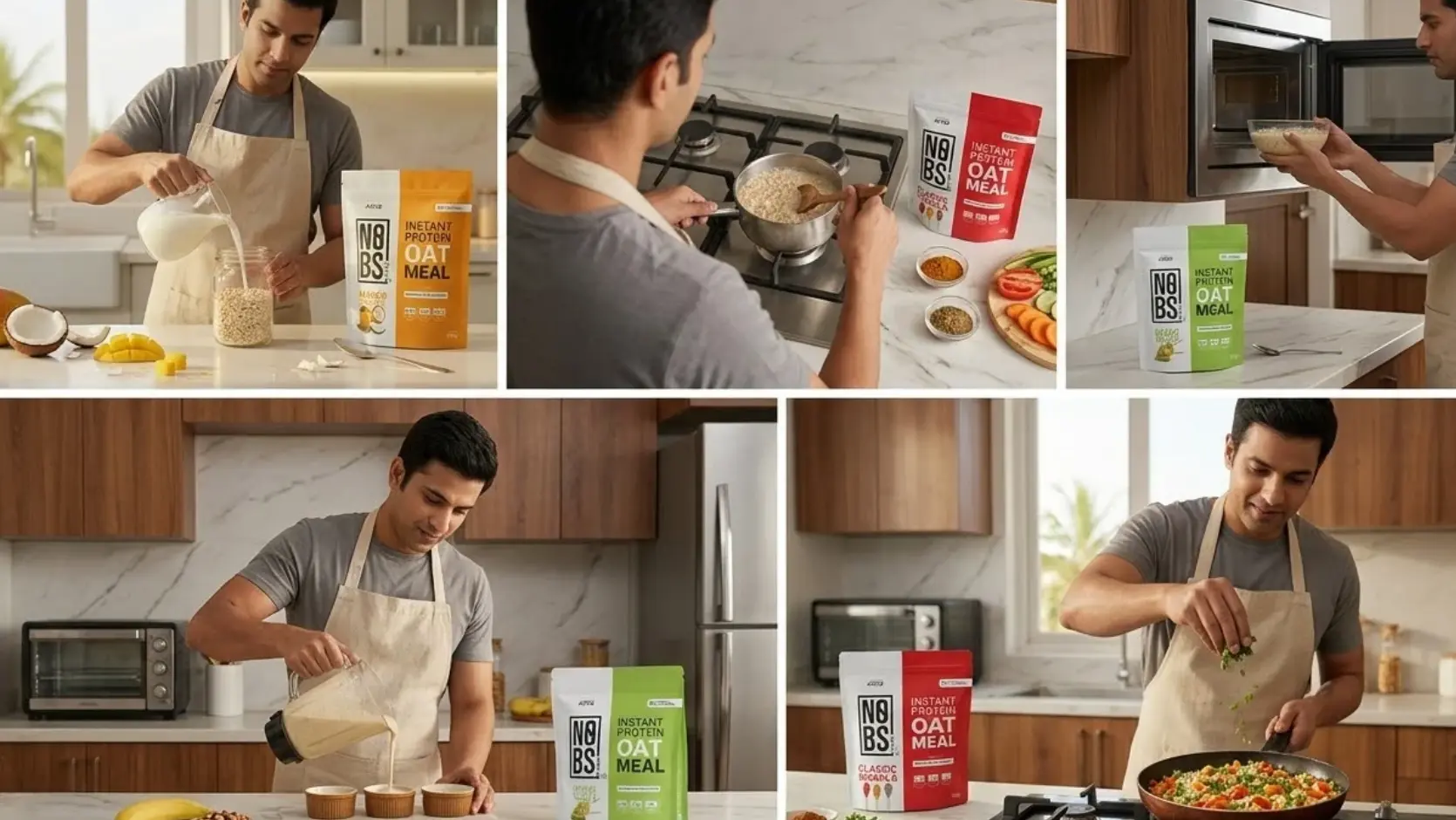
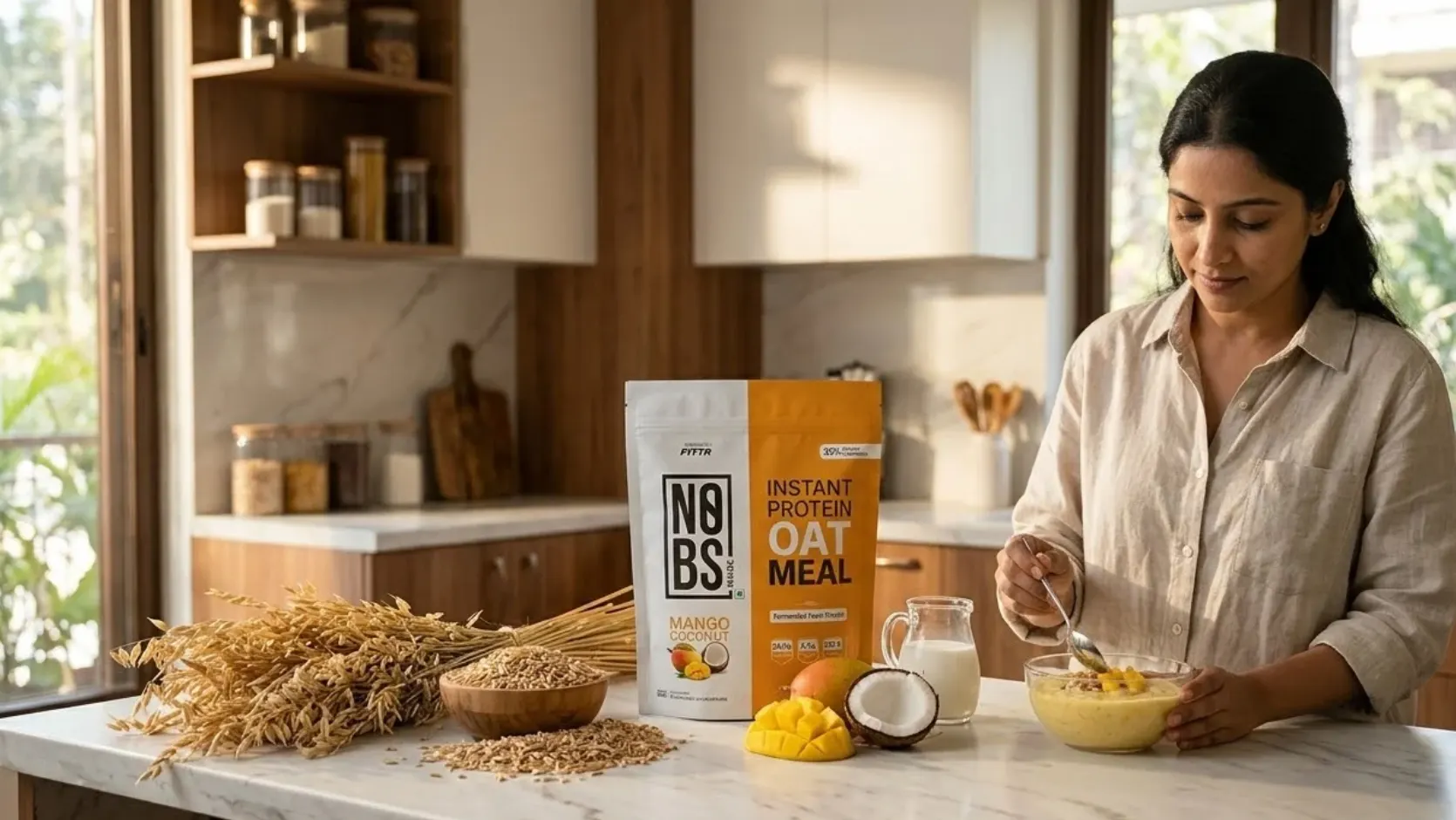
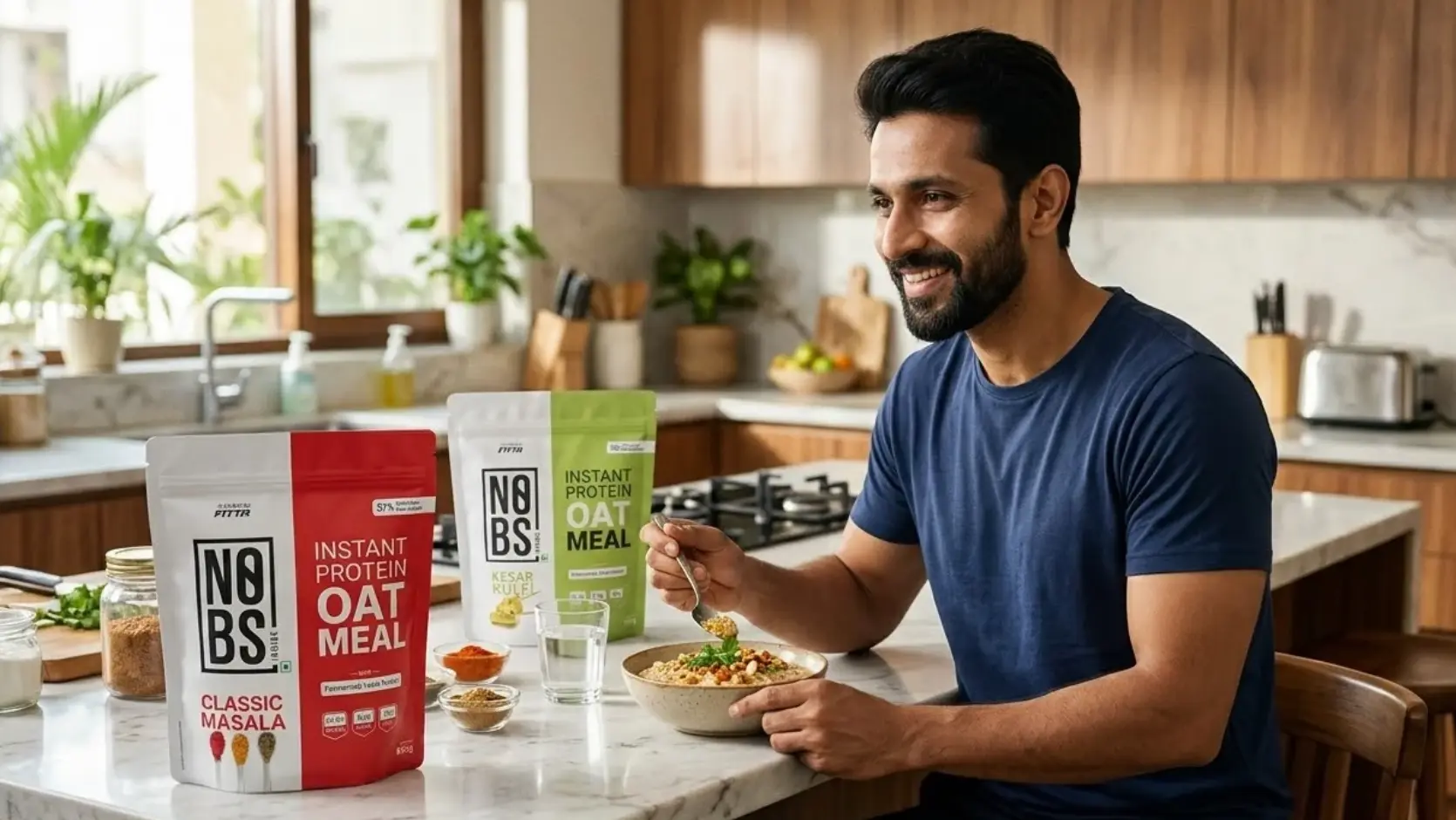
This guide covers how to cook steel cut oats (stove, pressure cooker and overnight), their nutrition per serving, the real benefits, how they compare with rolled oats, and simple Indian-style recipes. For a faster way to a high-protein bowl on busy days, No BS Protein Oats is a ready option.
How Steel Cut Oats Are Made
All oats start the same way: the grain is harvested, cleaned, de-husked and heat-treated (kilned) to keep its natural fats fresh. For steel cut oats, the groats are then simply chopped. Rolled oats go one step further – they are steamed and pressed flat – and instant oats are pre-cooked and rolled even thinner. Our guide on what oats are made of explains each step.
How to Cook Steel Cut Oats
The basic ratio is 1 part steel cut oats to 3-4 parts liquid by volume. Less liquid gives a chewier, almost risotto-like bowl; more gives a creamier porridge. One serving is about 40 g (roughly 1/4 cup) of dry steel cut oats.
Method 1: On the Stove (25-30 Minutes)
- Bring 160-200 ml water or milk to a boil for every 40 g of oats.
- Add the oats, lower the heat and simmer uncovered.
- Stir every few minutes so nothing sticks to the bottom.
- After 20-30 minutes, check: the oats should be tender with a slight bite.
- Add a pinch of salt near the end – it brings out the nutty flavour.
Toasting the dry oats in a pan for two minutes before adding liquid deepens the flavour noticeably.
Method 2: Pressure Cooker (Fastest Hands-Off Method)
Most Indian kitchens already have the best tool for steel cut oats. Add 1 part oats to 3 parts water in the cooker, close the lid and cook for 2-3 whistles on medium heat. Let the pressure release naturally, then stir in milk or toppings. Cooking time varies by cooker, so check your first batch and adjust.
Method 3: Overnight (Boil-and-Soak)
Bring water to a boil, stir in the oats, boil for one minute and switch off the flame. Cover and leave on the counter or in the fridge overnight. In the morning, warm for 5 minutes with milk. This cuts active cooking time to a few minutes. For the no-cook rolled-oats version, see our overnight oats recipe.
Method 4: Batch Cook for the Week
Cook 4-5 servings at once, cool, and store in airtight boxes in the fridge for up to 4-5 days. Reheat a portion with a splash of milk or water. This is the easiest way to make steel cut oats work on weekday mornings.
Steel Cut Oats Nutrition Per Serving
Steel cut and rolled oats are nutritionally very close per gram, because both are whole-grain oats. Here are standard values for dry oats:
| Serving (dry) | Calories | Protein | Carbs | Fiber | Fat |
| 30 g | 117 kcal | 5.1 g | 19.9 g | 3.2 g | 2.1 g |
| 40 g | 156 kcal | 6.8 g | 26.5 g | 4.2 g | 2.8 g |
| 50 g | 195 kcal | 8.5 g | 33.2 g | 5.3 g | 3.5 g |
Brand labels vary, so always check your pack. A 40 g bowl cooked in 200 ml toned milk comes to about 272 kcal and 13 g protein. For the full nutrient profile, read our oats nutrition guide.
Steel Cut Oats Benefits
1. Slower Digestion and Steadier Energy
Because the grain pieces are larger and less processed, steel cut oats break down more slowly. Their glycemic index is typically around 52-55, compared with 55-59 for rolled oats and 79-83 for instant oats (values vary by study and preparation). See our full guide to the oats glycemic index.
2. Longer-Lasting Fullness
The chewy texture means you eat more slowly, and beta-glucan fiber forms a gel in the gut that helps keep hunger in check through the morning.
3. Heart-Friendly Beta-Glucan
About 3 g of oat beta-glucan a day is linked to lower LDL cholesterol. A regular daily bowl of oats, alongside other whole grains and pulses, helps you get there.
4. Whole-Grain Minerals
Like all oats, steel cut oats supply manganese, phosphorus, magnesium, iron and zinc.
5. Better Texture for Savoury Dishes
Steel cut oats hold their shape, so they work well in khichdi-style dishes, savoury bowls and even as a rice substitute in small amounts.
If fat loss is your main goal, our deep-dive on steel cut oats for weight loss covers portions and recipes.
Steel Cut Oats vs Rolled Oats
| Factor | Steel cut oats | Rolled oats |
| Processing | Groats chopped | Groats steamed and flattened |
| Cook time | 20-30 min (or pressure cooker) | 5-10 min |
| Texture | Chewy, nutty | Soft, creamy |
| Glycemic index | ~52-55 | ~55-59 |
| Calories/protein per gram | Nearly identical | Nearly identical |
| Best for | Slow breakfasts, savoury dishes, batch cooking | Quick porridge, overnight oats, baking |
The honest answer to “steel cut oats vs rolled oats” is that both are excellent whole grains. Steel cut wins slightly on digestion speed and texture; rolled wins on convenience. Choose the one you will actually eat consistently. Learn more in our guide to rolled oats.
Indian-Style Steel Cut Oats Recipes
Kesar Elaichi Steel Cut Oats
Cook 40 g steel cut oats in water, then simmer for the last 5 minutes in 150 ml toned milk with a pinch of saffron and crushed cardamom. Top with 5 chopped almonds. About 280 kcal and 13 g protein.
Savoury Steel Cut Oats Khichdi
Pressure cook 40 g steel cut oats with 30 g moong dal, chopped vegetables, turmeric and salt. Finish with a jeera-hing tadka in 1 tsp ghee. A filling, one-pot lunch with roughly 325 kcal and 15 g protein. Our oats khichdi recipe has the full method.
High-Protein Breakfast Bowl
Cook 40 g steel cut oats in water, stir in one scoop of whey (30 g) off the heat, and top with half a banana and 1 tsp peanut butter. Roughly 360 kcal and 32 g protein.
Common Mistakes When Cooking Steel Cut Oats
- Using a rolled-oats ratio: too little liquid leaves them hard and undercooked.
- Cooking on high heat: they catch at the bottom. Keep it a gentle simmer.
- Adding salt at the start: it can slow softening. Add it in the last few minutes.
- Skipping protein: a plain bowl has under 7 g protein. Add milk, curd, whey or eggs on the side.
- Giving up because of time: use the pressure cooker or batch-cook once a week.
Who Should Choose Steel Cut Oats?
Good Fit
- People who want a slower-digesting breakfast and like chewy textures.
- Anyone managing blood sugar who is pairing oats with protein (speak to your doctor about your own plan).
- Meal-preppers who cook once and eat all week.
Maybe Not Ideal
- Busy mornings with zero prep time – rolled or instant oats are more practical.
- People who strongly prefer smooth, creamy porridge.
Buying and Storing Steel Cut Oats
What to Look For on the Label
- The ingredient list should say only “steel cut oats” or “oats”.
- Choose “certified gluten-free” if you have coeliac disease or a diagnosed intolerance.
- Check the best-before date; whole-grain fats can go stale over time.
How to Store Them
Keep steel cut oats in an airtight jar in a cool, dry place, away from humidity. In hot, humid months, storing them in the fridge helps them stay fresh longer. Cooked oats keep for 4-5 days in the fridge.
Tracking Your Results
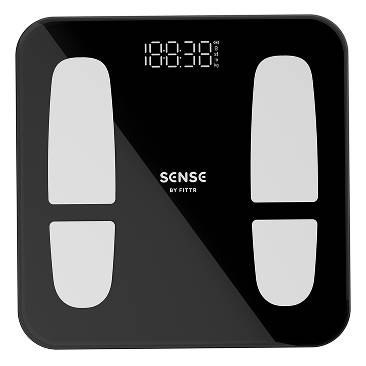
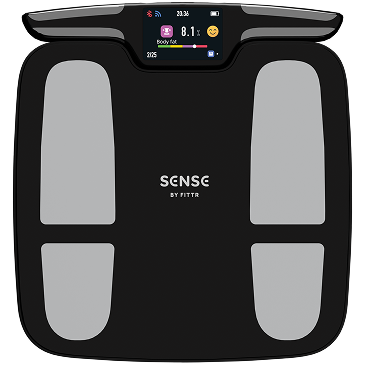
Steel cut oats can support both fat loss and lean gain – the outcome depends on your total intake. Weigh in weekly at the same time of day, and use a body composition scale like the SENSE Smart Scale Pro to see whether your weight change is coming from fat or muscle.
The Bottom Line
Steel cut oats are whole oat groats chopped into small pieces, giving a chewy, nutty bowl that digests a little more slowly than rolled or instant oats. Cook them in a 1:3 to 1:4 ratio for 20-30 minutes on the stove, use a pressure cooker for a hands-off version, or boil-and-soak overnight. Nutritionally they match rolled oats per gram; the edge is in texture, satiety and a slightly lower glycemic response.
Add a protein source to every bowl and pick the method that fits your mornings, and steel cut oats become one of the most dependable whole grains in your kitchen.
Frequently Asked Questions
How do you cook steel cut oats?
Simmer 1 part steel cut oats in 3-4 parts water or milk for 20-30 minutes, stirring occasionally. In a pressure cooker, cook with 3 parts water for 2-3 whistles and let the pressure release naturally.
Are steel cut oats healthier than rolled oats?
Per gram they have nearly the same calories, protein and fiber. Steel cut oats digest slightly more slowly and have a slightly lower glycemic index, but both are healthy whole grains.
How long do steel cut oats take to cook?
About 20-30 minutes on the stove, a few whistles in a pressure cooker, or around 5 minutes in the morning if you use the boil-and-soak overnight method.
Can I eat steel cut oats every day?
Yes. A daily 30-50 g serving fits most balanced diets. Keep added sugar low and include a protein source.
Are steel cut oats good for weight loss?
They can help because they are filling and digest slowly, but weight loss depends on your overall calorie intake. Keep portions to 30-40 g and add protein.
Do steel cut oats need to be soaked?
Soaking is not required, but a boil-and-soak overnight method shortens cooking time in the morning to a few minutes.
A Better Whole-Grain Bowl, Any Day
Steel cut oats, steel-cut oats, how to cook steel cut oats or steel cut oats vs rolled oats – however you search, the lesson is the same: a whole-grain base plus enough protein makes the best bowl.
On mornings when 25 minutes is too long, reach for No BS Protein Oats with 26-32 g of complete yeast protein per serving, or try the Kesar Kulfi flavour for a quick, high-protein breakfast.