



You have probably seen a BMI machine at a gym, pharmacy or clinic – step on, enter your height, and it tells you your Body Mass Index along with a category like normal or overweight. Many smart scales calculate BMI too. But what exactly is a BMI machine, how do you read the result, and how much should you trust it? This guide explains what a BMI machine is, how BMI is calculated and categorised, its real limitations, and why body composition often tells a more useful story about your health. Understanding BMI helps you use it sensibly – as a quick general guide, not the final word on your health.
What Is a BMI Machine?
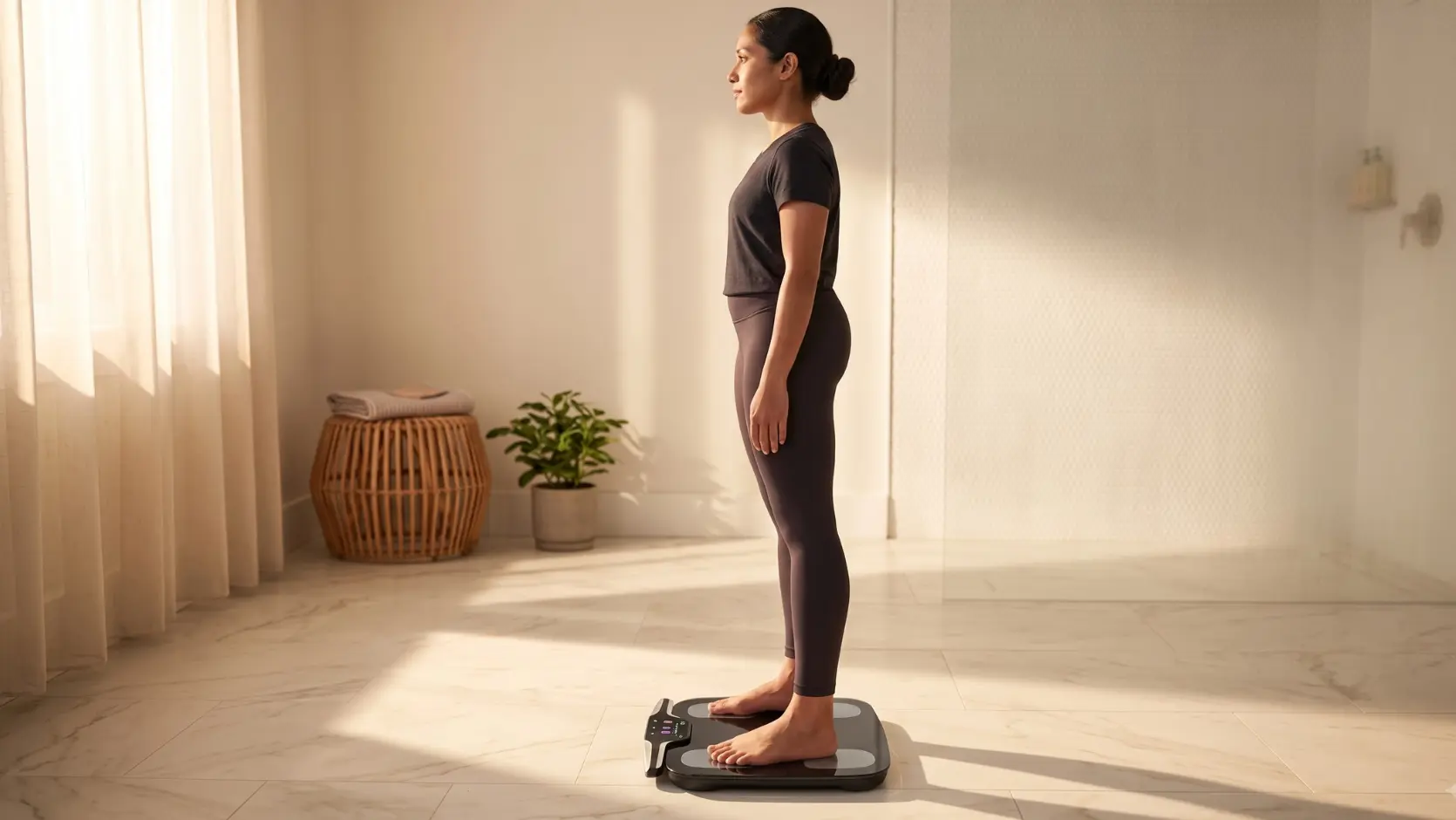
A BMI machine is a scale or device that calculates your Body Mass Index from your weight and height. Some are dedicated machines found in gyms and clinics; many modern smart scales also display BMI alongside your weight and body-composition estimates. The machine simply measures your weight and combines it with your height to produce the figure. BMI itself is not a measurement the machine takes directly – it is a calculation. That means any scale that knows your weight and height can show it, including a smart scale, which is why BMI appears so widely.
How Is BMI Calculated?
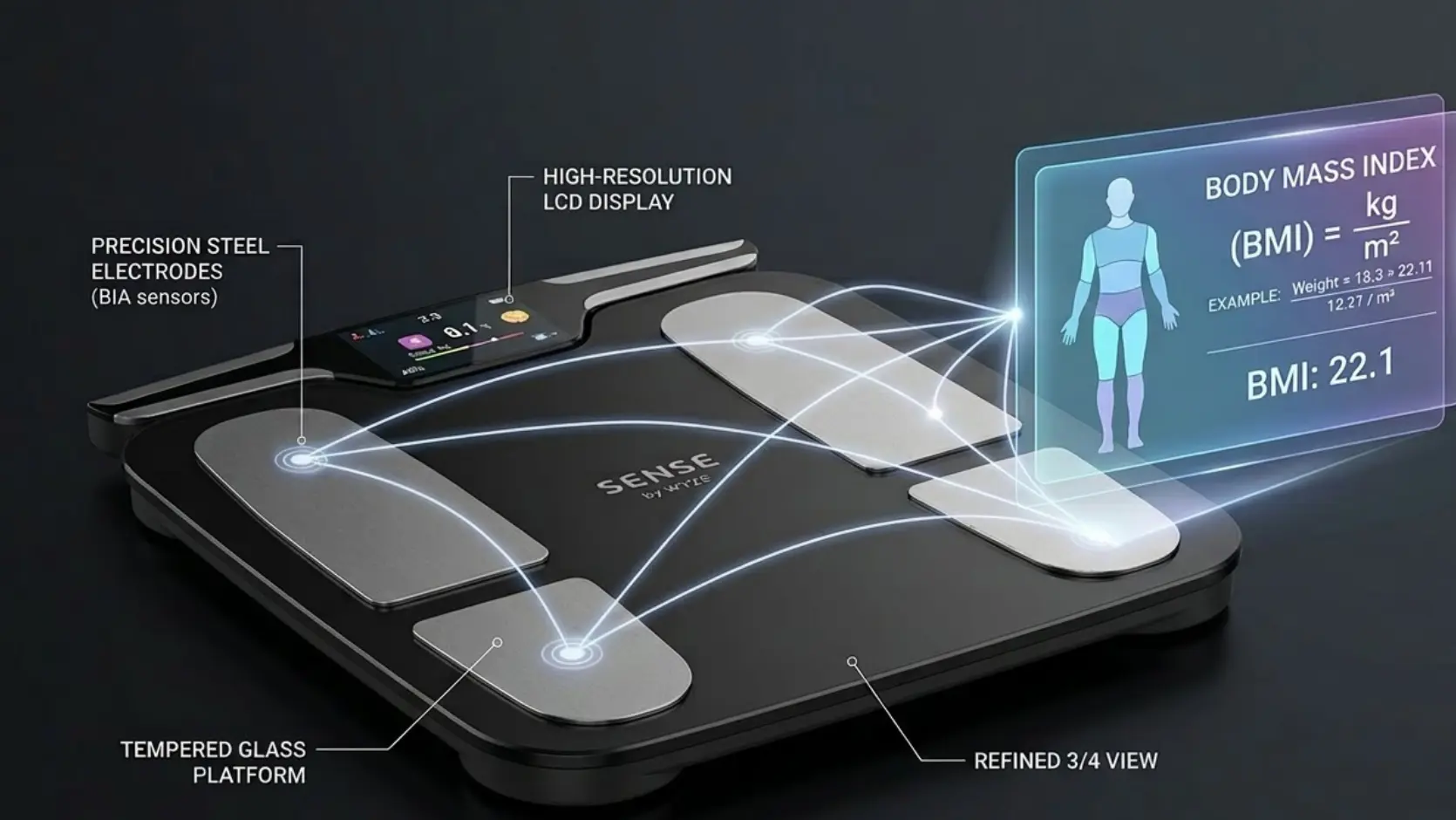
BMI is calculated by dividing your weight in kilograms by your height in metres squared. So someone weighing 70 kilograms and standing 1.75 metres tall has a BMI of about 22.9. The formula is the same worldwide, which is part of why BMI is so widely used as a quick screen. Because it relies only on height and weight, BMI is simple and cheap to calculate, requiring no special equipment beyond a scale and your height. That simplicity is its great strength as a population-level tool – and, as we will see, also the root of its limitations.
How to Read Your BMI
BMI results fall into standard categories that give a rough sense of where your weight sits relative to your height:
- Below 18.5: underweight, which may indicate too little body mass.
- 18.5 to 24.9: normal, generally a healthy weight range.
- 25.0 to 29.9: overweight, above the typical healthy range.
- 30.0 and above: obese, associated with higher health risks.
General categories; individual health depends on many factors beyond BMI.
What BMI Is Good For
BMI has real value as a quick, simple screening tool. For large populations and general guidance, it gives a useful first indication of whether someone’s weight may be too low, healthy, or high relative to their height. Doctors use it as a starting point, and it requires nothing more than a scale and your height. For an individual, BMI can be a helpful rough guide and a simple number to track over time. As long as you understand what it does and does not capture, it is a reasonable starting point for thinking about your weight in relation to your height.
The Limitations of BMI
BMI’s great weakness is that it cannot distinguish fat from muscle. Because it uses only weight and height, a muscular athlete and a person carrying excess fat can have the same BMI, even though their health and body composition are completely different. This is BMI’s most important limitation. It also takes no account of where fat is stored, age, sex or build, all of which affect health. This is why BMI can misclassify muscular, older or differently built people, and why it should be read as a rough screen rather than a precise verdict. Fittr’s difference between BMI and BMR explainer puts it in context.
Why Body Composition Tells a Better Story
Because BMI cannot see inside your body, body composition often tells a more useful story. Your body fat percentage and muscle mass reveal what BMI cannot – whether your weight is mostly fat or muscle, which matters enormously for health. A body fat percentage estimate adds the nuance BMI lacks. This is why smart scales that estimate body composition are so valuable: they give you BMI for a quick reference and body composition for the fuller picture. For anyone serious about their health, composition is the more meaningful metric to track over time.
How Smart Scales Handle BMI
Smart scales calculate BMI automatically from your measured weight and the height you enter once in the app. Alongside it, they estimate body fat, muscle and more using bioelectrical impedance, giving you both the simple BMI number and the richer body-composition data in one place. This combination is the best of both worlds. You get BMI as a familiar quick reference and body composition as the deeper insight, all tracked over time in an app. It lets you use BMI for what it is good at while not relying on it alone.
Using BMI Sensibly
The sensible way to use BMI is as one input among several, not the final word. Treat it as a quick general guide, track it over time, but pair it with body composition and how you look, feel and perform. If your BMI seems high but you are very muscular, for instance, the number is misleading you. Used this way, BMI is genuinely useful without being overweighted. It offers a simple, familiar reference point, while body composition and other markers fill in the detail it cannot capture.
Example: The FITTR Sense Smart Scale
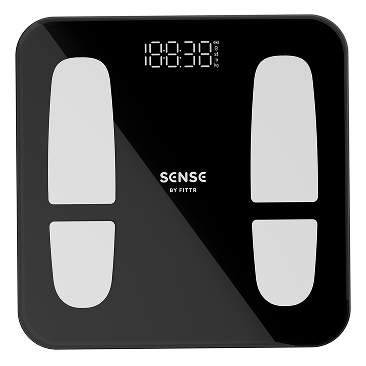
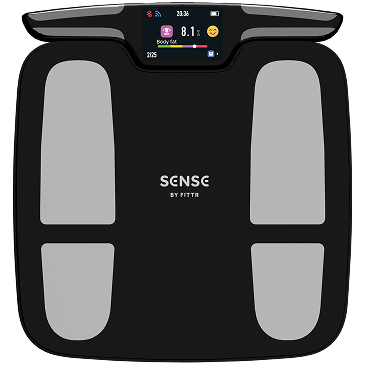
As an example, the FITTR Sense smart scale calculates your BMI from your weight and height while also estimating body fat, muscle and water, syncing it all to the FITTR app. That way you get the quick BMI reference and the fuller body-composition picture together, which is exactly how BMI is best used.
Where You Find BMI Machines
BMI machines appear in many everyday settings. Gyms use them to give members a quick health snapshot, pharmacies and clinics offer them as a simple screening tool, and many home smart scales calculate BMI automatically. Some standalone machines measure height and weight together to produce the figure on the spot. Wherever you encounter one, the underlying calculation is identical – weight divided by height squared. The convenience varies, but the number means the same thing, so the way you read and interpret it stays constant whether the machine is in a gym or your bathroom.
BMI for Children and Older Adults
BMI is interpreted differently for some groups. For children and teenagers, BMI is read against age and sex percentiles rather than the adult categories, because their bodies are still developing. For older adults, a slightly higher BMI is sometimes considered acceptable. This is another reason to treat BMI as a general guide rather than a fixed verdict. The standard adult categories do not fit everyone equally, and for children, older adults and athletes especially, BMI needs to be read with extra context or alongside other measures.
BMI vs Body Fat Percentage
The clearest way to see BMI’s limits is to compare it with body fat percentage. BMI uses only weight and height, so it cannot tell whether your mass is fat or muscle. Body fat percentage measures that directly, distinguishing a lean, muscular build from one carrying excess fat at the same BMI. For health and fitness, body fat percentage is usually the more meaningful number, while BMI serves as a quick, familiar reference. Using both gives you the simplicity of BMI and the accuracy of composition together.
BMI and Waist Measurement
Another useful companion to BMI is your waist measurement. Where fat is stored matters for health, and excess fat around the abdomen carries more risk than fat elsewhere. A simple waist measurement, or waist-to-height ratio, adds this dimension that BMI completely misses. Together, BMI and waist measurement give a fuller, still-simple picture than BMI alone. For anyone wanting more than BMI offers but without specialist equipment, adding a tape measure is a cheap and genuinely informative step.
Tracking BMI Over Time
Like weight, BMI is most useful tracked over time rather than read once. A BMI that drifts down as you lose fat, or holds steady as you maintain, tells a clearer story than a single snapshot. Smart scales make this easy by recording BMI alongside your weight and body composition automatically. Just remember that because BMI depends on weight, it shares weight’s limitation of not distinguishing fat from muscle. Tracking BMI alongside body composition gives you the trend plus the context, which is far more informative than watching BMI in isolation.
Common BMI Myths
A few misconceptions are worth clearing up:
- BMI does not measure body fat directly – it is calculated from weight and height.
- A normal BMI does not guarantee good health or body composition.
- A high BMI can reflect muscle, not just fat, in athletic people.
- BMI categories are general and do not fit everyone equally.
- Body composition, not BMI, tells you what your weight is made of.
Should You Worry About Your BMI?
If your BMI falls outside the normal range, it is worth attention but not panic. BMI is a screening tool, not a diagnosis, so a number in the overweight or underweight range is a prompt to look closer, ideally with body composition and, where appropriate, a doctor’s input. It flags a question rather than delivering a final answer. Equally, a normal BMI is reassuring but not a guarantee of health, since it cannot see your body composition or fat distribution. The sensible response to any BMI result is to read it alongside your body fat, waist measurement and how you feel, rather than treating the single number as the whole story.
Frequently Asked Questions
What is a BMI machine?
A BMI machine is a scale or device that calculates your Body Mass Index from your weight and height, often shown alongside your weight.
How do I read BMI?
BMI is your weight in kilograms divided by your height in metres squared, with categories for underweight, normal, overweight and obese.
Is BMI accurate?
BMI is a useful general screen but does not distinguish fat from muscle, so it can misjudge muscular or older individuals.
What is better than BMI?
Body composition, especially body fat percentage, gives a fuller, more accurate picture of your health than BMI alone.
Can a smart scale calculate BMI?
Yes. A smart scale calculates BMI from your measured weight and the height you enter, alongside body-composition estimates.
Health Is More Than a BMI Reading.
A BMI machine, bmi test machine, or bmi check machine offers a quick, simple read on your weight relative to your height – useful as a general guide, but limited because it cannot tell fat from muscle. Read your BMI sensibly, track it over time, and pair it with body composition for the fuller story. A smart scale like the FITTR Sense gives you both, so you can use BMI for what it is worth while relying on body composition for real insight.