





The words weighing balance and weighing scale are often used as if they mean the same thing, and in casual conversation that is harmless enough. But they are not identical, and if you have ever wondered whether you need a balance or a scale, the distinction is worth understanding – especially when buying for the right purpose. This guide explains the difference between a weighing balance and a weighing scale, how each works, where each is used, and which one you actually need for measuring body weight at home. The short version: a balance is for precise mass, a scale is for everyday weight – and for your body at home, a scale is what you want.
What Is the Difference?
At its core, the difference is precision and purpose. A weighing balance measures mass with high accuracy, traditionally by comparing an unknown mass against known reference weights, and is used where exactness is critical. A weighing scale measures weight, usually via a spring or electronic sensors, and is built for everyday and body-weight use where convenience matters more than laboratory precision. In practice, you will find balances in laboratories, jewellery shops and commercial settings, and scales in homes, bathrooms and gyms. For tracking your body weight, the scale – particularly a smart body scale – is the relevant tool, while a balance would be overkill.
What Is a Weighing Balance?
A weighing balance is a precision instrument designed to measure mass very accurately. Classic mechanical balances work by comparing the item against known weights until equilibrium is reached, while modern electronic balances use fine sensors to display mass to a high number of decimal places. The defining feature is exactness. Because of this precision, balances are used where small differences matter – weighing chemicals in a lab, precious metals in jewellery, or ingredients in pharmaceuticals. A digital weighing balance brings electronic convenience to this precision, but it remains a specialist tool rather than a household one.
What Is a Weighing Scale?
A weighing scale measures weight for everyday purposes. Bathroom scales, kitchen scales and gym scales are all weighing scales, designed for practical, repeatable measurement rather than laboratory-grade precision. They use a spring mechanism or, more commonly today, electronic load sensors to give a quick, clear reading. For body weight, a scale is exactly right. It is accurate and consistent enough to track your weight reliably over time, and smart versions add body composition and app tracking. You do not need the extreme precision of a balance to follow your health.
How a Balance Works
A traditional balance works on the principle of comparison. The unknown mass is placed on one side and known weights on the other until the two sides balance, directly comparing masses. Because it compares against references, a balance is unaffected by small changes in gravity and can be extremely accurate. Modern electronic balances replace the comparison mechanism with sensitive internal sensors and electromagnetic force compensation, displaying mass precisely on a digital screen. Either way, the goal is the same: exact mass measurement, often to fractions of a gram, for applications where that precision is essential.
How a Scale Works
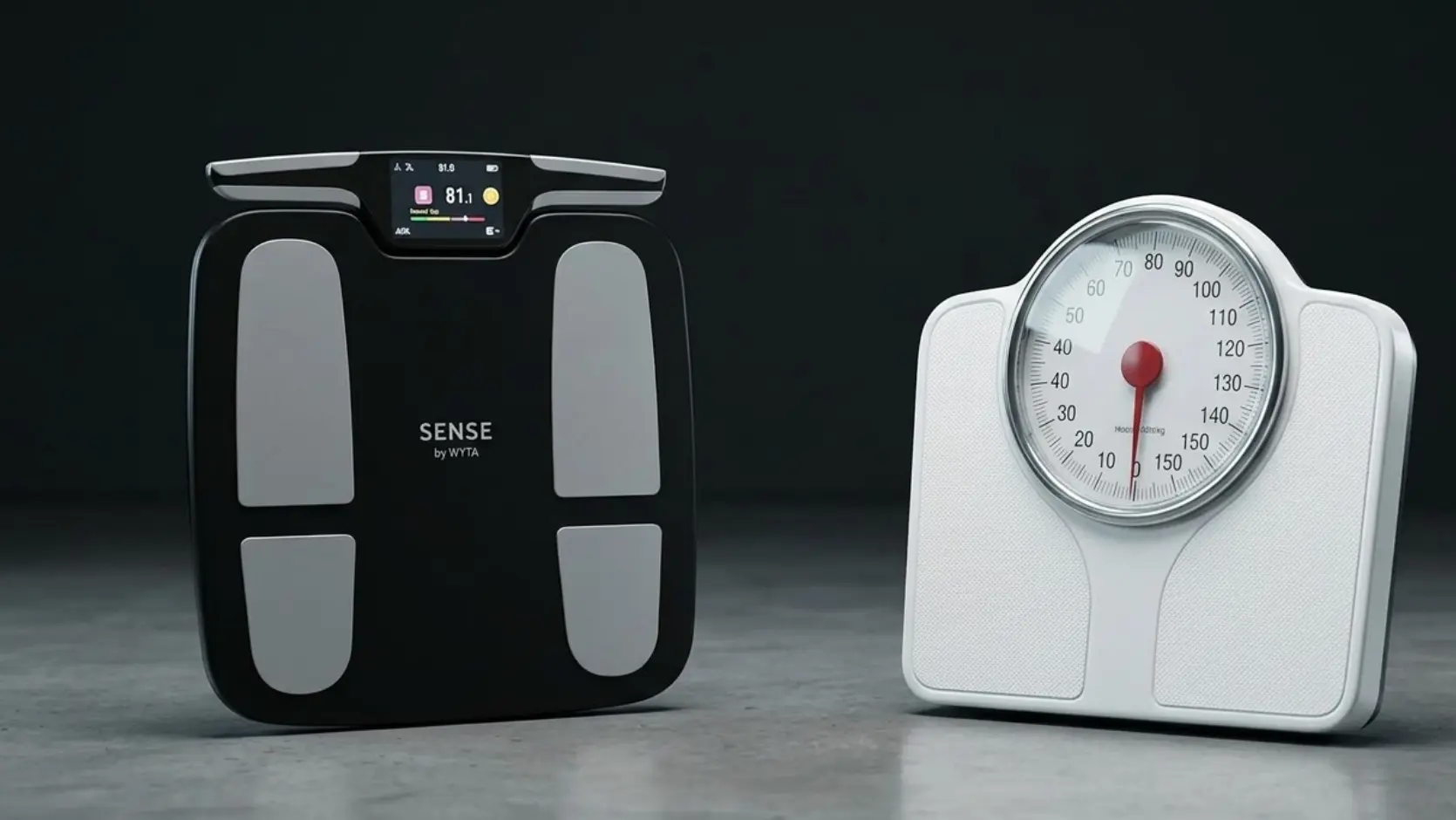
A weighing scale measures the force your weight exerts. Analog scales use a spring that compresses under load and moves a dial, while digital scales use load cells – sensors whose electrical resistance changes under pressure – to produce a precise reading on a display. Smart scales add bioelectrical impedance to estimate body composition. This approach prioritises convenience and repeatability over absolute precision, which is exactly what body-weight tracking needs.
Balance vs Scale at a Glance
- Measures: a balance measures mass very precisely; a scale measures weight practically.
- Precision: a balance offers very high precision, down to fractions of a gram; a scale offers good, consistent precision.
- Typical use: balances suit labs, jewellery and commerce; scales suit home, body, kitchen and gym use.
- Body weight: a balance is overkill; a scale is ideal.
- Body composition: not possible on a balance; possible on smart scales.
A general comparison; specific devices vary.
Do You Need a Weighing Balance at Home?
For almost everyone, the answer is no. A weighing balance is a specialist instrument for precise mass measurement, which household life rarely requires. Tracking your body weight, weighing food for cooking, or checking a parcel are all jobs for a scale, not a balance. The only time you might want balance-level precision at home is for a specific hobby or task requiring exact mass, such as some forms of cooking, reloading or crafts. For body weight and general use, a good scale is not only sufficient but the more practical choice.
Digital Weighing Balances Explained
A digital weighing balance is an electronic balance offering precise mass readings on a digital display, combining the accuracy of a balance with the convenience of digital electronics. They are common in laboratories, jewellery shops and commercial settings where exactness and speed both matter. While the term electronic weighing balance sometimes appears in consumer listings, true balances are specialist tools. For body weight, what you actually want is a digital or smart body scale, which uses similar electronic sensing but is designed and priced for personal health rather than laboratory precision.
Which Should You Choose for Body Weight?
For body weight, the choice is clear: a weighing scale, ideally a smart digital one. It is accurate and consistent enough to track your weight and, in smart form, your body composition, at a price and convenience suited to home use. A balance would be unnecessarily precise, costly and impractical for the job. So if you have been wondering whether to buy a balance or a scale for tracking your weight, set the balance aside. A quality body scale is the right, practical tool for the human body.
Example: The FITTR Sense Smart Scale
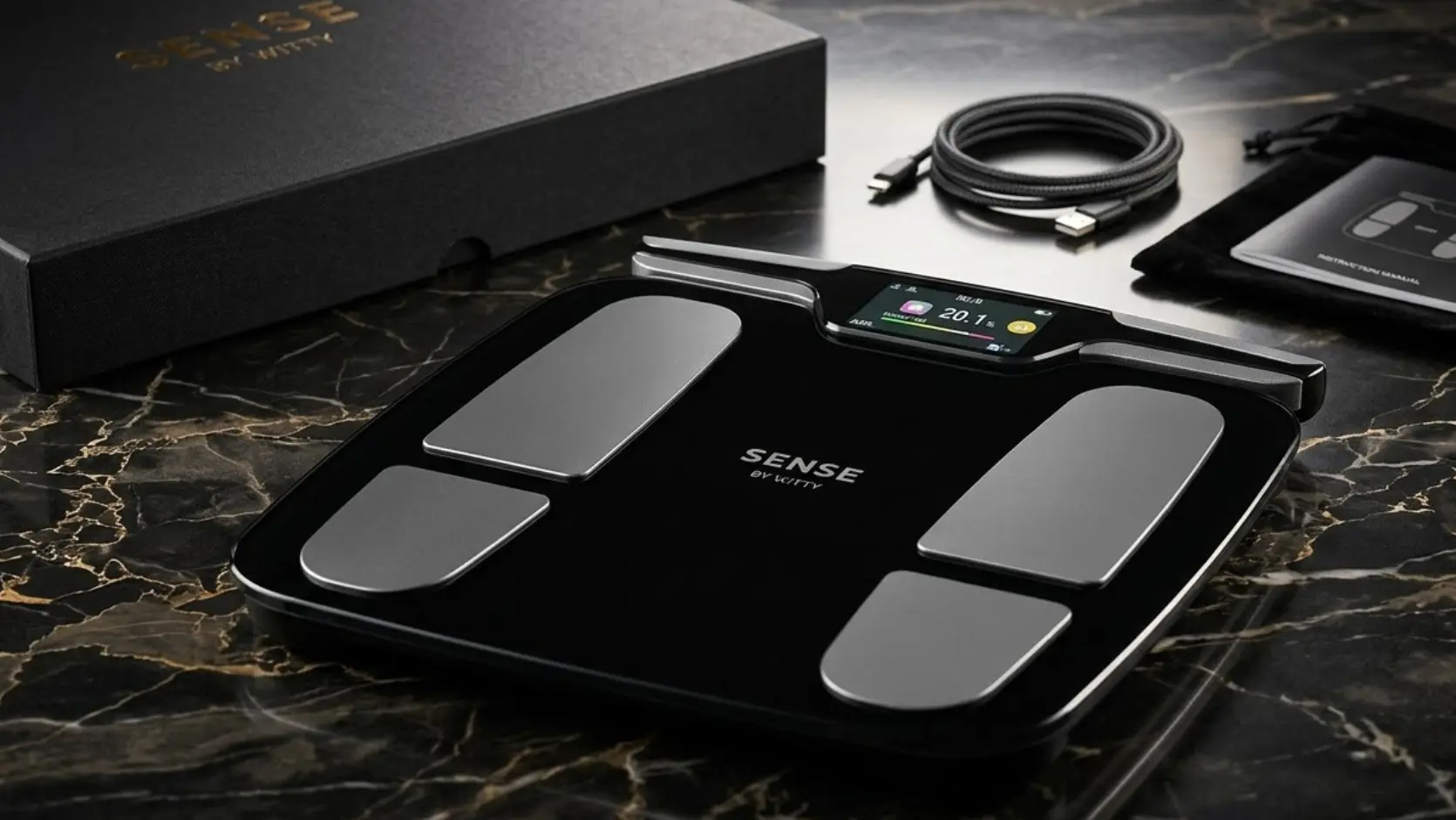
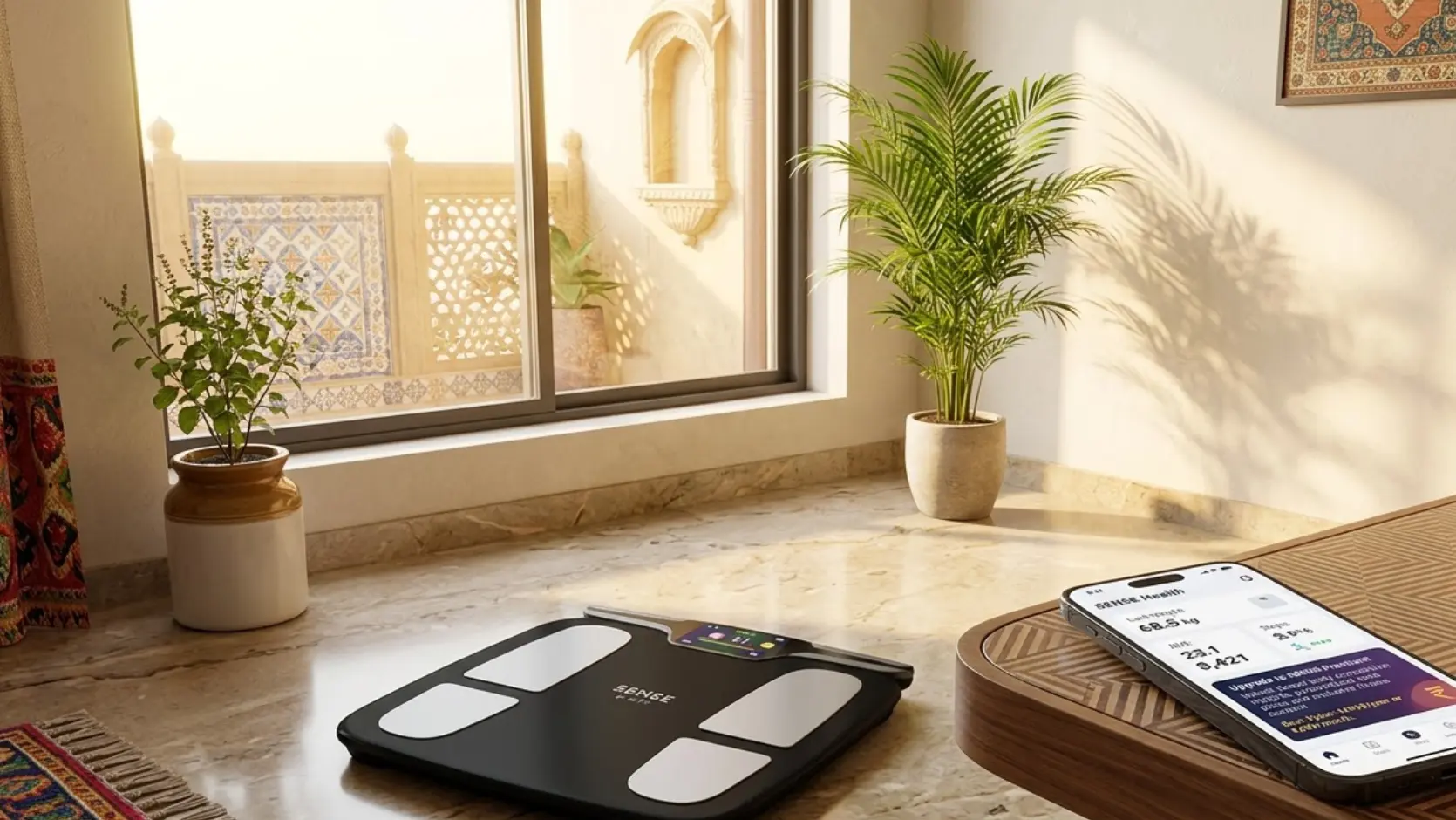
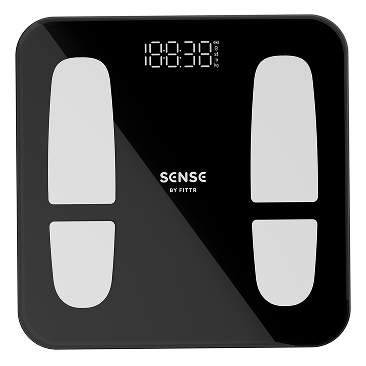
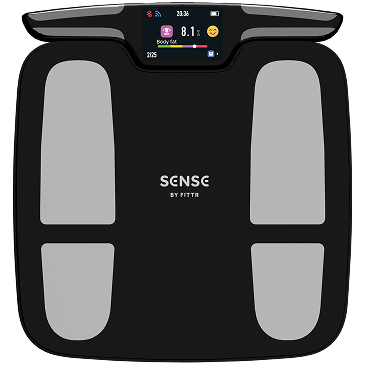
As an example of the right tool for body weight, the FITTR Sense smart scale is a smart weighing scale that measures weight and estimates body composition, syncing to the FITTR app for trend tracking. It delivers exactly the accuracy and insight body-weight tracking needs, without the unnecessary precision and cost of a laboratory balance.
Where the Confusion Comes From
Much of the confusion between balance and scale comes from everyday language, where the words are used interchangeably. Adding to it, the term electronic weighing balance appears on some consumer listings for what are really digital scales, blurring the line further. Technically, though, a balance measures mass by comparison or fine sensing, while a scale measures weight, usually via a spring or load cells. For practical purposes, you do not need to fuss over the terminology. What matters is choosing the right tool for the job: precise mass measurement calls for a balance, while everyday and body-weight measurement calls for a scale.
Accuracy: How Much Do You Really Need?
The real question is how much precision your task demands. A laboratory weighing chemicals needs accuracy to fractions of a gram, which only a balance provides. Tracking your body weight needs consistency within a sensible margin, which a good scale delivers easily. Chasing balance-level precision for body weight is pointless, since your weight naturally swings by a kilogram or more through the day. A scale’s consistency is far more useful here than a balance’s exactness.
Cost Differences
Balances and scales also differ in cost, reflecting their purpose. Precision balances, built for laboratory-grade accuracy, are typically far more expensive than body scales. A quality smart body scale costs a fraction of a professional balance while doing exactly what home health tracking requires. So for body weight, a scale is not only the more appropriate tool but the more economical one. Spending on a balance you do not need is wasted money, while a well-chosen scale gives you everything your goal requires at a sensible price.
Smart Scales: A Scale That Does More
Modern smart scales blur the old idea that a scale only shows weight. While they are firmly scales rather than balances, they add body-composition estimates and app tracking, doing far more than a simple weight reading. This makes them ideal for health, combining a scale’s convenience with insight a basic balance or scale never offered. For body weight, then, the most capable choice is not a balance at all, but a smart scale that measures weight and estimates what your body is made of.
Common Misconceptions
A few myths are worth clearing up:
- A balance is not better for body weight – it is overkill.
- A scale is not inaccurate – it is accurate and consistent enough for tracking.
- Electronic weighing balance often just means a digital scale in listings.
- You do not need lab precision to track your weight effectively.
- Smart scales are scales, not balances, but they do far more than weigh.
The Bottom Line
The difference between a balance and a scale is precision and purpose: a balance for exact mass in specialist settings, a scale for practical weight in homes, gyms and on the body. For tracking your weight, the answer is always a scale, ideally a smart one. Save the balance for the lab, and choose a good body scale for the job it is genuinely made for.
Choosing With Confidence
Once you understand the distinction, choosing becomes easy and you can buy with confidence. For body weight, ignore balances entirely and focus on picking a good scale – ideally a smart digital one – judged on accuracy, body composition and app quality. The reassuring takeaway is that the right answer for the human body is simple and affordable: a quality body scale, not a precision balance.
Frequently Asked Questions
What is the difference between a weighing balance and a weighing scale?
A weighing balance measures mass with high precision, often in labs and commercial use; a weighing scale measures weight for everyday and body use.
What is a weighing balance?
A weighing balance is a precision instrument that measures mass accurately, used in laboratories, jewellery and commercial settings.
Do I need a weighing balance at home?
No. For body weight at home, a body scale is the practical equivalent; a balance is for precise mass measurement.
Is a weighing balance more accurate than a scale?
Balances are more precise for mass, but a quality body scale is accurate and consistent enough for tracking your weight.
What is a digital weighing balance?
It is an electronic balance with a precise digital readout, used where exact mass measurement is needed, such as labs and commerce.
Know the Difference, Measure with Confidence.
A weighing balance, digital, or electronic weighing balance solves different problems from a weighing scale: the balance for precise mass in labs and commerce, the scale for practical weight in homes, gyms and on the body. For tracking your body weight, you want a scale – ideally a smart digital one – not a balance. A good body scale like the FITTR Sense gives you all the accuracy your health needs, with the convenience a balance never could.