




How accurate are digital weighing scales, really? It is the question behind every purchase, because a scale you cannot trust is worse than no scale at all. The good news is that quality digital scales are highly accurate and, crucially, consistent – but understanding what that means, and which features actually matter, helps you choose and use one wisely. This guide explains how accurate digital weighing scales are, what determines that accuracy, and which features genuinely add value – from body composition to app tracking – so you can judge a scale on what counts. By the end, you will know how to spot an accurate, well-featured digital scale and how to get reliable readings from it.
How Accurate Are Digital Weighing Scales?
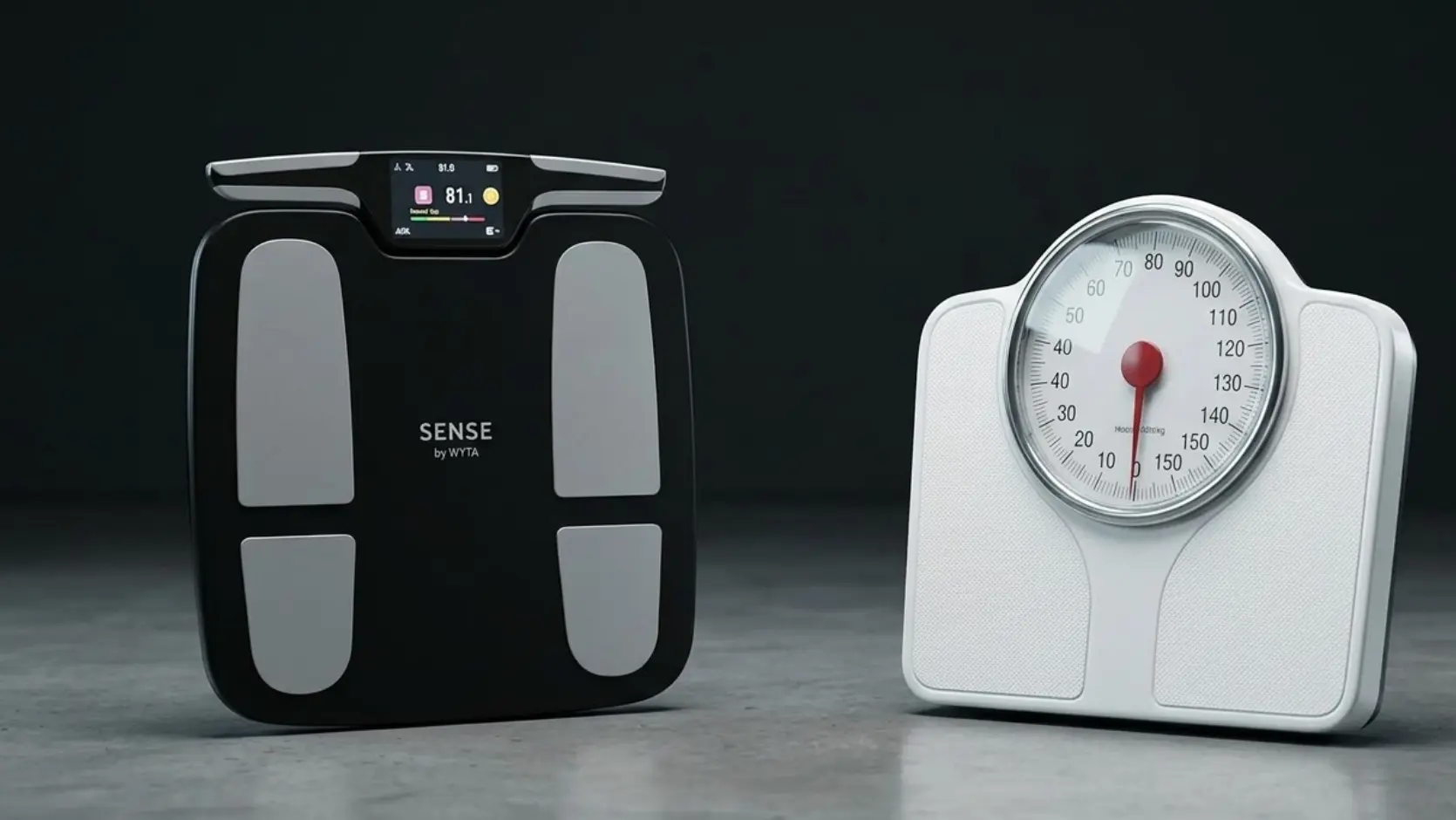
Quality digital weighing scales are accurate, typically measuring your weight to within a small, consistent margin. More importantly, they are consistent, giving the same reading under the same conditions, which is exactly what tracking your weight over time requires. This consistency is the quality that truly matters for health. Digital scales are also more accurate than analog ones, whose spring mechanisms are less precise and can drift over time. For practical purposes, a good digital scale is more than accurate enough to track your progress reliably.
Accuracy vs Consistency
It helps to separate two ideas. Accuracy is how close the reading is to your true weight; consistency is how reliably the scale gives the same reading under the same conditions. For tracking your health, consistency matters more, because it lets you trust the trend even if the absolute figure is slightly off. A scale that reads a few hundred grams differently from the doctor’s but always gives you the same number each morning is perfectly useful, because you are tracking change, not an absolute. Prioritising consistency over perfect calibration is the key insight for getting value from a digital scale.
What Makes a Digital Scale Accurate?
Several things determine a digital scale‘s accuracy. The quality of its load sensors is foundational – better sensors give more precise, stable readings. Good calibration ensures those readings are correct, and a sturdy, stable platform keeps them consistent. Build quality underpins all of this. How you use the scale matters too. Even an excellent scale gives poor readings on carpet, on an uneven floor, or with a low battery. Accuracy is a partnership between a well-made scale and good weighing habits, both of which are needed for readings you can trust.
Getting Accurate Readings
To get the most accurate readings, place the scale on a hard, flat, level surface, weigh at the same time of day under similar conditions, and stand still and balanced. Replace the battery before it fades, since a low battery can affect accuracy. These habits remove the noise that makes a scale seem inaccurate when the real issue is inconsistent use. Weigh the same way every time, and even an affordable digital scale will give you reliable, trackable numbers.
Key Features Worth Having
Beyond accuracy, certain features add genuine value to a digital scale:
- Body composition – fat, muscle and water estimates for a fuller picture.
- App syncing – to record readings and chart your trends.
- Multi-user support – separate histories for each family member.
- High capacity – suitable for everyone who will use it.
- Clear display – easy to read, ideally backlit.
Body Composition Features
The standout feature of advanced digital scales is body composition. Using bioelectrical impedance, a smart scale estimates your body fat, muscle and water alongside your weight, revealing what weight alone cannot. For fitness goals, this is the feature that turns a scale into a genuine health tool. Read these estimates as trends rather than exact figures, since they are less precise than weight and affected by hydration. Under consistent conditions, though, the direction of your body composition over time is reliable and far more informative than the scale number alone.
App and Tracking Features
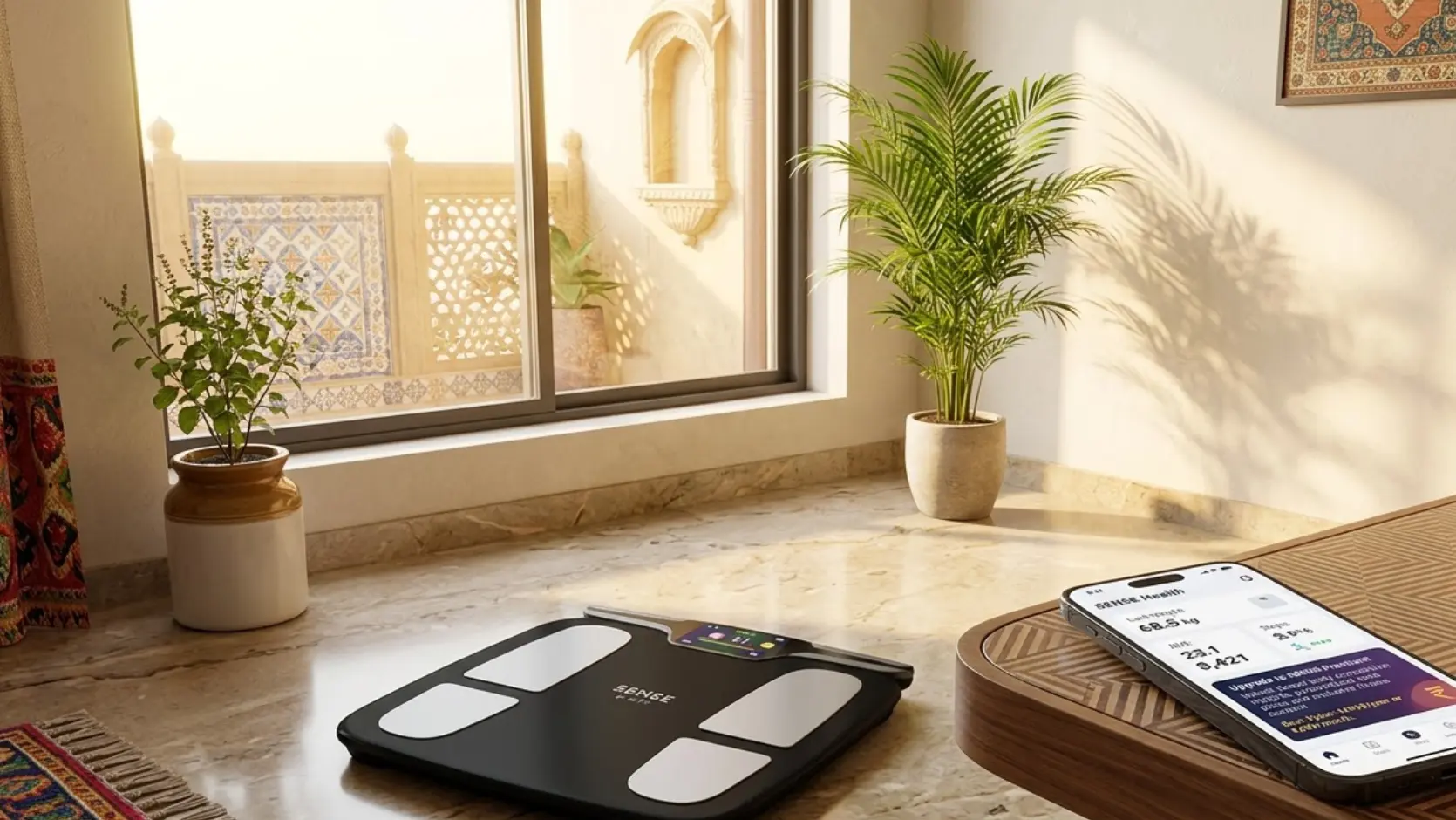
For smart digital scales, the app is where much of the value lives. It stores every reading, charts your weight and body-composition trends, and turns isolated numbers into a clear picture of your progress. A good app makes the scale genuinely useful; a poor one wastes good hardware. When judging a digital scale’s features, look closely at the app’s quality and reviews. Does it present trends clearly, track the metrics you care about, and stay reliable? Often the app matters more than small differences in the scale’s hardware.
Features You Can Skip
Not every feature is worth paying for. Some scales tout extras that sound impressive but add little real value for most users, and a touchscreen, while pleasant, does not make a scale more accurate. Focus your money on accuracy, body composition and a good app rather than novelty features. The goal is to pay for capability that serves your actual goals, not a long spec sheet. A scale that does the core things excellently is better value than one crammed with features you will never use or that do not improve the measurement.
Electronic Measuring Scales in Context
The term electronic measuring scale simply describes a digital scale that uses electronic sensors to measure weight, as opposed to a mechanical analog one. All the accuracy and feature considerations in this guide apply to them. For body weight, what you want is a quality digital or smart electronic scale, chosen on accuracy and the features that match your goals. Whatever the listing calls it, the principles are the same: prioritise consistent accuracy and useful features, and judge the scale on how reliably it serves your health rather than on its label.
Example: The FITTR Sense Smart Scale
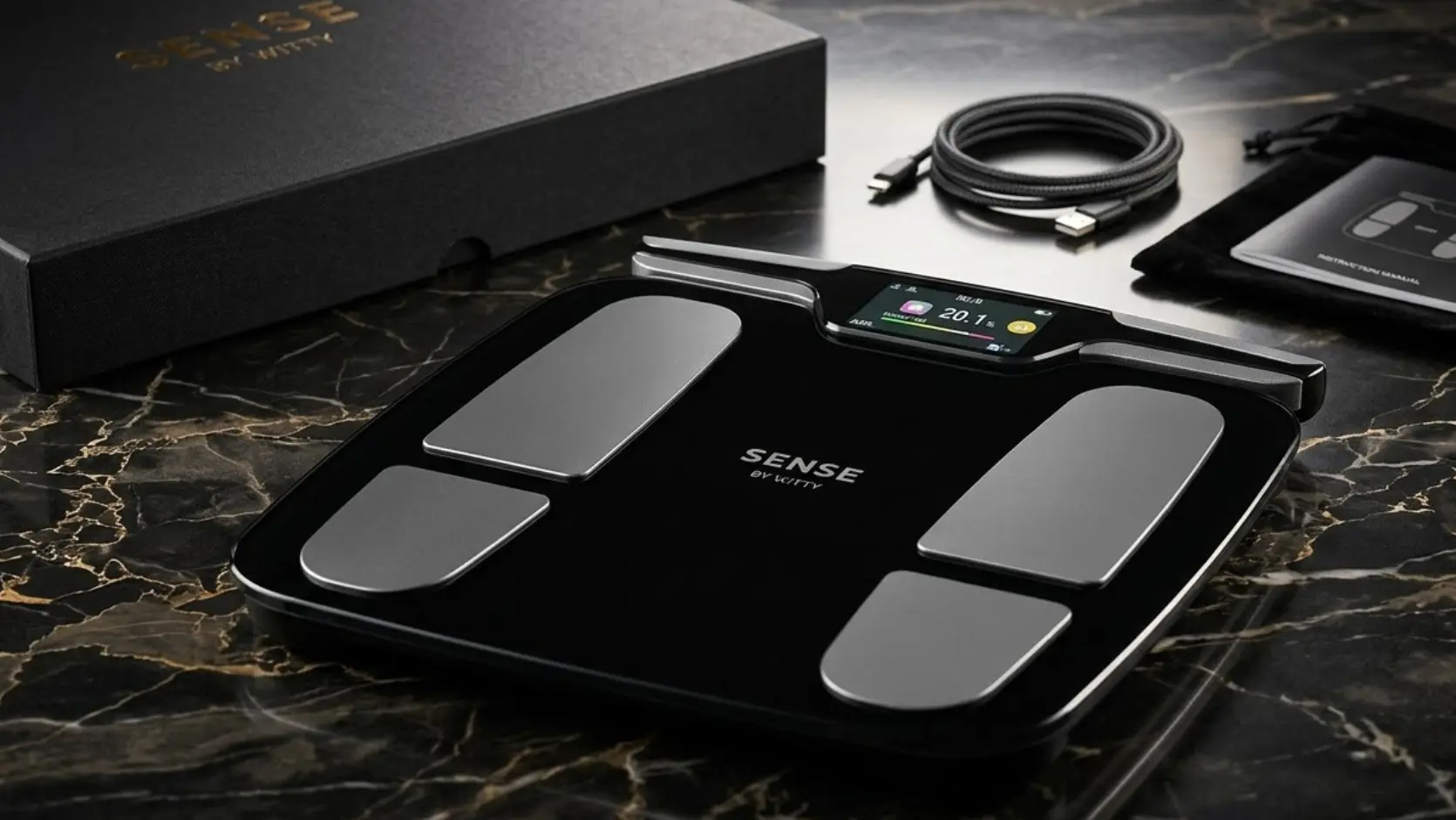
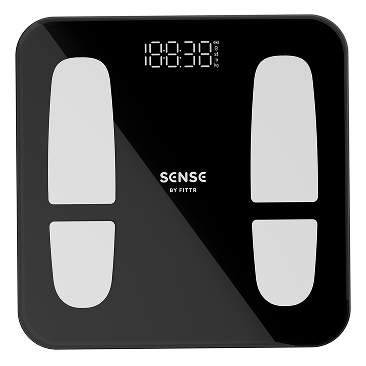
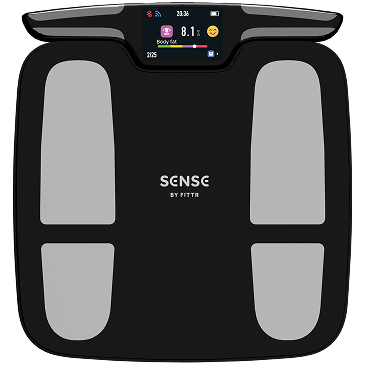
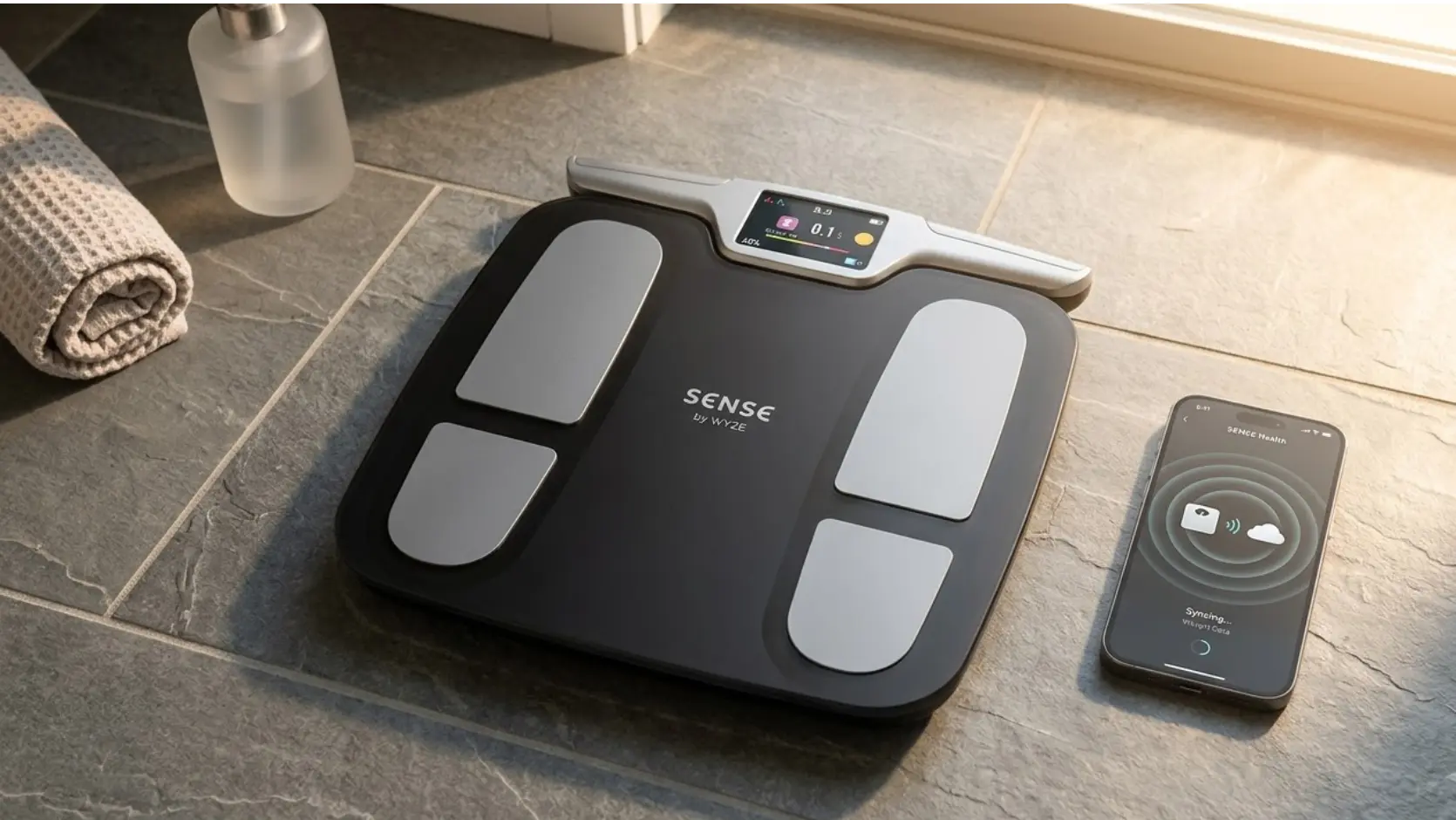
As an example of an accurate, well-featured digital scale, the FITTR Sense smart scale combines consistent weight measurement with body-composition estimates and app-based trend tracking. It focuses on the things that genuinely matter – reliable accuracy and useful features – which is exactly what to look for in a digital weighing scale.
Why Scales Disagree With Each Other
It is common to notice that two scales give slightly different readings, which can be unsettling but is usually normal. Scales can be calibrated a little differently, and you are often weighed at different times, in different clothing, on different surfaces, all of which shift the number. None of this means either scale is faulty. What matters is not that two scales agree, but that each is consistent with itself. As long as your own scale gives the same reading under the same conditions, it tracks your trend reliably. Treat each scale as its own reference rather than expecting them to match to the gram.
Calibration Explained
Calibration is the process of ensuring a scale reads correctly against a known weight. Quality digital scales arrive well calibrated and hold it for years, and many self-calibrate when you set them up or move them. Calibration affects absolute accuracy – how close the reading is to your true weight. For tracking, though, perfect calibration matters less than consistency, since you are following change rather than an absolute figure. A scale that is very slightly off but always consistent still reveals your trend faithfully, which is what counts for monitoring your health over time.
Body Composition Accuracy
Body-composition estimates are less precise than weight, because bioelectrical impedance infers fat and muscle from your body’s response to a current, which hydration and timing affect. The figures can differ from a clinical test and should be read as trends. Used under consistent conditions, though, body-composition readings reliably show the direction of your fat and muscle over weeks. That trend is accurate enough to guide your training and nutrition, even if any single absolute number is approximate.
Features for Different Users
Which features matter depends on who you are. A casual user wants accuracy and an easy display; a fitness enthusiast wants body composition and app trends; a family wants multi-user support and high capacity. Matching features to your needs ensures you value the scale you buy. There is little point paying for features you will not use, just as there is little point saving money on a scale that lacks what your goals require. The right feature set is the one that fits how you and your household will actually use the scale.
Maintaining Accuracy Over Time
A scale stays accurate longer with a little care. Keep it on a hard, flat surface, wipe it clean, replace the battery before it fades, and avoid dropping or overloading it. Store it flat rather than propped against a wall, which can stress the sensors. If your scale ever seems off, check the surface and battery before doubting it. With basic care, a quality digital scale holds its accuracy for years, giving you reliable readings throughout its life.
Common Accuracy Myths
A few myths are worth dispelling:
- A more expensive scale is not always more accurate for your needs.
- A touchscreen does not improve accuracy over buttons.
- Daily weight swings are normal, not a sign of an inaccurate scale.
- Body-composition numbers are estimates, best read as trends.
- Two scales disagreeing usually reflects calibration and conditions, not a fault.
Putting Accuracy in Perspective
It helps to keep accuracy in perspective. For tracking your health, you do not need laboratory precision; you need a scale that is consistent enough to reveal your trend over time. A good digital scale comfortably clears that bar, and pairing it with tools like Fittr’s BMR calculator turns its readings into a plan. Obsessing over the last gram of accuracy misses the point of what a home scale is for.
Frequently Asked Questions
How accurate are digital weighing scales?
Quality digital weighing scales are accurate and, crucially, consistent, which is what matters for tracking your weight trend over time.
What features should a digital weighing scale have?
Accuracy, a clear display, suitable weight capacity, and ideally body composition and app tracking for health goals.
Are digital scales more accurate than analog?
Usually yes. Digital load sensors give more precise and consistent readings than an analog spring mechanism.
What makes a digital scale accurate?
Quality load sensors, good calibration and consistent use on a hard, flat surface.
Do digital weighing scales measure body fat?
Smart digital scales do, using bioelectrical impedance; basic digital scales show weight only.
Better Choices Lead to Better Tracking.
A digital weighing scale, digital weight scale, or electronic measuring scale is accurate and, above all, consistent, which is exactly what tracking your health needs. Judge a scale on consistent accuracy and the features that matter – body composition, a good app, suitable capacity – rather than novelty extras, and use it correctly for reliable readings. A well-featured, accurate option like the FITTR Sense shows what to look for in a digital scale you can genuinely trust.