








Most people have heard that fiber is good for you. It helps with digestion, prevents constipation, keeps you full. That is usually where the conversation ends. Fiber gets treated as a minor dietary footnote, something you think about briefly when you eat a salad and then forget about entirely. But a 2025 study covering more than 17 million people just made it very difficult to keep treating fiber that way. The data shows that consistently eating enough fiber is one of the most powerful things you can do to reduce your risk of dying from the diseases most likely to kill you. Not marginally. Meaningfully. And most people are nowhere near the amount their body actually needs.
This article starts from the beginning. What fiber actually is, what it does inside your body, why different types matter, where to find the most of it, and what the largest evidence review ever conducted on the topic found when it looked at 17 million people across 38 different health outcomes.
What Is Fiber, Really?
Fiber is a type of carbohydrate found in plant foods. Unlike the carbohydrates in rice, bread, or sugar, your body cannot break fiber down and absorb it as glucose. It passes through your stomach and small intestine largely intact and reaches your large intestine where the real action happens. This inability to digest fiber is not a limitation. It is exactly what makes it so valuable. Because fiber is not broken down and absorbed like other carbohydrates, it slows digestion, feeds your gut bacteria, scrubs your intestinal walls, and interacts with your body’s chemistry in ways that produce measurable health benefits across nearly every major organ system.
Fiber is only found in plant foods. Meat, fish, eggs, and dairy contain zero fiber. This is important to understand because it means your fiber intake is entirely determined by how much plant food you eat on a regular basis, vegetables, fruits, legumes, whole grains, nuts, and seeds. If those foods are not regularly on your plate, your fiber intake is almost certainly low regardless of how healthy the rest of your diet appears to be.
The Two Main Types of Fiber and What Each One Does
Not all fiber behaves the same way in the body. There are two main types and understanding both helps explain why fiber has such a wide range of health effects.
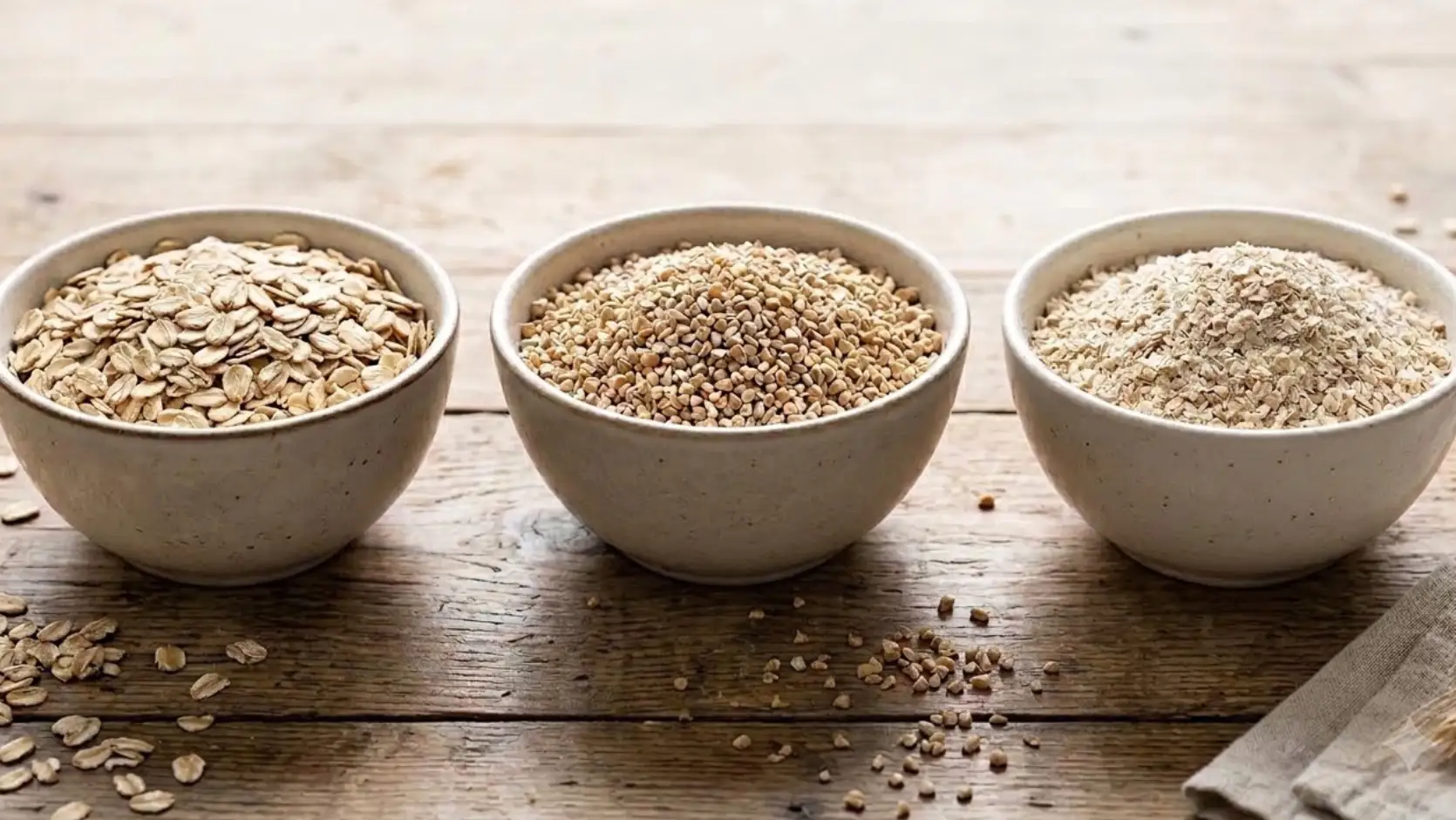
Soluble fiber dissolves in water and forms a thick gel inside your digestive tract. Picture it like a slow-moving sponge that coats the inside of your gut. This gel slows down how quickly food leaves your stomach, which flattens blood sugar spikes after meals and keeps you feeling full for longer. As it travels through the intestine, it physically binds to cholesterol-containing compounds called bile acids and drags them out of your body through your stool rather than letting them be reabsorbed. Your liver then has to pull more cholesterol out of your blood to replace them, which is why regularly eating soluble fiber lowers LDL cholesterol over time. When soluble fiber reaches the large intestine, your gut bacteria ferment it and produce compounds that reduce inflammation, strengthen your gut lining, and interact with your immune system in ways that appear to reduce disease risk at multiple sites in the body. The best food sources of soluble fiber are oats, barley, apples, pears, legumes like rajma and chana, flaxseeds, and psyllium.
Insoluble fiber does not dissolve in water and passes through your digestive system largely unchanged. Its job is more mechanical. It adds bulk to stool, pushes waste through the colon faster, and reduces the time that potentially harmful compounds spend pressed against the intestinal wall. This is the primary reason adequate fiber intake reduces the risk of diverticular disease, where pouches form in the colon wall due to chronic pressure, and appears to reduce colorectal cancer risk over time. The best sources of insoluble fiber are whole wheat products, wheat bran, vegetable and fruit skins, nuts, and seeds.
Most whole plant foods contain both types in varying proportions, which is one of the main reasons getting fiber from actual food rather than an isolated supplement produces broader and more consistent health benefits. The two types working together across the full food matrix is what the research is built on.
There is also a third category worth knowing about called resistant starch. It is technically a starch rather than a fiber but behaves like one because it resists digestion in the small intestine and reaches the large intestine intact where gut bacteria ferment it. Cooked and cooled rice and potatoes, unripe bananas, and legumes are all good sources. This is one reason why traditional meals built around dal, rice, sabzi, and roti support gut health as well as they do when eaten consistently.
What Fiber Does Inside Your Body: The Full Picture
Once you understand the two types, the range of health effects fiber produces starts to make complete sense because multiple biological pathways are being activated simultaneously.
Blood sugar management happens because soluble fiber slows glucose absorption from food, preventing the sharp spikes and crashes that chronically stress the pancreas and drive insulin resistance over time. Cholesterol reduction happens through the bile acid binding mechanism described above, directly lowering LDL without any medication. Gut bacteria get fed, producing short chain fatty acids that reduce systemic inflammation throughout the body, not just in the gut. The physical bulk of insoluble fiber protects the colon wall by reducing contact time with harmful compounds and maintaining healthy bowel pressure. The combination of slower digestion and bacterial fermentation creates an intestinal environment that is measurably less hospitable to cancer development and chronic disease progression.
When you understand all of this happening at once from a consistent dietary habit, the breadth of health outcomes linked to fiber in the research stops being surprising. It becomes the expected result of a nutrient doing multiple important jobs well.
What the Largest Fiber Research Review Ever Found
A 2025 umbrella review published in Clinical Nutrition by Nicola Veronese and colleagues brought together 33 separate meta-analyses examining 38 different health outcomes across more than 17 million people. An umbrella review sits at the very top of the evidence hierarchy because it does not just look at individual studies or even individual meta-analyses. It evaluates the quality of the entire body of evidence on a topic simultaneously and grades each finding based on how consistent, unbiased, and statistically robust it is. Seventy-six percent of the 38 outcomes examined showed a statistically significant lower disease risk in people eating the most fiber compared to those eating the least.
The three outcomes with the strongest and most reliable evidence, classified as convincing after the strictest possible quality checks, were approximately 18 percent lower risk of dying from cardiovascular disease, approximately 42 percent lower risk of pancreatic cancer, and approximately 26 percent lower risk of diverticular disease. These are not soft associations driven by lifestyle confounding. They held up after controlling for other variables and survived every bias and consistency test the researchers applied.
The second tier of evidence, classified as highly suggestive meaning strong but not quite at the top level, showed associations with lower all-cause mortality meaning death from any cause at all, lower rates of coronary heart disease, and lower ovarian cancer risk. Highly suggestive is not weak. It means the associations are clear and consistent across large populations but had some degree of variation between studies that prevented them from reaching the very top grade.
To put all of this in plain language: people who consistently eat more fiber die less from heart disease, get pancreatic cancer less often, have fewer gut problems, and live longer on average than people who consistently eat less fiber. This pattern held across 17 million people and 33 separate analyses. The evidence is not tentative.
The Richest Sources of Fiber
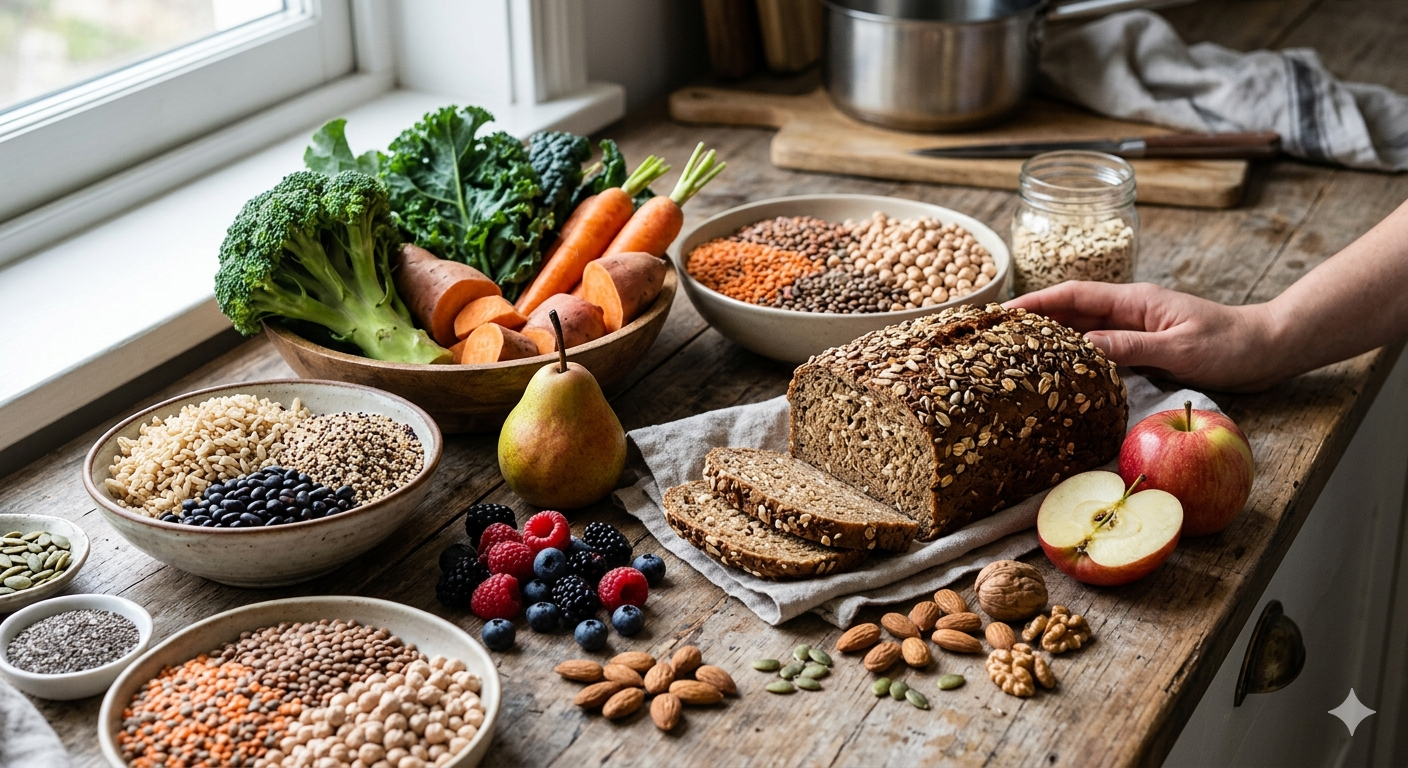
Knowing that fiber matters is the starting point. Knowing where to actually get it in meaningful amounts is what changes daily behaviour. The foods highest in fiber are all plant-based and most of them are affordable, accessible, and already familiar.
Among legumes, white beans lead with around 10 grams per cooked cup followed closely by rajma, chana, and black beans at 8 to 9 grams, lentils at 7 to 8 grams, and moong dal at 6 to 7 grams. Anyone eating a legume-based meal once a day is already covering a significant portion of their daily target before touching anything else.
Among whole grains, barley is the highest at around 6 grams per cooked cup, oats at 4 grams per cup cooked, whole wheat products at 3 to 5 grams per serving, and quinoa at around 3 grams per cup cooked. Brown rice contributes around 2 grams per cup which is modest but adds up when eaten daily alongside higher-fiber foods.
Among vegetables, green peas are exceptional at 8 to 9 grams per cup cooked. Artichokes, broccoli, Brussels sprouts, and spinach all deliver 4 to 5 grams per cooked cup. Carrots, sweet potatoes, and beetroot provide 3 to 4 grams per serving. Eating vegetables with their skin on rather than peeling them consistently adds meaningful additional fiber because the skin is where a significant portion of insoluble fiber is concentrated.
Among fruits, avocado stands out at around 10 grams per whole fruit. Guava delivers 9 grams per cup. Raspberries and blackberries both come in at 8 grams per cup, making berries one of the most fiber-dense fruit options available. Pears with skin provide 5 to 6 grams, apples with skin around 4 to 5 grams, and bananas around 3 grams each. Slightly unripe bananas also contain resistant starch that provides additional fermentable fiber benefit beyond what shows up in standard counts.
Among seeds, chia seeds are remarkable at 10 grams per two tablespoons and can be added to anything without significantly changing the taste. Flaxseeds deliver 8 grams per two tablespoons and are particularly rich in soluble fiber. Almonds provide around 3.5 grams per 30-gram serving and most other nuts contribute 2 to 3 grams per serving.
How Much You Actually Need and How Far Most People Are From It
Current guidelines recommend 28 to 30 grams of fiber per day for adults. Average intake in the United Kingdom is around 19 grams. In the United States, over 90 percent of adults do not reach the recommended target. This is a chronic, population-wide shortfall in one of the most evidence-backed protective dietary components available to us.
The research suggests that every 10 gram increase in daily fiber intake is associated with a 10 percent reduction in all-cause mortality. This is a dose-response relationship meaning more consistently delivers more benefit up to adequate intake levels. Someone eating 15 grams per day who gets to 25 grams is meaningfully shifting their long-term risk profile. Someone already at 25 who gets to 30 is completing the picture. Neither requires exotic foods or expensive interventions.
A practical example of what 28 grams looks like in a single day: a bowl of oats at breakfast adds 4 grams, a lunch of rajma chawal adds 9 grams, a serving of cooked broccoli or sabzi adds 4 grams, an apple with skin adds 4 grams, and a small handful of almonds adds 3.5 grams. That is already over 24 grams without any deliberate effort beyond choosing whole foods over processed ones. Swapping refined bread for whole grain, choosing whole fruit over juice, and eating dal regularly covers most of the gap for most people.
One practical note: if your current fiber intake is low and you increase it quickly, bloating and gas are common in the first week or two as your gut bacteria adjust. Increasing intake gradually over two to three weeks and drinking adequate water alongside it makes the transition much more comfortable.
The Bottom Line
Fiber is not a minor nutritional footnote. It is a foundational dietary component with convincing evidence of protection against cardiovascular mortality, pancreatic cancer, and diverticular disease, plus highly suggestive evidence for lower all-cause mortality, reduced coronary heart disease, and lower ovarian cancer risk, across the largest synthesis of evidence ever assembled on the topic. These effects are produced by two types of fiber working through separate and complementary biological pathways simultaneously, managing blood sugar, lowering cholesterol, feeding gut bacteria, reducing inflammation, and protecting the colon. The richest sources are legumes, whole grains, vegetables, fruit, and seeds, most of which are already part of traditional Indian cooking but not eaten in sufficient quantity consistently enough. The daily target is 28 to 30 grams. Most people are getting significantly less. The gap is easy to close with foods that are already in most kitchens. The evidence for why closing it matters is about as robust as nutrition science produces.
Reference
https://doi.org/10.1016/j.clnu.2025.06.021