



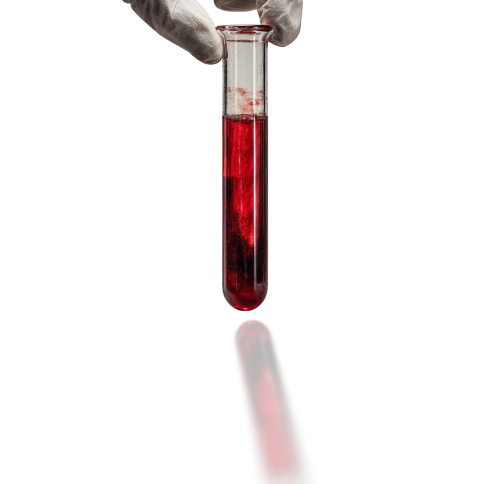
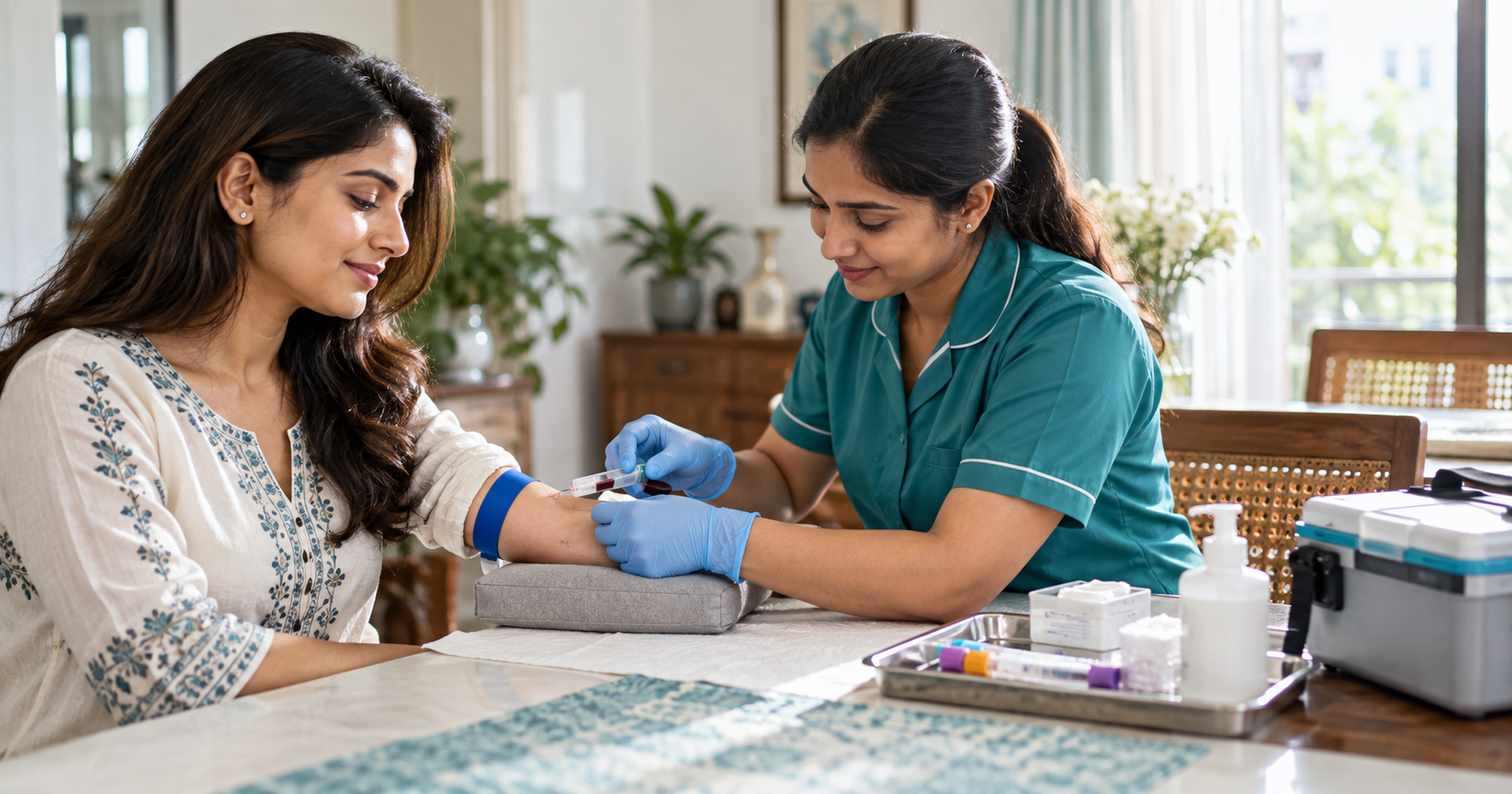
A thyroid test at home means a trained phlebotomist visits you, draws a small blood sample and sends it to a diagnostic lab, which measures hormones such as TSH, T3 and T4. No fasting is needed for a standard thyroid test, the draw takes a few minutes, and reports are usually shared digitally.
This guide explains how home collection works, which thyroid tests to book, how to prepare so your results are accurate, and how to read the basics of your report.
Which Thyroid Test Should You Book?
TSH (Thyroid Stimulating Hormone)
TSH is the single most useful first test. It’s made by the pituitary gland and rises when the thyroid is underactive, falls when it’s overactive. Most doctors start here.
Thyroid Profile (T3, T4, TSH)
This adds total or free T3 and T4 to show how much hormone the thyroid is actually producing. It’s commonly booked when symptoms are present or when TSH is abnormal.
Free T3 and Free T4
These measure the unbound, active portion of the hormones and are less affected by pregnancy, oestrogen and other factors that change protein levels in the blood.
Anti-TPO Antibodies
Anti-thyroid peroxidase antibodies indicate autoimmune thyroid disease, such as Hashimoto’s thyroiditis. This is usually added when TSH is abnormal, not as a first test.
If you’re unsure, a TSH or a standard thyroid profile is the usual starting point, and your doctor can add tests based on the result.
How Home Sample Collection Works
Step 1: Book Your Test and Slot
Choose the thyroid test you need and pick a time slot. An early-morning slot is preferable, for reasons explained below.
Step 2: Confirm Preparation Instructions
You’ll receive instructions. For a standalone thyroid test, fasting usually isn’t required. If your thyroid test is bundled with blood sugar or a lipid profile, those need 8–12 hours of fasting.
Step 3: The Phlebotomist Visits
A trained phlebotomist arrives with a sealed collection kit, verifies your details, and draws a small sample from a vein in your arm. This takes a few minutes.
Step 4: Labelling and Transport
Tubes are labelled in front of you and placed in a temperature-controlled carrier, then transported to the lab within set time limits.
Step 5: Testing and Digital Report
The lab measures your hormone levels, a pathologist verifies the results, and your report is shared digitally.
How to Prepare for an Accurate Thyroid Test
1. Test in the Morning
TSH follows a daily rhythm. It tends to be highest in the early morning and lower through the afternoon, and the difference can be large enough to matter when your value is borderline. Booking a morning slot, and using the same slot for follow-up tests, keeps results comparable.
2. Fasting Is Usually Not Required
A standard thyroid test doesn’t need fasting. Some clinicians still prefer a morning fasting sample, because eating can slightly lower TSH and could mask a borderline result. Follow whatever your doctor or lab advises, and always fast if other tests in the same draw require it.
3. Take Thyroid Medication After the Draw
If you take levothyroxine, most clinicians advise taking your dose after the blood draw rather than before. Taking it shortly before testing causes a temporary spike in T4 levels that doesn’t reflect your true day-to-day status. Never skip or change a dose without asking your doctor.
4. Pause High-Dose Biotin
Biotin (Vitamin B7), common in hair, skin and nail supplements, can interfere with the lab methods used for thyroid tests and produce falsely abnormal results. The US FDA has issued a safety communication about this. Many clinicians advise stopping high-dose biotin for two to three days before testing, but check with the lab or your doctor first.
5. Tell the Lab What You Take
Iodine supplements, some heart and psychiatric medicines, steroids and recent contrast scans can all influence thyroid results. Share a full list of medicines and supplements.
6. Reschedule If You’re Acutely Unwell
Severe illness can temporarily alter thyroid hormone levels. If you’re seriously unwell, ask your doctor whether to postpone routine testing.
7. Stay Hydrated
Drink water before the draw. It makes veins easier to access and the collection quicker.
Understanding Your Thyroid Report
| Pattern | What it usually suggests |
|---|---|
| High TSH, low T4 | Hypothyroidism (underactive thyroid) |
| High TSH, normal T4 | Subclinical hypothyroidism |
| Low TSH, high T3/T4 | Hyperthyroidism (overactive thyroid) |
| Low TSH, normal T3/T4 | Subclinical hyperthyroidism |
| Normal TSH and T4 | Thyroid function within range |
Reference ranges differ between labs and assays, and the normal range for pregnancy differs from the general population. Always review your report with a doctor rather than self-diagnosing, and ideally use the same lab for repeat tests so values are comparable.
Who Benefits Most From Home Collection
- People with hypothyroidism or hyperthyroidism who need repeat tests every few months
- Pregnant women, who may need thyroid monitoring during pregnancy
- Elderly people and anyone with limited mobility
- Busy professionals who can’t make a morning lab visit
- People with fatigue or low energy, for whom travelling to a lab feels like an effort
After Your Test
An abnormal result usually needs a doctor’s interpretation and often a repeat test, because a single reading can be affected by timing, illness or medication. If treatment starts or a dose changes, thyroid levels are typically rechecked after about 6–8 weeks, then less often once stable, as advised by your doctor.
Frequently Asked Questions
1. How do I book a thyroid test at home in Pune?
Book a thyroid test with Fittr Labs, Pune, and choose a home collection slot. A trained phlebotomist visits your home, collects the blood sample, and it’s tested at the Fittr Labs diagnostic centre in Kharadi. Your report is shared digitally once verified.
2. Do I need to fast for a thyroid test?
No, a standard thyroid test doesn’t require fasting. Some doctors prefer a morning fasting sample because eating can slightly lower TSH, which matters for borderline results. If your thyroid test is combined with blood sugar or a lipid profile, fast for 8–12 hours.
3. What is the best time of day for a thyroid test?
Early morning, ideally between 7 and 9 am. TSH is naturally highest in the early morning and declines through the day, so morning testing gives the most reliable picture and keeps repeat tests comparable.
4. Should I take my thyroid medicine before the test?
Most clinicians advise taking levothyroxine after the blood draw, not before. Taking it shortly before testing temporarily raises T4 levels and can distort your result. Don’t skip or change your dose without your doctor’s advice.
5. Which thyroid test should I book: TSH or a full thyroid profile?
TSH is the usual starting point and is often enough for a first check. A thyroid profile adding T3 and T4 is useful if you have symptoms, are already diagnosed, or if your doctor has asked for it. Anti-TPO antibodies are added when autoimmune thyroid disease is suspected.
6. Can biotin supplements affect thyroid test results?
Yes. High-dose biotin, found in many hair and nail supplements, can interfere with thyroid assays and produce falsely abnormal results. Tell the lab what you take; many clinicians advise pausing high-dose biotin for two to three days before testing.
7. How long does a home thyroid test take?
The blood draw itself takes about 5–10 minutes, including verifying your details and labelling tubes. Reports are usually shared digitally after the lab processes and verifies the sample.
8. Can pregnant women get a thyroid test at home?
Yes, and home collection is often more comfortable during pregnancy. Thyroid reference ranges differ in pregnancy, so results should always be interpreted by your obstetrician or physician rather than compared against standard ranges.
9. How often should I repeat a thyroid test?
If you’re being treated or your dose has changed, thyroid levels are typically rechecked about 6–8 weeks later, then less frequently once stable. People with normal results and no symptoms don’t need frequent testing. Your doctor sets the schedule.
10. Can I book a thyroid test at home along with other blood tests?
Yes. A thyroid test can be collected in the same visit as other blood tests, including a full-body checkup. Fittr Labs offers home sample collection in Pune, so one visit covers all tests that don’t need imaging or equipment.
Book a thyroid test with Fittr Labs, Pune, at the Kharadi centre or with home sample collection.