


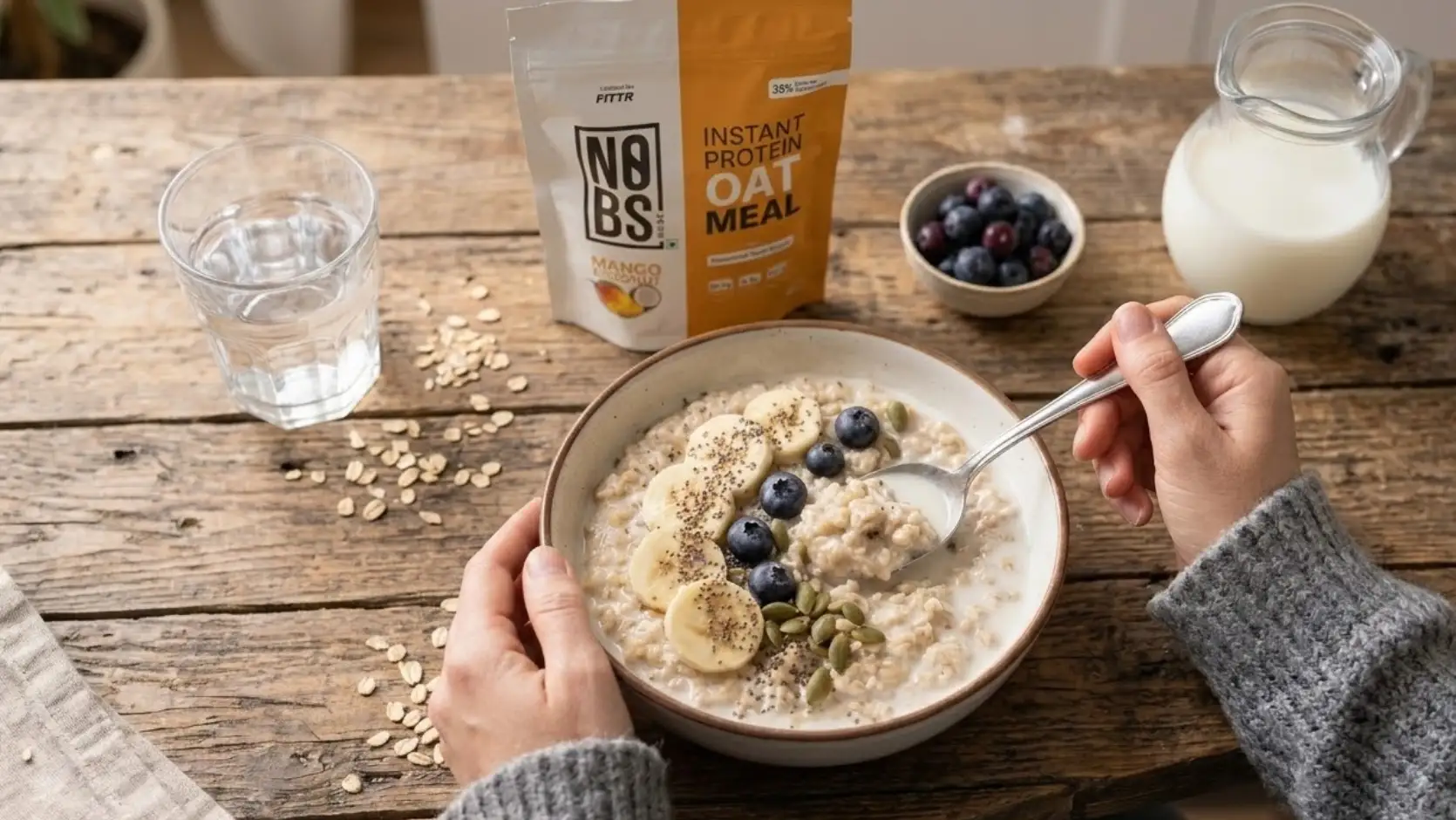
Why Oats and Milk Became India’s Default Breakfast
For many households, “having oats” means one thing: oats cooked in milk, a little sweetener, maybe a banana. It is quick, warm and comforting. But is the combination actually good for you, and how many calories does it really add up to?
The short answer is yes – oats with milk benefits most people, because milk fills the biggest gap in oats: protein. This guide covers the calories and nutrition of oats and milk, which milk to choose for your goal, when the combination may not suit you, and a simple recipe. If you want to skip the maths, a high-protein oatmeal can do the heavy lifting for you.
Oats With Milk Benefits: What Each Ingredient Brings
Oats and milk complement each other almost perfectly. Oats bring slow carbohydrates, fiber and minerals. Milk brings protein, calcium and some fat, which slows digestion further.
- More protein: 200ml toned milk adds about 6g protein, roughly doubling the protein of a 40g bowl.
- Better satiety: protein plus oat beta-glucan keeps you full for longer than either alone.
- Calcium and vitamin B12: both largely missing from oats, both supplied by milk.
- Steadier blood sugar: the protein and fat in milk lower the glycemic response of the meal.
- Creamier texture: oats in milk taste richer, so you need less added sugar.
These are the core benefits of oats with milk, and they apply whether your goal is fat loss, maintenance or muscle gain – only the portion changes.
Oats Calories With Milk: The Numbers
Here is how oatmeal and milk calories change depending on the milk you use, based on a standard 40g bowl of rolled oats and 200ml of milk.
| Milk (200 ml) + 40g oats | Calories | Protein | Fat |
| Water (for comparison) | 156 kcal | 6.8 g | 2.8 g |
| Skimmed / double toned | 236 kcal | 13.6 g | 3.6 g |
| Toned (3%) | 272 kcal | 13 g | 8.8 g |
| Full cream | 332 kcal | 13.2 g | 14.8 g |
| Soy milk | 236 kcal | 13.8 g | 6.8 g |
| Unsweetened almond milk | 190 kcal | 7.8 g | 5.8 g |
A larger 50g bowl in 250ml toned milk comes to about 340 kcal and 16g protein. For a complete serving-by-serving breakdown, see our guide to oats calories and 1 bowl of oatmeal calories.
Which Milk Is Best for Oats?
For Fat Loss
Skimmed, double toned or toned milk keeps calories moderate while keeping protein high. Unsweetened almond milk is lowest in calories but adds almost no protein, so pair it with whey or curd.
For Muscle Gain
Full cream milk adds easy calories without extra volume, useful when you are struggling to eat enough. Add a scoop of protein and nut butter for a proper bulking bowl.
For Lactose Intolerance or a Dairy-Free Diet
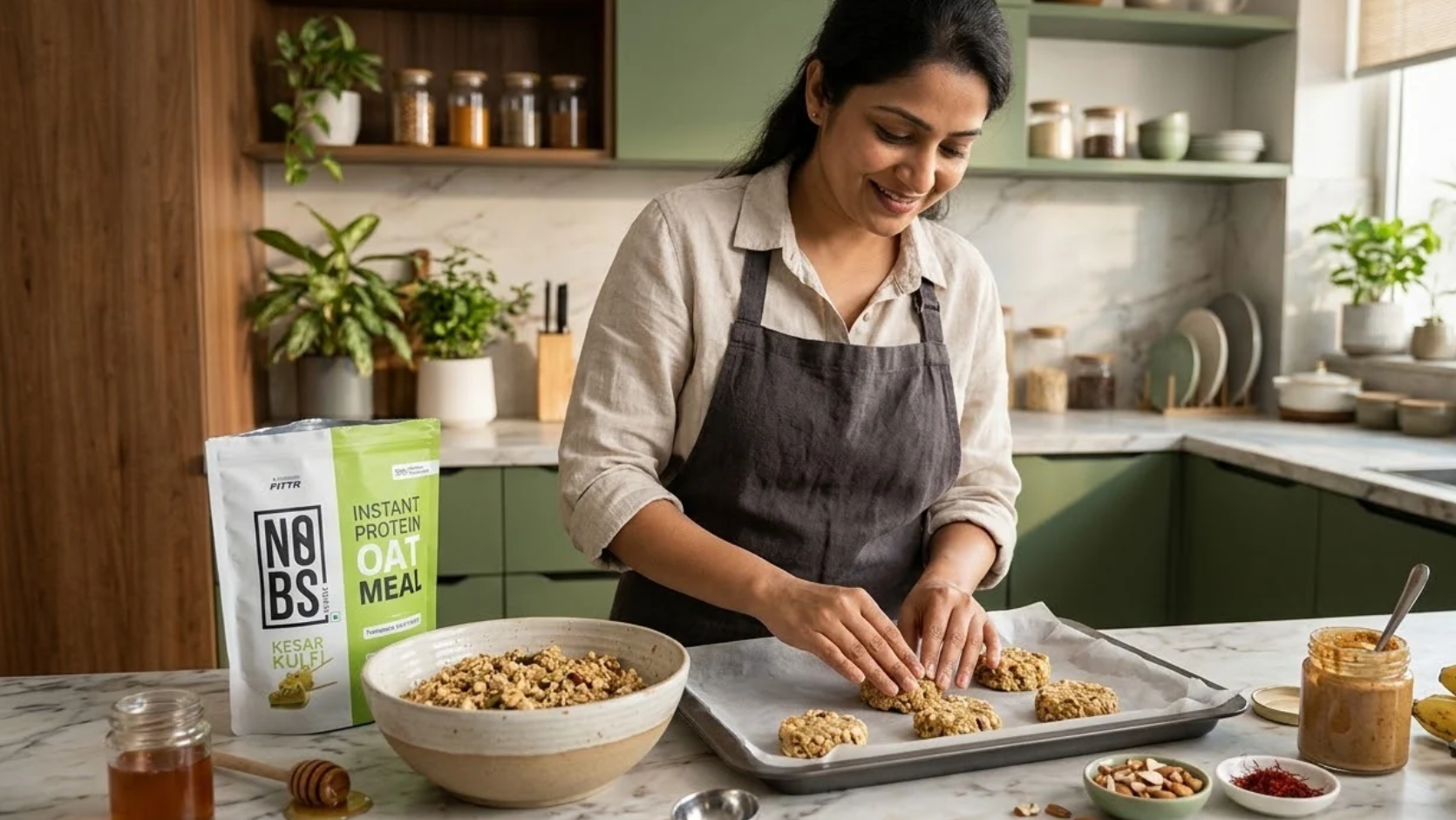
Soy milk is the closest match to dairy for protein. Lactose-free milk works too. If you want a dairy-free route to high protein, No BS Protein Oats uses complete yeast protein (PDCAAS 1.0) and contains no dairy, delivering 26-32g protein per serving.
Is Oats With Milk Good for Weight Loss?
Yes, when portioned sensibly. Milk oats are more filling than water-cooked oats, which helps you eat less later in the day. The risk is quantity: a big bowl in full cream milk with honey, dried fruit and nuts can easily cross 500 kcal.
Keep a fat-loss bowl to 30-40g oats and 150-200ml toned or skimmed milk, sweeten with cinnamon or fruit, and you have a satisfying breakfast under 300 kcal. Our guides on whether oatmeal is good for weight loss and how to eat oats for weight loss go deeper.
Oats and Milk Benefits for Muscle Gain and Recovery
After training, your body needs protein to repair muscle and carbohydrate to refill glycogen. Oats in milk offer both. A 60g bowl in 300ml milk gives around 400 kcal and 20g protein – add a scoop of whey and you are near 45g. Read more in oats for gym and oats and whey protein.
When Oats in Milk May Not Suit You
- Lactose intolerance: bloating or discomfort after dairy – switch to lactose-free or soy milk.
- Very low calorie targets: full cream milk can use up a big share of your budget.
- Sugary add-ons: the milk is rarely the problem; heaped sugar, honey or jaggery often is.
- Medical diets: if you manage diabetes or kidney conditions, check portions with your doctor or dietitian.
Oats With Milk Recipe: The Simple Everyday Bowl
This classic bowl takes under 10 minutes and gives about 272 kcal and 13g protein before toppings.
Ingredients
- 40g rolled oats
- 200ml toned milk
- 1/4 tsp cinnamon or a pinch of cardamom
- Half a banana, sliced (optional, adds about 53 kcal)
- 1 tsp chia seeds (optional)
Method
- Bring the toned milk to a gentle simmer in a small pan.
- Add the oats and spice and stir well.
- Cook on low heat for 4-5 minutes, stirring often, until creamy.
- Rest for a minute to thicken, then top with banana and chia.
Per-Serving Macros
| Version | Calories | Protein | Carbs | Fiber | Fat |
| Base bowl | 272 kcal | 13 g | 36 g | 4.2 g | 8.8 g |
| With half banana + 1 tsp chia | 345 kcal | 14.5 g | 51 g | 7.1 g | 10.2 g |
Three Easy Milk Oats Variations
- Kesar elaichi oats: cook in milk with a few saffron strands and cardamom, top with pistachios. For a high-protein shortcut, try the Kesar Kulfi flavour.
- Cold milk oats: soak oats in cold milk overnight – see our overnight oats recipe.
- Mango oats: blend cooked, cooled milk oats with ripe mango for a breakfast smoothie, or go straight for the Mango Coconut flavour.
Checking Whether Your Bowl Is Working
Use the Fittr macro calculator to see how a milk oats breakfast fits your daily protein and calorie targets, and track weekly trends rather than day-to-day swings.
A Sample Day With Milk Oats: Two Goals Compared
Oats and milk can fit very different plans just by changing the portion and the milk. The numbers below use the reference values for plain rolled oats and milk.
| Fat-loss bowl | Muscle-gain bowl | |
| Oats | 40 g (156 kcal, 6.8 g protein) | 60 g (234 kcal, 10.1 g protein) |
| Milk | 200 ml double toned (~92 kcal, 6.8 g protein) | 300 ml full cream (~264 kcal, 9.6 g protein) |
| Add-ons | Cinnamon, a few berries | 1 banana + 1 tbsp peanut butter (~200 kcal, ~5 g protein) |
| Total | ~250 kcal, ~14 g protein | ~700 kcal, ~25 g protein |
Rounding Out the Day
On a fat-loss day, follow the bowl with a protein-led lunch such as dal, paneer or chicken with vegetables, and a curd or shake snack. On a muscle-gain day, keep the same structure but add larger portions of rice or rotis and an extra protein snack. Use the Fittr BMR calculator to set your daily target first.
Myths About Oats and Milk
What Is True and What Is Not
- “Oats with milk make you gain weight.” Weight gain depends on your total daily calories, not on this pairing. A measured bowl fits weight-loss plans well.
- “Milk cancels out the fiber in oats.” It does not. You still get the beta-glucan and fiber; milk simply adds protein and calcium.
- “Hot milk oats are healthier than cold soaked oats.” Both deliver nearly the same nutrition. Choose the one you enjoy and will eat consistently.
- “Plant milk always works better.” Unsweetened almond milk is lower in calories but also much lower in protein. Soy milk is the closest plant match to dairy for protein.
Tips for Creamier Milk Oats Without Extra Calories
Texture Tricks That Cost Nothing
- Simmer slowly and stir in the last minute – the oats release starch that thickens the bowl naturally.
- Add a pinch of salt; it makes milk oats taste sweeter without sugar.
- Mash a few slices of banana into the bowl instead of adding honey.
- Use cardamom, cinnamon or a few strands of kesar for flavour that feels rich.
- Let the bowl rest for two minutes before eating so it sets into a creamy consistency.
The Bottom Line
Oats with milk benefits most people because milk adds what oats lack: protein, calcium and B12, plus extra staying power. The calories depend mainly on the milk – from about 236 kcal with skimmed milk to 332 kcal with full cream for a 40g bowl.
Choose your milk based on your goal, keep sweeteners light, and oats and milk remain one of the simplest balanced breakfasts you can make.
Frequently Asked Questions
Is it good to eat oats with milk?
Yes. Milk adds protein, calcium and vitamin B12 to oats and makes the bowl more filling. It suits most people unless they are lactose intolerant.
How many calories are in oats with milk?
40g oats with 200ml toned milk has about 272 kcal and 13g protein. With full cream milk it is about 332 kcal; with skimmed milk about 236 kcal.
Is oats with milk good for weight loss?
Yes, if portions stay moderate. Use 30-40g oats in toned or skimmed milk and avoid heavy sweeteners to keep the bowl under 300 kcal.
Which milk is best for oats?
Toned or skimmed milk suits fat loss, full cream milk suits weight gain, and soy milk is the best dairy-free option for protein.
Can I eat oats with milk at night?
Yes. A small bowl of warm oats in milk can be a filling, easy-to-digest dinner or late snack, as long as it fits your daily calories.
Is oats with water or milk better?
Milk is better for protein and satiety; water is better if you need the lowest calories. Water-cooked oats need a protein source added to the meal.
Can I make oats with milk ahead of time?
Yes. Cook or soak oats in milk, cool them and refrigerate in a closed container for up to 2 days. Add a splash of milk when reheating to loosen the texture.
Better Bowls Start With Better Pairings
Oats and milk, milk oats or oats in milk – however you make it, the benefits of oats with milk come from pairing slow carbs with quality protein.
Take it a step further with No BS Protein Oats, or stock up with the combo pack and keep a high-protein breakfast ready every morning.