





Oats or Muesli: Why the Choice Is Confusing
Walk down any supermarket cereal aisle and oats and muesli sit side by side, both labelled “healthy”, “high fiber” and “wholegrain”. Many people assume muesli is simply a tastier version of oats. In reality, the two can be very different once you read the label – especially if your goal is weight loss.
This guide compares oats and muesli on calories, sugar, protein and fiber, explains what muesli is made of, looks honestly at muesli oats benefits, and helps you choose the better option for fat loss. Spoiler: the winner is usually the one with less added sugar and more protein, not the one with the prettiest box.
What Muesli Is Made Of
Muesli was created in Switzerland as a raw mix of rolled oats, grated apple, nuts and milk. Modern packaged muesli has evolved a lot. Typical muesli contents include:
- A base of rolled oats, often with wheat flakes, corn flakes or rice crisps
- Nuts and seeds such as almonds, cashews, pumpkin or flax seeds
- Dried fruit like raisins, cranberries, apricots or dates
- Sometimes honey clusters, chocolate pieces or flavoured crisps
- In many Indian packs, added sugar, glucose syrup or jaggery
So when someone asks what muesli is made of, the honest answer is: oats plus extras. Those extras decide whether muesli is a healthy breakfast or closer to a dessert.
Plain Oats in Comparison
Plain rolled oats are just that – whole oat grains, steamed and flattened. Nothing added. You control the sugar, the fat and the protein.
Oats vs Muesli: Nutrition Compared
Here is a typical per-100g comparison. Muesli values vary widely between brands, so treat these as ranges and check your pack.
| Per 100g | Plain rolled oats | No-added-sugar muesli | Typical sweetened muesli |
| Calories | 389 kcal | ~360-380 kcal | ~380-420 kcal |
| Protein | 16.9 g | ~10-12 g | ~8-10 g |
| Carbohydrates | 66.3 g | ~62-68 g | ~68-75 g |
| Sugars | ~1 g | ~8-12 g (from fruit) | ~15-25 g |
| Fiber | 10.6 g | ~8-10 g | ~6-8 g |
| Fat | 6.9 g | ~7-10 g | ~6-10 g |
What the Numbers Show
- Sugar is the big difference. Plain oats have about 1g per 100g. Sweetened muesli can carry 15-25g – up to 5 teaspoons.
- Protein is lower in muesli because flakes and dried fruit dilute the oat base.
- Calories are similar or higher in muesli, but portion sizes are easy to overpour because muesli is denser and tastier.
- Fiber is usually higher in plain oats, unless the muesli is heavy on nuts and seeds.
Muesli Oats Benefits: What Muesli Does Well
Muesli is not a bad food. A well-chosen muesli has real advantages:
- Ready to eat: no cooking, just add milk or curd. Great for rushed mornings.
- Built-in variety: nuts and seeds add healthy fats, vitamin E and minerals.
- Natural sweetness from fruit: if dried fruit is the only sweetener, sugar comes with fiber and micronutrients.
- Oat base: you still get some beta-glucan, the soluble fiber linked to fullness and healthy cholesterol.
- Good for active people with higher calorie needs, where extra energy from nuts and fruit is useful.
These benefits of muesli oats apply most to unsweetened or no-added-sugar varieties. Once sugar and chocolate clusters dominate, the benefits shrink.
Muesli Oats for Weight Loss: The Catch
For weight loss, what matters is your total calorie intake, protein and how full a meal keeps you. Muesli has three weaknesses here.
1. Easy to Over-Pour
Muesli is calorie-dense and eaten cold, so it is easy to pour 80-100g instead of 40g. That alone can add 150-250 kcal.
2. Added Sugar Reduces Fullness
Sugary breakfasts digest quickly and can leave you hungry again by mid-morning. That makes it harder to stick to your calorie target later in the day.
3. Lower Protein Per Serving
A 45g serving of sweetened muesli with milk may give 10-12g of protein – well below the 20-30g that helps control appetite.
Why Plain Oats Usually Win for Weight Loss
Plain oats give you a blank canvas: low sugar, more protein and fiber per 100g, and full control over add-ons. A 40g bowl of oats cooked in 200ml toned milk is about 272 kcal and 13g protein. Add a scoop of whey or a few spoons of Greek yogurt and you reach 25-35g of protein for under 400 kcal.
Our guides on whether oatmeal is good for weight loss and the best oats for weight loss in India go further into choosing and preparing oats for fat loss.
The High-Protein Shortcut
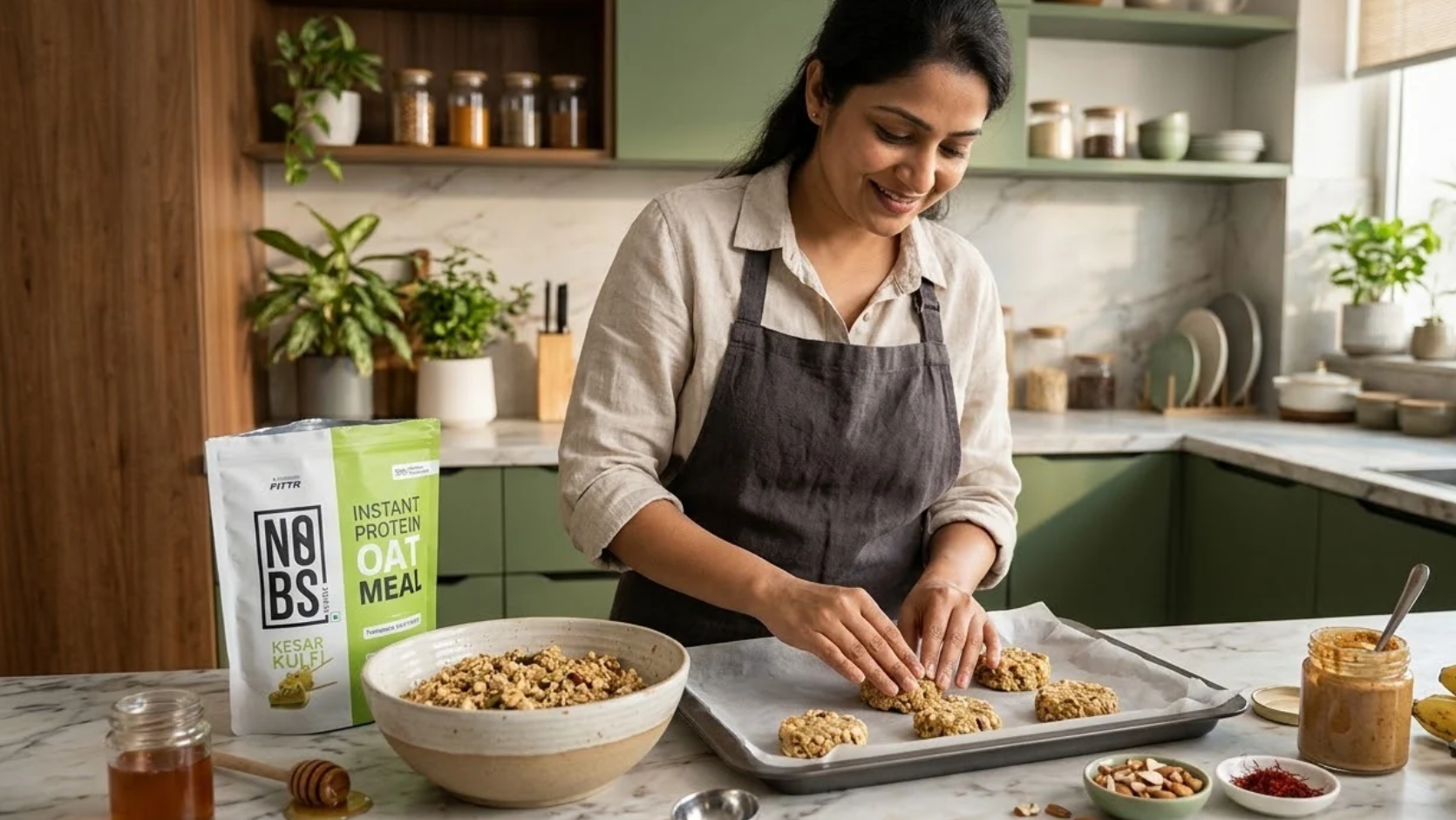
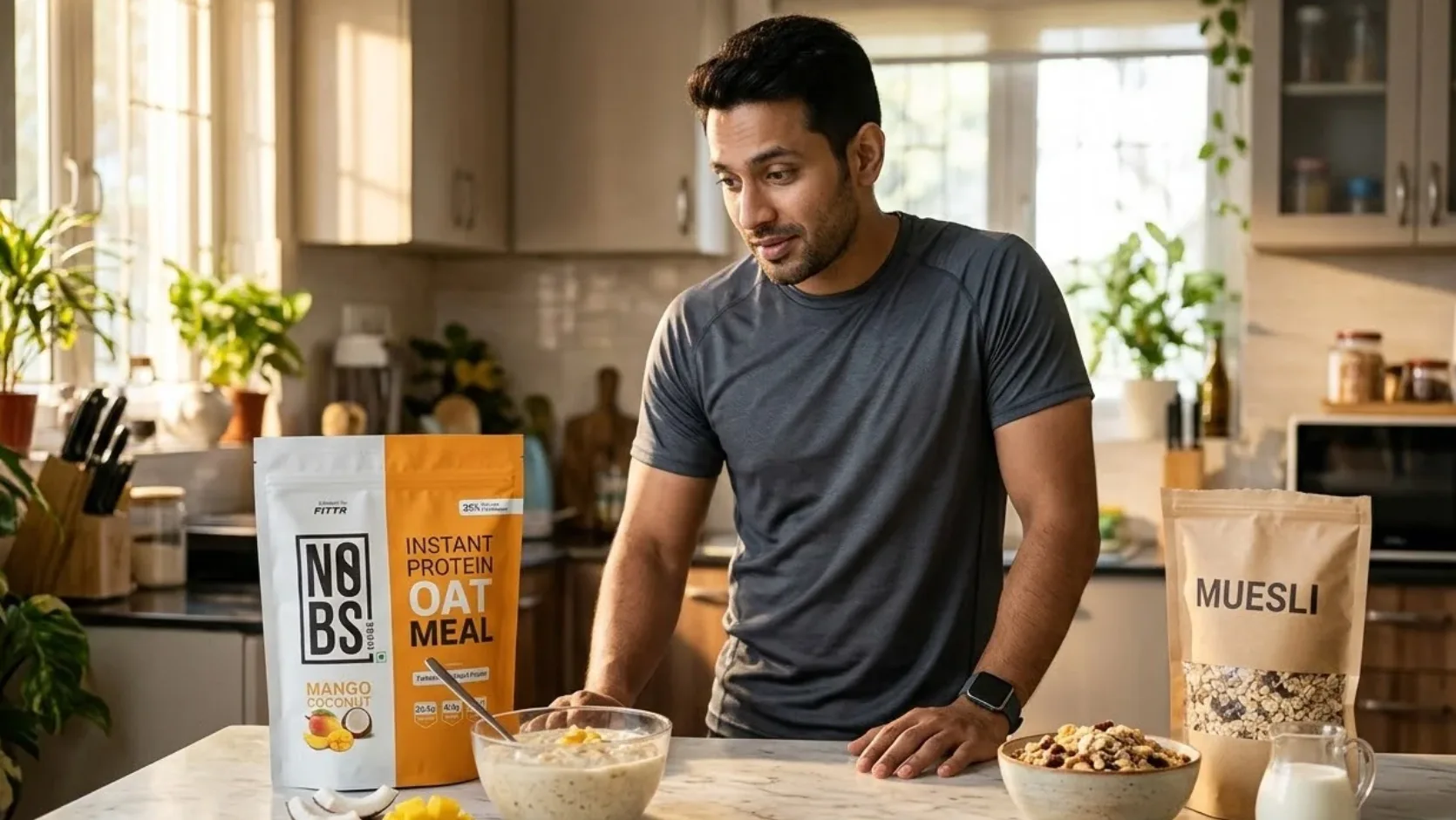
If you want oats that are ready quickly and already high in protein, No BS Protein Oats gives 26-32g of complete yeast protein per serving, dairy-free, with no preservatives or empty fillers. It brings the convenience people like about muesli, with the protein muesli usually lacks.
Oats vs Muesli Over a Week: The Hidden Difference
Small daily differences compound. Imagine two breakfasts eaten five days a week:
| Weekly view (5 breakfasts) | 45g sweetened muesli + 150ml toned milk | 40g oats + 200ml toned milk + 100g Greek yogurt |
| Calories per bowl | ~270 kcal | ~350 kcal |
| Protein per bowl | ~9 g | ~23 g |
| Added sugar per bowl | ~8-10 g | 0 g |
| Weekly protein | ~45 g | ~115 g |
| Weekly added sugar | ~40-50 g | 0 g |
The oats bowl has slightly more calories, but it provides more than double the protein and no added sugar – which usually means fewer cravings and less snacking later in the morning. Over a month, that difference in fullness often matters more than the 80 kcal gap.
Making Muesli Work Harder
If you love muesli, simply halve the portion and top it up with plain oats and curd. You keep the crunch and flavour, cut the sugar in half and lift the protein.
How to Choose a Healthier Muesli
If you prefer muesli, choose carefully:
- Check sugar per 100g. Aim for under 10g, ideally with dried fruit as the only source.
- Look at the ingredient order. Oats should be first; sugar, glucose or honey should not be in the top three.
- Compare protein. Choose packs with at least 10g per 100g.
- Avoid chocolate, “crunchy” or “fruit and nut delight” variants for daily use.
- Measure 40-45g, not the bowl.
A Smarter Way: DIY Muesli With an Oats Base
You can get the best of both by making your own muesli:
- 40g rolled oats
- 1 tbsp mixed seeds (pumpkin, sunflower, flax)
- 5-6 almonds, chopped
- 1 tbsp raisins or chopped dates
- Cinnamon
- Serve with 150ml toned milk and 100g Greek yogurt
This bowl comes to roughly 450 kcal and about 25g protein, with no added sugar. For a sweet, fruity version, mix in a serving of Mango Coconut protein oats instead of plain oats. You can also soak it overnight – see our overnight oats recipe guide.
Oats vs Muesli: Quick Verdict Table
| If you want… | Better choice |
| Lowest sugar | Plain oats |
| Most protein per 100g | Plain oats (or protein oats) |
| No cooking at all | Muesli or overnight oats |
| Most fullness per calorie | Oats with added protein |
| A treat or travel breakfast | No-added-sugar muesli |
Track What Works for You
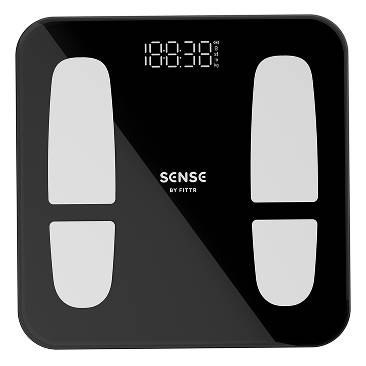
Whichever you choose, the scale and the mirror will tell you if it fits your goal. Weekly weigh-ins and body composition checks on a SENSE Smart Scale show whether your breakfast is helping you lose fat while keeping muscle.
Oats vs Muesli by Goal
The better choice changes with what you want from breakfast. Here is a simple way to decide.
Weight Loss
Plain oats usually come out ahead because you control the sugar and the portion. A 40g bowl cooked in toned milk is around 272 kcal with about 13g protein. A similar 60g pour of sweetened muesli with milk can reach 350-400 kcal before you notice. If you prefer muesli, choose unsweetened and weigh it.
Muscle Gain
Muesli’s nuts, seeds and dried fruit make it more calorie-dense, which can help when you are struggling to eat enough. Pair it with milk or curd and a protein source so the extra calories support muscle, not just energy. Fittr’s guide to oats for muscle gain covers the protein side.
Blood Sugar Control
Plain rolled or steel-cut oats are easier to manage because there is no hidden sugar. Many sweetened muesli packs add 10-25g of sugar per 100g, which raises the glycemic load of the bowl. Speak to your doctor or dietitian if you are managing diabetes.
Busy Mornings
Muesli needs no cooking, but overnight oats prepared the night before are just as quick. A dairy-free Mango Coconut protein oats serving is another fast option with far more protein than most muesli.
Muesli Oats Myths vs Facts
Muesli carries a health halo that does not always match the label.
What to Know Before You Buy
- Myth: Muesli is always sugar-free because it is “raw”. Fact: many Indian packs add sugar, honey or glucose syrup – check the ingredients list.
- Myth: More fruit and nuts means a healthier muesli. Fact: they add useful nutrients but also calories, so portion size becomes more important.
- Myth: Muesli has more fiber than oats. Fact: fiber depends on the mix; plain oats already provide about 10.6g per 100g.
Reading a Muesli Label in 60 Seconds
A quick check prevents most mistakes.
Three Things to Look At
- Sugar per 100g: under 5g is excellent; above 15g means it is closer to a breakfast treat.
- First ingredient: whole grains such as oats should come first, not sugar or cornflakes.
- Protein per serving: if it is under 5g, plan to add milk, curd or a protein source.
The Bottom Line
Oats and muesli share the same base grain, but packaged muesli often adds sugar and dilutes protein. Muesli oats benefits are real for unsweetened, nut-and-seed-rich varieties, especially for busy mornings. For weight loss, plain oats or protein oats usually come out ahead because they offer more protein and fiber, less sugar, and full control over what goes into your bowl.
Frequently Asked Questions
Is muesli healthier than oats?
Not usually. Plain oats have less sugar and more protein and fiber per 100g. Unsweetened muesli can be a healthy alternative, but sweetened varieties are closer to a treat.
What is muesli made of?
Muesli is made of rolled oats plus other flakes, nuts, seeds and dried fruit. Many packaged versions also contain added sugar, honey or glucose syrup.
Is muesli good for weight loss?
It can fit a weight-loss diet if you choose a no-added-sugar muesli, measure 40-45g and add a protein source like curd or milk.
Can I mix oats and muesli?
Yes. Mixing plain oats with a little muesli adds flavour and texture while keeping sugar lower than muesli alone.
Which has more calories, oats or muesli?
They are similar per 100g, but sweetened muesli often has slightly more. Muesli portions also tend to be larger, so total calories are often higher.
Is muesli good for diabetics?
Unsweetened muesli in a measured portion can fit a diabetes-friendly diet, but sweetened varieties raise blood sugar faster. Plain oats with protein are usually easier to manage – check with your doctor or dietitian.
Pick the Bowl That Works Harder
Oats and muesli, muesli oats or muesli oats for weight loss – across every comparison the rule stays the same: less added sugar, more protein, measured portions.
Make the switch easy with No BS Protein Oats, or stock up with the combo pack for a high-protein breakfast all month.