Do Oats Actually Build Muscle?
Oats themselves do not build muscle directly – no single food does. Muscle growth requires a calorie surplus or adequate maintenance calories, sufficient protein, and progressive resistance training. What oats genuinely offer is a reliable, calorie-dense carbohydrate source that supports the training and recovery processes that actually drive muscle growth.
This guide explains how oats for muscle building fit into a genuine mass-gain approach, and how to structure meals around them for the best result.
Understanding this distinction matters, since expecting any single food to build muscle on its own sets you up for disappointment regardless of how genuinely useful that food actually is within a well-structured plan.
Why Carbohydrates Matter for Muscle Gain
Carbohydrates are not just filler calories during a muscle-building phase – they fuel the intense training sessions that stimulate growth and help replenish glycogen stores that resistance training depletes.
Oats as a Quality Carbohydrate Source
Oats provide a steady, sustained energy release rather than a sharp spike and crash, making them a genuinely good carbohydrate choice for fuelling both training sessions and daily activity during a muscle-building phase. Fittr’s guide to the basic science of muscle gain covers the broader mechanics this fits into.
Building a Calorie Surplus With Oats
Gaining muscle effectively requires eating in a calorie surplus – more than your body burns – and oats are a genuinely useful, calorie-dense food to help reach that target without excessive volume of food.
Why Oats Suit a Surplus Well
A generous bowl of oats, especially prepared with milk and added toppings, can contribute 400-500 calories relatively easily, which helps anyone who struggles to eat enough food consistently during a bulking phase. Understanding your total daily energy needs first helps you know exactly how large that surplus should be.
Protein: The Missing Piece Oats Alone Don’t Provide
While oats bring useful carbohydrate and a modest baseline of protein, muscle building requires considerably more protein than a plain bowl of oats provides on its own.
Why Pairing Matters So Much Here
Pairing oats with a genuine protein source – eggs, protein powder, Greek yogurt or paneer – turns a carbohydrate-focused meal into a genuinely complete muscle-building meal, delivering both the fuel and the building blocks growth actually requires.
Best Oats for Muscle Gain: Timing Matters
When you eat oats during a muscle-building routine can matter almost as much as what you pair them with, particularly around training sessions.
Pre and Post-Workout Timing
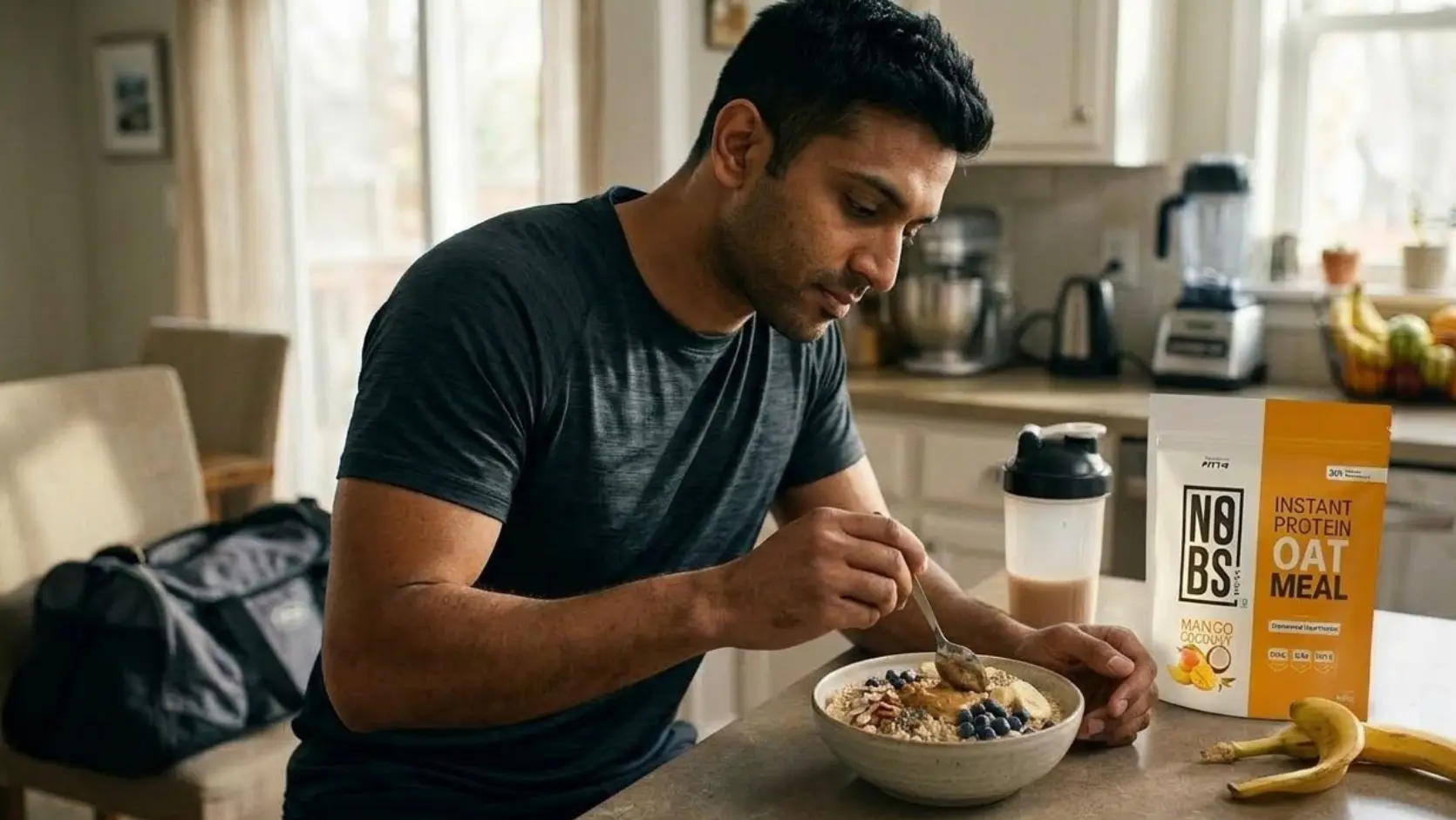
A moderate oats-based meal one to two hours before training provides sustained energy for the session ahead, while a protein-paired oats meal after training supports recovery when your body is primed to use those nutrients efficiently. Fittr’s guide to the best time to workout touches on how training timing interacts with nutrition more broadly.
A Genuine Oats Recipe for Muscle Gain
This recipe is built specifically around the calorie and protein needs of a muscle-building phase, not a fat-loss one.
Ingredients and Method
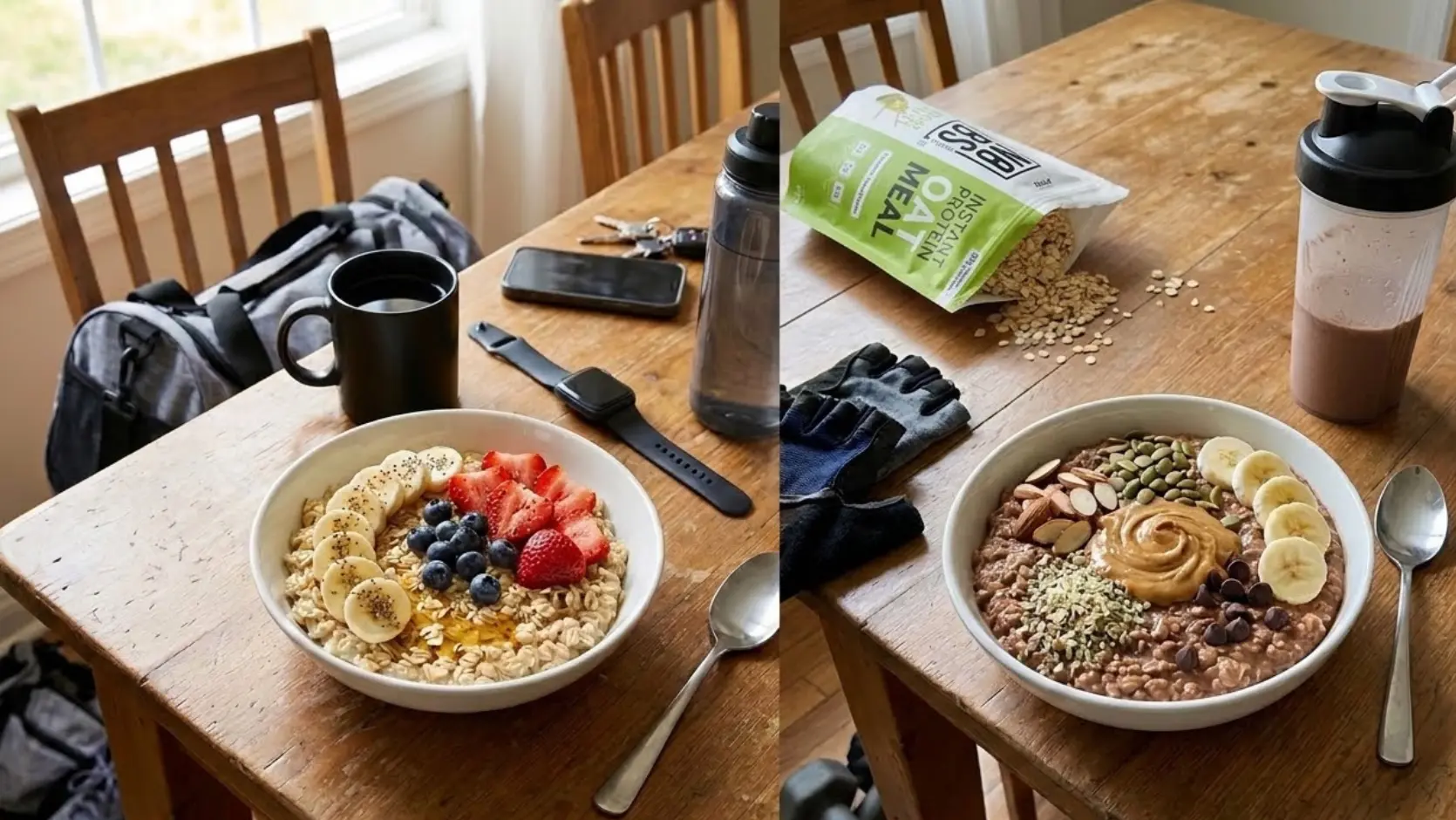
Cook 60-70g of oats in 250ml full-fat milk, then stir in a full scoop of protein powder, a tablespoon of peanut butter and half a sliced banana. This combination typically delivers 550-650 calories and 35-40 grams of protein, a genuinely substantial meal suited to a bulking phase.
Oatmeal for Muscle Gain vs Fat Loss: What Changes
The same base food serves both goals, but the way you build the meal around it shifts considerably depending on whether you are bulking or cutting.
Adjusting Portions and Additions by Goal
For muscle gain, larger portions, calorie-dense additions like nut butter and full-fat milk, and a generous protein source all support the surplus needed for growth. For fat loss, smaller portions, water or low-fat milk, and a lighter protein addition keep the same meal within a deficit instead.
How Often Should You Eat Oats During a Bulk?
There’s no fixed rule, but oats can reasonably feature in more than one meal per day during a muscle-building phase, given their usefulness for hitting calorie and carbohydrate targets consistently.
Avoiding Monotony While Staying Consistent
Rotating between sweet, savory and shake-format oats preparations, using the variety covered elsewhere in this guide series, helps you eat oats multiple times a week – or even multiple times a day – without the meal becoming repetitive or something you dread.
Some people in a serious bulking phase eat oats-based meals both at breakfast and as a post-workout snack, simply adjusting toppings and preparation style between the two to keep things interesting across the day.
Common Mistakes When Using Oats for Muscle Gain
- Relying on oats alone without adding a genuine protein source, missing the amino acids muscle growth actually requires.
- Eating in a surplus with oats but neglecting progressive resistance training, the actual stimulus for muscle growth.
- Choosing water-based, low-calorie oats preparations when a genuine calorie surplus is the actual goal.
- Ignoring total daily protein targets and assuming oats-based meals alone provide sufficient intake.
- Expecting oats specifically, rather than the overall surplus and training programme, to drive muscle growth.
Oats for Muscle Gain in a Vegetarian Diet
For vegetarians building a muscle-gain routine, oats offer a particularly useful role, since they provide both quality carbohydrate and a modest protein contribution without relying on meat sources.
Pairing Oats With Vegetarian Protein Sources
Paneer, Greek yogurt, plant-based protein powder or a combination of dal and oats-based meals across the day all help vegetarians reach the protein totals needed for effective muscle building, with oats serving as a reliable, calorie-dense carbohydrate base throughout.
Tracking Progress While Using Oats for Muscle Gain
As with any structured approach, tracking whether your specific combination of oats-based meals and training is actually producing the intended result matters more than following a fixed recipe indefinitely.
What to Monitor Beyond the Scale
Weight gain alone does not confirm muscle growth specifically – tracking strength progress in training, and ideally body composition changes over time, gives a more complete picture of whether your oats-supported surplus is building genuine lean mass rather than excess fat.
Common Myths About Oats and Muscle Building
- Oats do not build muscle directly; they support the calorie surplus and training that actually drive growth.
- You do not need to eat oats specifically to gain muscle; they are simply one convenient, calorie-dense carbohydrate option among many.
- More oats does not automatically mean more muscle; total calories, protein and training still determine the outcome.
- Oatmeal for muscle gain is not fundamentally different in ingredients from oats for fat loss – only the portion size and additions change.
- Skipping oats entirely will not prevent muscle gain, provided your overall calorie and protein targets are still met through other foods.
The Bottom Line
Oats for muscle gain work as a genuinely useful, calorie-dense carbohydrate source that helps you hit the surplus and fuel the training sessions that actually build lean mass – not as a direct muscle-building food on their own. Pairing them consistently with adequate protein and progressive resistance training is what turns oats from a simple breakfast into a genuine tool for your muscle-building goal.
For the broader science behind muscle growth, see Fittr’s guide to the basic science of muscle gain, and pair your meal planning with an understanding of your daily protein needs to build a genuinely complete approach around your oats-based meals.
Give the process the weeks and months it genuinely requires, and a consistent oats-supported surplus paired with progressive training will reliably outperform any single “muscle-building food” chased in isolation.
Frequently Asked Questions
Do oats help build muscle?
Not directly – muscle growth requires a calorie surplus, adequate protein and resistance training. Oats support this by providing reliable, calorie-dense carbohydrate fuel.
What are the best oats for muscle gain?
Any type works, prepared in a larger portion with full-fat milk and a genuine protein addition like protein powder, eggs or Greek yogurt to support the surplus and protein needs of muscle building.
How much oatmeal should I eat for muscle gain?
A larger portion than for fat loss, often 60-70g dry oats per meal, adjusted to fit your overall daily calorie surplus target.
Can oatmeal replace protein powder for muscle gain?
No, oats provide only a modest baseline of protein; pairing them with a genuine protein source is necessary to meet muscle-building protein needs.
When should I eat oats for muscle building – before or after training?
Both can work well – oats before training provide sustained energy, while a protein-paired oats meal after training supports recovery.
Power Every Workout with Better Fuel
Oats for muscle gain, oats for muscle building, or oatmeal for muscle gain – across every phrasing, the real driver is the surplus, the protein, and the training, with oats as a genuinely useful supporting tool rather than a standalone solution.
Build oats consistently into a well-structured surplus with adequate protein, and they can become one of the most reliable staples in your muscle-building routine.