




Most people experience a blood test from one side of the needle. What happens between collection and a digital report arriving on your phone is a sophisticated process involving multiple stages of quality control, specialised equipment, and trained laboratory professionals. Understanding this process helps you interpret report timelines, understand why certain tests take longer, and appreciate why lab quality matters for accuracy.
Stage 1: Sample Collection
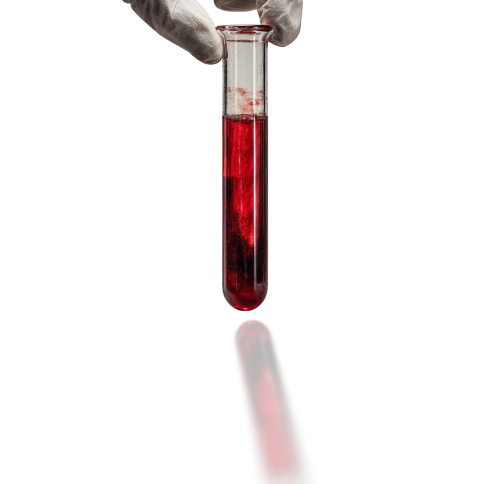
Venous blood is collected using sterile needles and vacuum tubes. Different tests require different tube types – each contains a specific additive:
EDTA tubes (purple cap) – CBC and HbA1c. Prevents clotting.
Serum separator tubes (gold/red cap) – biochemistry panels. Blood clots, then serum is separated.
Fluoride oxalate tubes (grey cap) – fasting blood glucose. Fluoride prevents glucose metabolism in the sample.
Errors at collection – under-filled tubes, incorrect mixing, haemolysis (red blood cell damage) – can invalidate the sample and require recollection.
Stage 2: Transportation and Pre-Analytics
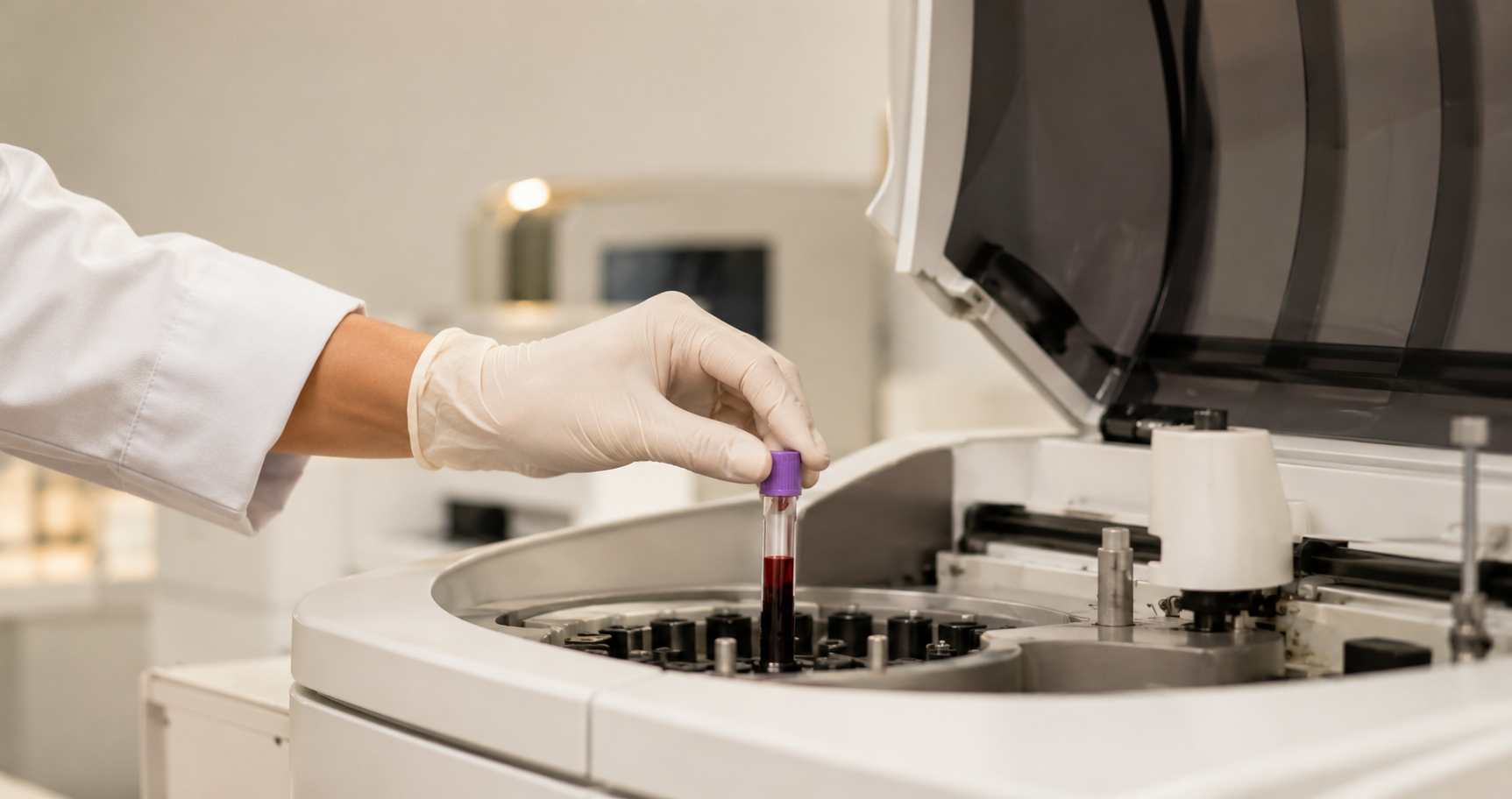
Samples reach the laboratory within 2 to 4 hours in temperature-maintained containers. At the lab they undergo centrifugation, visual inspection for haemolysis or lipemia (fat cloudiness), and labelling verification. Pre-analytical errors account for approximately 70% of all laboratory errors – which is why sample handling is taken as seriously as the analysis itself.
Stage 3: Analysis on Automated Analysers
Haematology Analyser (CBC) – Counts and measures blood cells using electrical impedance and laser scattering. Results typically available within 30 to 60 minutes of receipt.
Biochemistry Analyser – Measures glucose, creatinine, liver enzymes, cholesterol through photometric reactions. Results typically within 2 to 4 hours.
Immunoassay Analyser – Measures hormones (TSH, T3, T4), vitamins (D3, B12), and tumour markers using antibody-antigen reactions. These require longer incubation times – typically 4 to 8 hours.
Urine Analysis – Automated urinalysis machines test physical, chemical, and microscopic parameters. Typically completed within 1 to 2 hours.
Stage 4: Quality Control
Before patient results are released, quality control (QC) samples with known concentrations run alongside patient samples. If QC falls outside acceptable limits, the entire run is flagged and re-analysed. Accredited laboratories also participate in External Quality Assurance Schemes (EQAS) with reference bodies.
Stage 5: Report Generation and Delivery
After analysis and QC, results are reviewed by a laboratory professional – complex or flagged results by a pathologist. Reports are generated digitally with reference ranges and abnormal flags highlighted, then transmitted electronically.
Why Some Tests Take Longer
Turnaround time is determined by the biology of the test. Immunoassay tests for vitamins and hormones require specific incubation times that cannot be shortened without compromising accuracy. CBC and chemistry tests use faster methods and are typically ready in hours.
fittr.com/labs/full-body-checkup-test-kharadi-pune/
Frequently Asked Questions
Q1. How long does it take to get blood test results?
CBC and basic biochemistry: 6 to 8 hours. Thyroid hormones (TSH, T3, T4), Vitamin D, Vitamin B12, and HbA1c: 24 to 48 hours due to immunoassay processing times. Specialised tests like tumour markers or cultures: 2 to 5 days.
Q2. What happens to blood samples after collection?
Samples are transported to the lab in temperature-controlled containers within 2 to 4 hours. At the lab they are centrifuged, inspected for quality, then analysed on automated machines. Quality control samples run alongside every batch to verify accuracy.
Q3. Why do different blood tests take different amounts of time?
Turnaround time is set by the biology of the test. Hormone and vitamin tests use immunoassay technology requiring specific incubation periods that cannot be shortened without affecting accuracy. CBC and chemistry use faster photometric and electrical methods.
Q4. What causes errors in blood test reports?
Approximately 70% of laboratory errors occur before analysis – in the pre-analytical phase. Common causes: haemolysis from rough handling, under-filled tubes, wrong tube type, delayed transport, and patient not fasting when required.
Q5. Which lab provides same day blood test reports in Pune?
FITTR Labs provides digital blood test reports within 24 to 48 hours for most tests including full body checkups, delivered via email and WhatsApp. Routine tests including CBC and basic biochemistry are typically available sooner.
Q6. Are digital blood test reports as reliable as physical ones?
Yes. Digital reports contain identical information – all results, reference ranges, abnormal flags, and laboratory details. Reputable labs issue digitally verified reports valid for medical consultation.
Book your full body test – https://fittr.com/labs/