




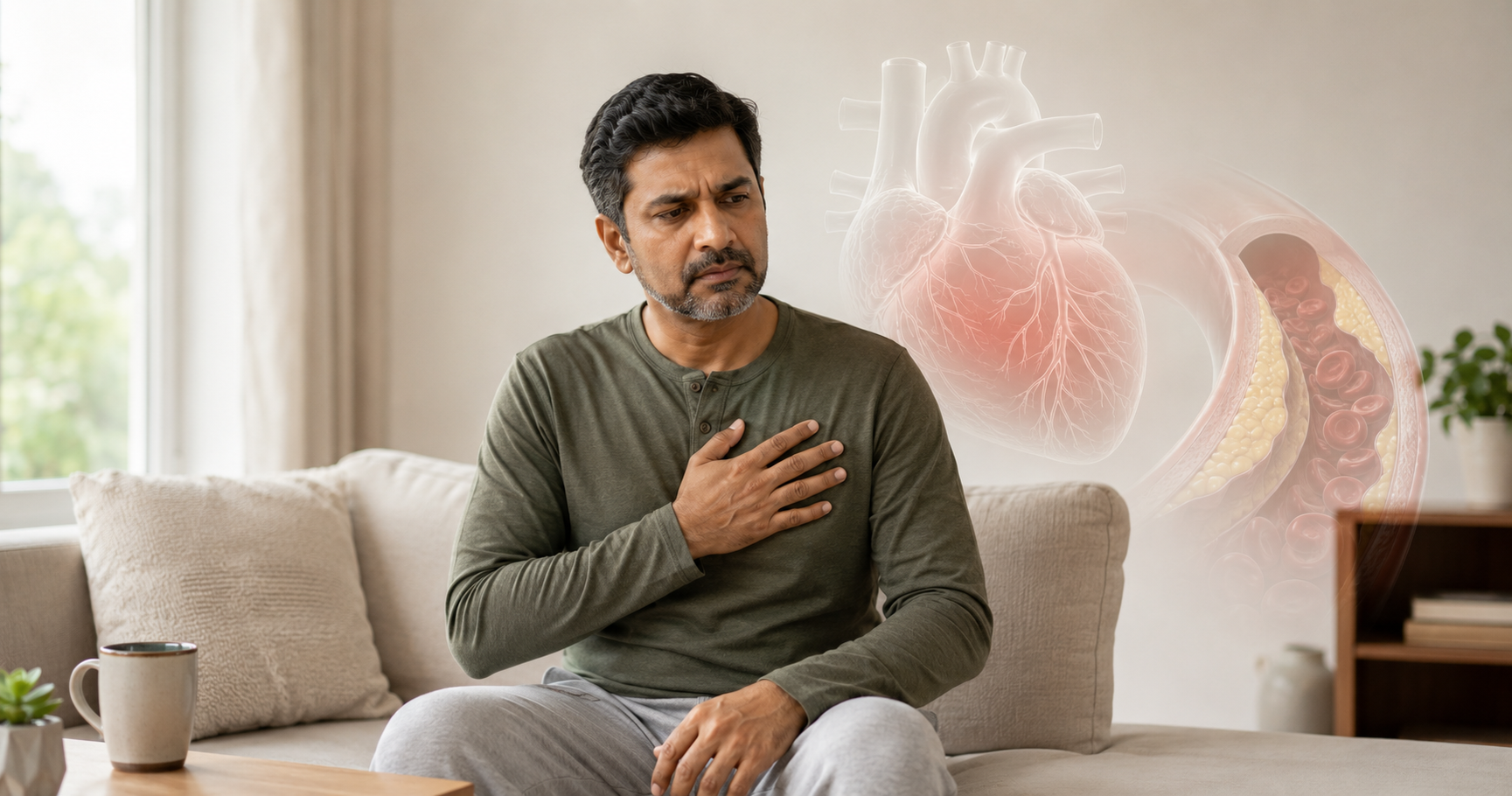
High cholesterol is called a ‘silent’ condition because it produces no obvious symptoms for most of its course. Unlike hypertension or diabetes, elevated cholesterol causes no physical symptoms while quietly damaging arteries over years. The WHO estimates that raised cholesterol causes 4.4 million deaths annually worldwide. By the time it causes a detectable problem – a heart attack, stroke, or chest pain – significant arterial damage has often already occurred.
fittr.com/labs/full-body-checkup-test-kharadi-pune/
What Causes High Cholesterol?
Dietary Causes
- Saturated fats – red meat, full-fat dairy, butter, ghee, coconut oil – raise LDL
- Trans fats – partially hydrogenated vegetable oils, commercial baked goods – raise LDL and lower HDL simultaneously
Lifestyle Causes
- Physical inactivity – regular aerobic exercise raises HDL and improves LDL particle size
- Obesity – raises LDL and triglycerides, lowers HDL
- Smoking – damages arterial walls and reduces HDL
- Excessive alcohol – raises triglycerides significantly
Medical Causes
- Hypothyroidism – an underactive thyroid raises LDL; lipid panels should always be read alongside thyroid function
- Type 2 diabetes – associated with high triglycerides and low HDL
- Chronic kidney disease – impairs lipid metabolism
- Familial hypercholesterolaemia (FH) – genetic condition causing severely elevated LDL from birth
Symptoms of High Cholesterol
For most people, there are no symptoms. Physical signs appear only in specific situations:
- Xanthomas- fatty deposits of cholesterol under the skin – yellowish raised patches on eyelids (xanthelasma), around the Achilles tendon, or on knuckles. A sign of severely or chronically elevated cholesterol, particularly associated with familial hypercholesterolaemia.
- Corneal Arcus – A pale white or grey ring around the outer edge of the cornea. In people under 45, associated with high cholesterol; in older adults it is more common and less specific.
Symptoms of Cardiovascular Complications
Chest pain on exertion (angina), shortness of breath, leg pain on walking (peripheral artery disease) – by which point significant atherosclerosis has usually developed.
What Happens If High Cholesterol Is Left Untreated?
- Atherosclerosis – LDL particles penetrate arterial walls and are oxidised, triggering an immune response. White blood cells accumulate, forming plaques that grow, harden, and narrow arteries, reducing blood flow. This begins in early adulthood and accelerates with smoking, hypertension, and diabetes.
- Heart Attack – When an atherosclerotic plaque ruptures, a blood clot forms. If it blocks a coronary artery (supplying the heart), the result is a heart attack. Damage depends on which artery is blocked and for how long.
- Stroke – The same mechanism in a cerebral artery causes a stroke – brain cell death within minutes, with consequences ranging from speech and movement impairment to death.
Who Should Get a Cholesterol Test?
- All adults above 35 – every 2 years minimum
- Family history of heart disease or early heart attacks; people with diabetes, obesity, or high blood pressure
- Smokers; anyone on medications known to affect cholesterol
Frequently Asked Questions
Q1. Does high cholesterol have any symptoms?
For most people, high cholesterol causes no symptoms at all. Symptoms only appear when complications develop – chest pain from angina, leg pain from peripheral artery disease, or in the worst case, a heart attack or stroke. In rare cases of severely elevated cholesterol, visible fatty deposits called xanthomas appear under the skin or on eyelids.
Q2. What causes high cholesterol?
Common causes: diet high in saturated fats (ghee, coconut oil, red meat), trans fats in commercial snacks, physical inactivity, obesity, hypothyroidism, type 2 diabetes, and genetic predisposition (familial hypercholesterolaemia). Indians are known to develop cardiovascular disease at younger ages and have lower cholesterol levels than Western populations, making early screening especially important.
Q3. What is a normal cholesterol level?
Desirable total cholesterol is below 200 mg/dL. LDL should be below 100 mg/dL. HDL should be above 60 mg/dL (protective). Triglycerides should be below 150 mg/dL. Total cholesterol of 200-239 mg/dL is borderline high. Above 240 mg/dL is high.
Q4. What happens if high cholesterol is not treated?
Untreated high cholesterol allows LDL to accumulate in arterial walls, forming plaques that progressively narrow arteries (atherosclerosis). Over years, this significantly increases the risk of heart attack, stroke, and peripheral artery disease. The process begins in early adulthood and accelerates with other risk factors – smoking, hypertension, diabetes.
Q5. Can high cholesterol be reversed with diet?
Dietary changes typically reduce LDL by 10-20%, especially by reducing saturated and trans fats and increasing soluble fibre (oats, lentils, barley, fruits). For very high LDL or familial hypercholesterolaemia, medication (statins) is usually required alongside diet. Regular aerobic exercise also raises HDL.
Q6. Where can I book a cholesterol test in Pune?
A lipid profile test (total cholesterol, LDL, HDL, triglycerides, VLDL, LDL/HDL ratio) is available at FITTR Labs with home blood sample collection across all 10 Pune locations. 9 to 12 hours of fasting is required. Also included in the FITTR Labs full body checkup.