





Introduction
Non-Alcoholic Fatty Liver Disease (NAFLD) has become one of the most common conditions in urban India. A systematic review of 50 Indian studies (PubMed, 2022) estimated that approximately 1 in 3 Indian adults has some degree of fatty liver. Urban populations show higher rates, with one North India study reporting a prevalence of 65.7%.
NAFLD occurs when excess fat accumulates in the liver in people who drink little or no alcohol. In early stages – simple steatosis – it is largely reversible with lifestyle change. In later stages – NASH, fibrosis, cirrhosis – it causes serious and irreversible damage. The challenge is that early fatty liver rarely announces itself.
What Causes Fatty Liver?
- Obesity and overweight – the most significant risk factor
- Type 2 diabetes and insulin resistance
- High triglycerides
- High blood pressure
- Sedentary lifestyle
- High sugar intake, particularly fructose from processed food and sugary drinks
- Rapid weight loss or crash dieting
Importantly, Indians develop metabolic disease at lower BMI thresholds than Western populations. Fatty liver can occur in people who are not clinically obese by standard BMI.
Early Symptoms of Fatty Liver
1. Persistent Fatigue
One of the most frequently reported symptoms – a generalised tiredness that does not improve with rest.
2. Dull Discomfort in the Upper Right Abdomen
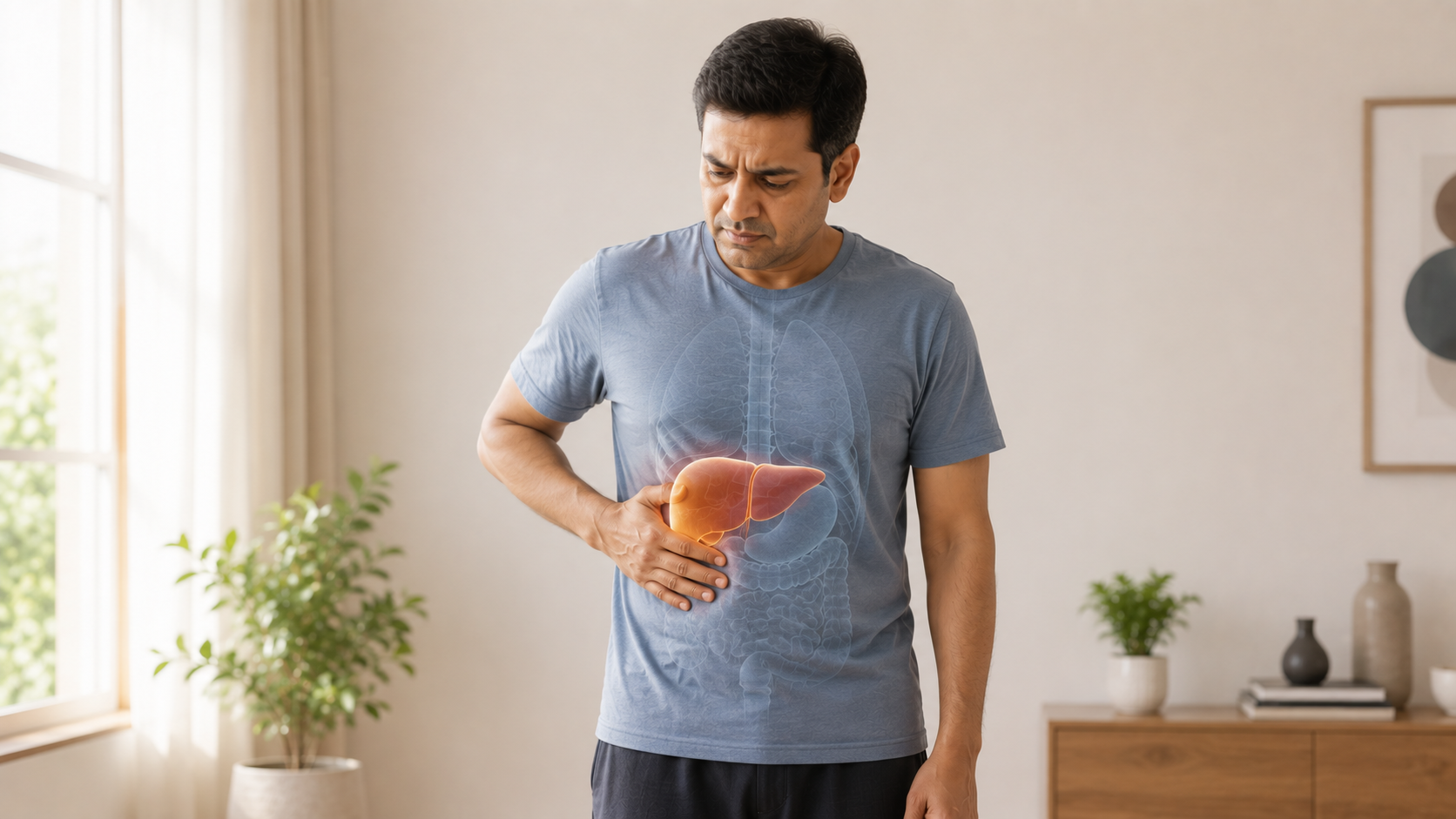
Some people notice a vague heaviness or aching in the upper right side – where the liver sits. Its absence does not rule out fatty liver.
3. Unexplained Weight Gain
Fatty liver is closely tied to insulin resistance, which promotes fat storage and abdominal weight gain.
4. Bloating and Digestive Discomfort
Impaired liver function affects bile production and digestion, leading to bloating and generalised gut discomfort.
5. Elevated Liver Enzymes Found on a Blood Test
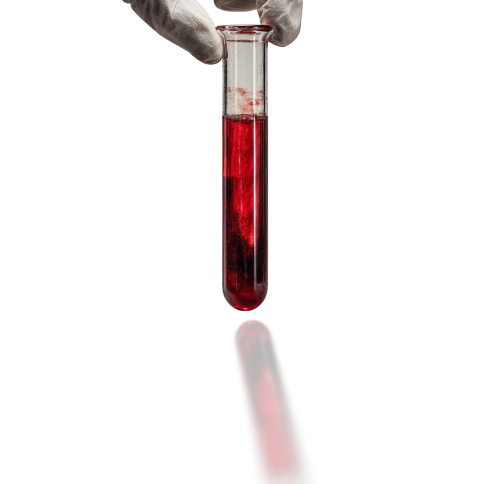
For most people, raised SGPT (ALT) and SGOT (AST) on a routine blood test is the first indication – before any symptoms appear. This is why annual liver function testing matters.
Key Blood Tests for Detecting Fatty Liver
SGPT (ALT): Primary marker of liver cell damage. Normal: below 40 U/L. In fatty liver, values of 40–80 U/L are common. | SGOT (AST): Elevated alongside SGPT. Normal: below 40 U/L. | ALP: Elevated in bile duct involvement. Normal: 44–147 U/L. | Serum Albumin and Total Protein: Fall in advanced liver disease. Note: Blood tests alone cannot confirm fatty liver – an abdominal ultrasound is needed to visualise fat deposits.
Frequently Asked Questions
Q1. What are the early signs of fatty liver?
Early fatty liver (NAFLD) often has no obvious symptoms. When symptoms do appear, they include persistent fatigue, dull discomfort or heaviness in the upper right abdomen, unexplained weight gain, and bloating. The most reliable early indicator is elevated liver enzymes – specifically raised SGPT (ALT) on a blood test – which is why annual liver function testing is important even without symptoms.
Q2. Which blood tests detect fatty liver?
The key blood tests for detecting fatty liver are SGPT (ALT), SGOT (AST), ALP (Alkaline Phosphatase), and GGT (Gamma-Glutamyl Transferase). Elevated SGPT is the most sensitive marker of liver cell damage. Serum Albumin and Total Protein fall in advanced liver disease. Note that blood tests suggest fatty liver but an abdominal ultrasound is required to confirm it.
Q3. Is fatty liver common in India?
Yes. A systematic review and meta-analysis of 50 Indian studies published in PubMed (2022) found that approximately 1 in 3 Indian adults has NAFLD (Non-Alcoholic Fatty Liver Disease), with an estimated pooled adult prevalence of 38.6%. Urban populations show higher rates. A 2022 PLOS ONE study in North India reported an urban NAFLD prevalence of 65.7%.
Q4. Can fatty liver be reversed?
Early-stage fatty liver (simple steatosis) is largely reversible with lifestyle changes including weight loss, a lower-sugar diet, increased physical activity, and alcohol avoidance. Advanced stages – NASH, fibrosis – may have partial reversibility. The earlier it is detected, the greater the potential for reversal.
Q5. Can I get a liver function test done at home in Pune?
Yes. FITTR Labs offers liver profile testing with home blood sample collection across Kharadi, Hadapsar, Viman Nagar, Wagholi, Kalyani Nagar, Magarpatta, Mundhwa, Koregaon Park, Yerawada, and Shivajinagar in Pune. Call +91 7804000800 or book online. Digital reports are delivered within 24 to 48 hours.
Q6. Who should get a liver function test regularly?
A liver function test is recommended annually for: adults above 30 years, people with diabetes or prediabetes, individuals with abdominal obesity, those with high triglycerides, people who consume alcohol, and anyone on long-term medications that affect the liver (such as statins or certain antibiotics).