





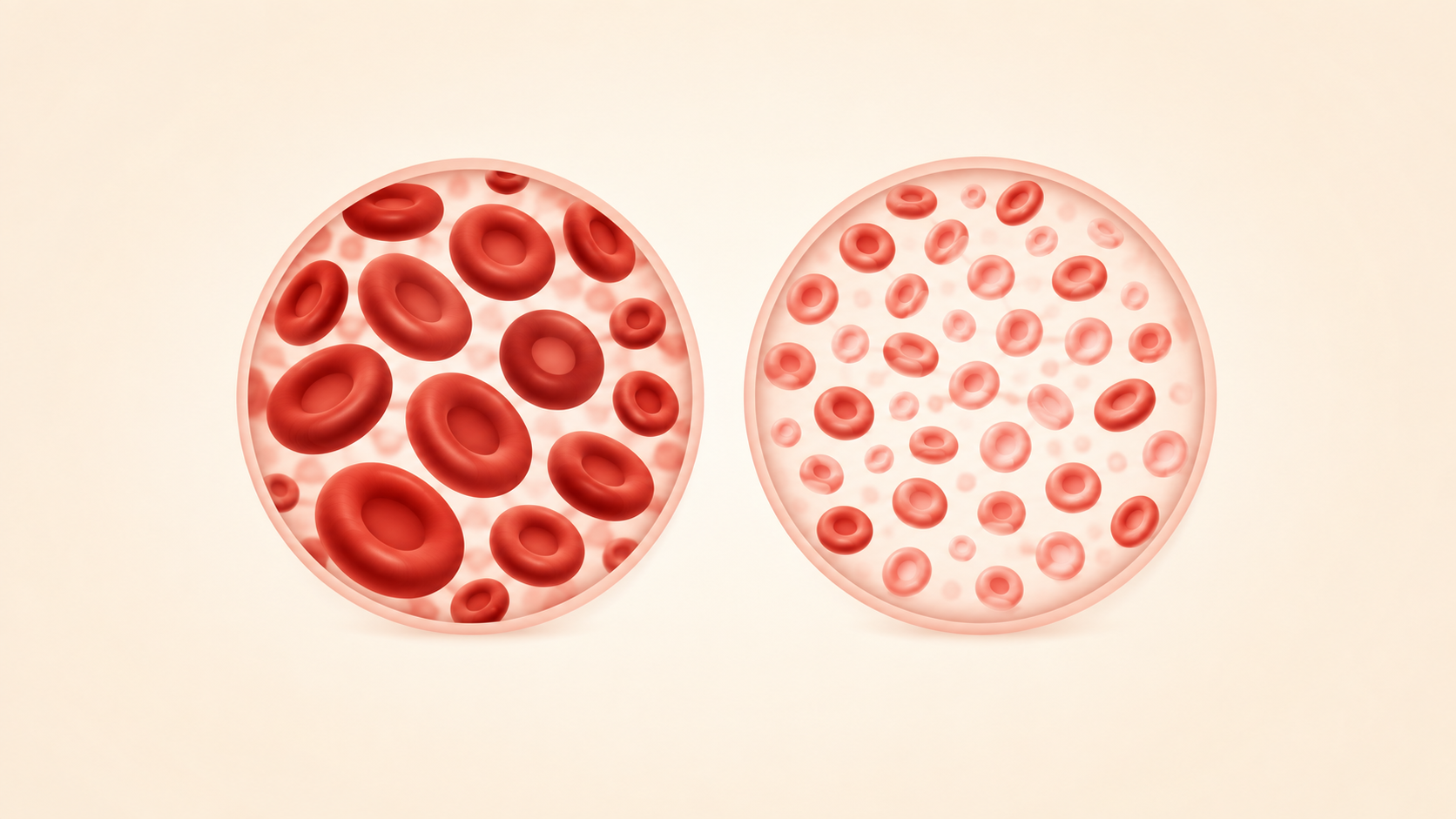
Anaemia is among the most persistent public health challenges in India. NFHS-5 (2019-21) found 57% of women aged 15-49, 67% of children under 5, and 25% of men aged 15-49 are anaemic. Despite decades of intervention, including the Anaemia Mukt Bharat programme, anaemia prevalence actually increased between NFHS-4 and NFHS-5.
Part of the challenge is that anaemia in India is not a single condition – it is a clinical sign with multiple causes. Treating all anaemia as iron deficiency, as has historically been the default, misses significant cases caused by Vitamin B12 deficiency, folate deficiency, thalassaemia, and chronic disease.
-> fittr.com/labs/full-body-checkup-test-kharadi-pune/
What Is Anaemia?
Anaemia is defined as haemoglobin concentration below the normal threshold for age and sex. Haemoglobin carries oxygen from the lungs to every tissue. When it falls, oxygen delivery is reduced, causing the characteristic symptoms of fatigue, breathlessness, and pallor.
HAEMOGLOBIN RANGES: Men 13.5-17.5 g/dL | Women 12-15.5 g/dL. WHO ANAEMIA THRESHOLDS: Men below 13.0 g/dL | Women below 12.0 g/dL | Pregnant women below 11.0 g/dL | Children 6-59 months below 11.0 g/dL. SEVERITY: Mild 10.0-12.9 g/dL (men) or 10.0-11.9 g/dL (women) | Moderate 7.0-9.9 g/dL | Severe below 7.0 g/dL.
Types of Anaemia and Their Causes
- Iron Deficiency Anaemia – the Most Common Type in India- Occurs when iron stores are sufficiently depleted that haemoglobin synthesis falls below normal. Common causes: inadequate dietary iron from predominantly plant-based diets, heavy menstrual bleeding, repeated pregnancies, intestinal parasites, and malabsorption syndromes.
- Vitamin B12 Deficiency Anaemia (Megaloblastic Anaemia) – B12 deficiency impairs DNA synthesis in developing red blood cells, producing abnormally large (macrocytic) cells – fewer in number. Driven largely by vegetarian dietary patterns. Also accompanied by neurological symptoms – tingling, memory problems, balance issues – which do not occur with iron deficiency anaemia.
- Folate Deficiency Anaemia – Folate deficiency causes anaemia by the same mechanism as B12. Particularly common during pregnancy (when demand increases significantly) and in malabsorption conditions. B12 and folate deficiency often coexist.
- Anaemia of Chronic Disease – Chronic inflammation – from rheumatoid arthritis, kidney disease, cancer, tuberculosis, HIV – suppresses red blood cell production by sequestering iron and impairing bone marrow response. Does not respond to iron supplementation.
- Thalassaemia– An inherited blood disorder in which haemoglobin is produced abnormally, causing chronic anaemia. India has a high burden of thalassaemia trait (carriers). Thalassaemia major requires regular blood transfusions.
- Haemolytic Anaemia- Red blood cells are destroyed faster than produced. Causes include autoimmune conditions, G6PD deficiency (common in India), sickle cell disease, and certain infections and medications.
Symptoms of Anaemia
- Persistent fatigue and weakness
- Pallor – pale skin, pale inner lower eyelids, pale nail beds
- Shortness of breath on mild exertion
- Palpitations – rapid or pounding heartbeat
- Dizziness and lightheadedness on standing
- Headaches and cold hands and feet
- In iron deficiency specifically: hair fall, brittle nails, pica, restless legs
- In B12 deficiency specifically: tingling in hands/feet, balance problems, memory difficulties
Which Blood Tests Diagnose Anaemia?
Complete Blood Count (CBC) – the First Step
KEY CBC PARAMETERS FOR ANAEMIA: Haemoglobin – confirms anaemia. MCV (Mean Corpuscular Volume) – most important for typing: below 80 fL = microcytic (iron deficiency or thalassaemia) | 80-100 fL = normocytic (chronic disease or haemolysis) | above 100 fL = macrocytic (B12 or folate deficiency). MCH (Mean Corpuscular Haemoglobin) – low in iron deficiency. RDW (Red cell Distribution Width) – elevated in iron deficiency.
Iron Studies – for Microcytic Anaemia
If MCV is low, iron studies confirm cause: ferritin, serum iron, TIBC, and transferrin saturation. These distinguish iron deficiency anaemia (low ferritin, low serum iron, high TIBC) from thalassaemia trait (normal ferritin, normal or elevated serum iron with low MCV).
Vitamin B12 and Folate – for Macrocytic Anaemia
If MCV is high, Vitamin B12 and serum folate are measured. B12 below 200 pg/mL with elevated MCV and megaloblastic changes on blood film confirms B12 deficiency anaemia.
Frequently Asked Questions
Q1. What are the most common types of anaemia in India?
The most common types in India are: iron deficiency anaemia (the most prevalent – driven by poor dietary iron and menstrual blood loss), Vitamin B12 deficiency anaemia (particularly in vegetarians), folate deficiency anaemia (especially during pregnancy), anaemia of chronic disease (in infections or chronic conditions), and thalassaemia trait (a genetic carrier state common in certain Indian communities).
Q2. What is the normal haemoglobin level?
Normal haemoglobin is 13.5 to 17.5 g/dL for men and 12 to 15.5 g/dL for women. The WHO defines anaemia as below 13 g/dL in men and below 12 g/dL in women. Severity: mild (10-12.9 g/dL for men, 10-11.9 g/dL for women), moderate (7-9.9 g/dL), or severe (below 7 g/dL).
Q3. Which blood test is used to detect anaemia?
A Complete Blood Count (CBC) is the first test. It measures haemoglobin, red blood cell count, and MCV. MCV is especially important: low MCV suggests iron deficiency or thalassaemia; high MCV suggests B12 or folate deficiency; normal MCV with low haemoglobin suggests chronic disease or haemolysis. Further tests – ferritin, B12, folate – are ordered based on the CBC pattern.
Q4. How is iron deficiency anaemia different from B12 deficiency anaemia?
Iron deficiency anaemia: small red blood cells (low MCV), low haemoglobin, low ferritin. Symptoms include pallor, fatigue, hair fall, restless legs. No neurological symptoms. Vitamin B12 deficiency anaemia: large red blood cells (high MCV), low haemoglobin, low B12. Symptoms include fatigue, pallor, AND neurological features – tingling, memory problems, balance difficulties.
Q5. What is the prevalence of anaemia in India?
NFHS-5 (2019-21): 57% of women aged 15-49, 67% of children under 5, and 25% of men aged 15-49 in India are anaemic. Anaemia prevalence in women has remained at approximately 45-57% since 1990 despite multiple government programmes, partly because the condition has multiple causes requiring different interventions.
Q6. Which blood test detects anaemia in a full body checkup?
The FITTR Labs full body checkup includes a Complete Blood Count (23 parameters – haemoglobin, MCV, MCH, RDW), ferritin and iron studies, and Vitamin B12 – making it one of the most comprehensive anaemia screening panels available in a single blood draw.