

Why 50g Became the “Standard” Oats Serving
Look at almost any oats pack in India and you will see 40g or 50g printed as the suggested serving. Fitness apps, diet charts and gym trainers repeat the same number. But is 50g actually the ideal amount for you, or just a convenient round figure? Knowing the 50g oats calories and macros is the first step to answering that.
In this guide we break down exactly what 50g of oats gives you, how it compares with smaller and larger portions, and how to decide whether 50g suits a fat-loss, maintenance or muscle-gain goal. We will also show how to turn a 50g bowl into a high-protein breakfast that keeps you full until lunch.
The short version: 50g is a sensible middle-ground portion, but the right serving depends on your calorie target and what you add to the bowl.
50g Oats Calories and Nutrition at a Glance
Here is the 50g oats nutrition profile for plain, dry rolled oats, based on standard food-composition data.
| Nutrient | 50g dry rolled oats |
| Calories | 195 kcal |
| Protein | 8.5 g |
| Carbohydrates | 33.2 g |
| Fiber | 5.3 g |
| Fat | 3.5 g |
| Sugars | ~0.5 g |
| Beta-glucan | ~1.5-2.5 g |
So the calories in 50g oats come to roughly 195 kcal before you add milk, fruit or toppings. Indian brand labels often list slightly lower protein (around 6-7g per 50g) and 185-195 kcal, so check your specific pack.
What 50g of Oats Looks Like
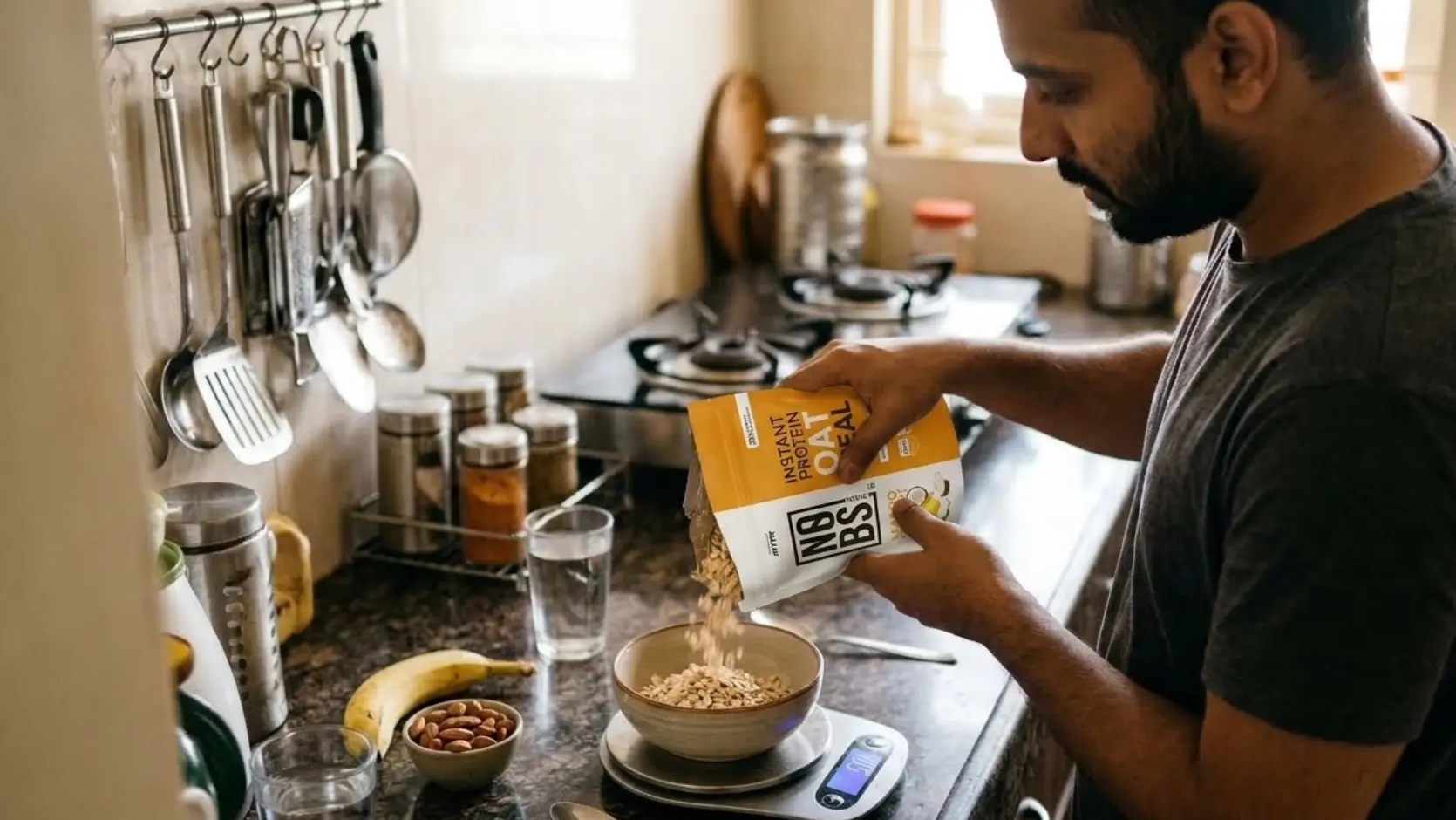
Without a kitchen scale, 50g of rolled oats is a little over half a cup, or about 7-8 level tablespoons. Once cooked in liquid it fills a standard cereal bowl. If you do not own a food scale, weigh your usual scoop once and remember it.
50g Oats Protein: Is It Enough?
The 50 gm oats protein figure – about 8.5g – is good for a grain but low for a meal. Most active adults benefit from 20-30g of protein at breakfast to support muscle maintenance, recovery and fullness. A plain 50g bowl covers less than half of that.
Ways to Lift 50g Oats Protein to 25g+
- Cook in 250ml toned milk: adds about 7.8g protein, taking the bowl to ~16g.
- Stir in one scoop of whey after cooking: adds ~24g.
- Top with 100g Greek yogurt or hung curd: adds ~10g.
- Mix in two egg whites while cooking savoury oats: adds ~7g.
- Swap plain oats for No BS Protein Oats, which provide 26-32g of complete yeast protein per serving, dairy-free.
For the bigger picture on protein in different oat types, read how much protein is in oats.
50g vs 30g vs 40g: How Portions Compare
The difference between portions looks small on the spoon but adds up over weeks.
| Serving (dry) | Calories | Protein | Carbs | Fiber |
| 30 g | 117 kcal | 5.1 g | 19.9 g | 3.2 g |
| 40 g | 156 kcal | 6.8 g | 26.5 g | 4.2 g |
| 50 g | 195 kcal | 8.5 g | 33.2 g | 5.3 g |
| 70 g | 272 kcal | 11.8 g | 46.4 g | 7.4 g |
| 100 g | 389 kcal | 16.9 g | 66.3 g | 10.6 g |
Going from 40g to 50g adds just 39 kcal. Going from 50g to 70g adds nearly 80 kcal. For a full breakdown of every portion, see our guide to oats calories by serving size and the 100g oats nutrition reference.
Is 50g the Ideal Serving? It Depends on Your Goal
There is no single ideal oats serving. The right amount is the one that fits your daily calorie and protein targets. Start by estimating your maintenance calories with the Fittr BMR calculator, then use these guidelines.
For Fat Loss: 30-40g Is Often Enough
In a calorie deficit, breakfast typically sits at 300-400 kcal. A 30-40g base leaves room for protein and fruit without overshooting. Many people find 40g of oats plus a protein source keeps them full better than 50g of oats alone. Our guide to how to eat oats for weight loss covers this in detail.
For Maintenance: 50g Works Well
If you are eating at maintenance and are moderately active, 50g of oats is a balanced choice. Add milk and a protein source and you have a 400-450 kcal breakfast that covers carbs, fiber and protein.
For Muscle Gain: 60-80g or Two Meals
During a lean bulk, 50g is often too little. Increase to 60-80g, cook in full-cream milk and add nut butter and banana, or eat oats twice a day. See oats for muscle gain for sample meals.
For Pre-Workout Fuel: 30-50g, 60-90 Minutes Before
A moderate portion of oats before training provides slow-release energy. Larger portions close to a session can feel heavy, so keep fat and fiber add-ons light pre-workout.
How Much Do Add-Ons Change 50g Oats Calories?
The oats are rarely where the calories hide. It is the liquid and toppings.
| 50g oats bowl | Approx. calories | Approx. protein |
| Cooked in water | 195 kcal | 8.5 g |
| + 250ml toned milk | 340 kcal | 16 g |
| + 250ml full-cream milk | 415 kcal | 16.5 g |
| + toned milk + 1 banana | 445 kcal | 17 g |
| + toned milk + 1 tbsp peanut butter + 1 tsp honey | 456 kcal | 20 g |
| + toned milk + 1 scoop whey | 460 kcal | 40 g |
Two people can both eat “50g of oats” and be 250 kcal apart. That is why logging the full bowl matters more than logging the oats.
Signs Your Oats Serving Is Too Small or Too Large
Your body gives useful feedback if you pay attention.
- Too small: hungry within 90 minutes, low energy mid-morning, cravings before lunch.
- Too large: heavy or bloated after eating, sluggish at your desk, weight trending up when you meant to maintain.
- About right: comfortably full for 3-4 hours, steady energy, weight trending in the direction you planned.
If you feel hungry soon after a 50g bowl, adding protein usually works better than adding more oats.
Practical Tips for Portioning 50g of Oats
- Weigh once, then use the same cup or scoop every day.
- Keep dry oats in an airtight jar with a measured scoop inside.
- For overnight oats, prep five jars of 40-50g on Sunday.
- Choose plain oats or an unsweetened protein oatmeal, then flavour yourself.
- Rotate sweet and savoury bowls so you stay consistent without boredom.
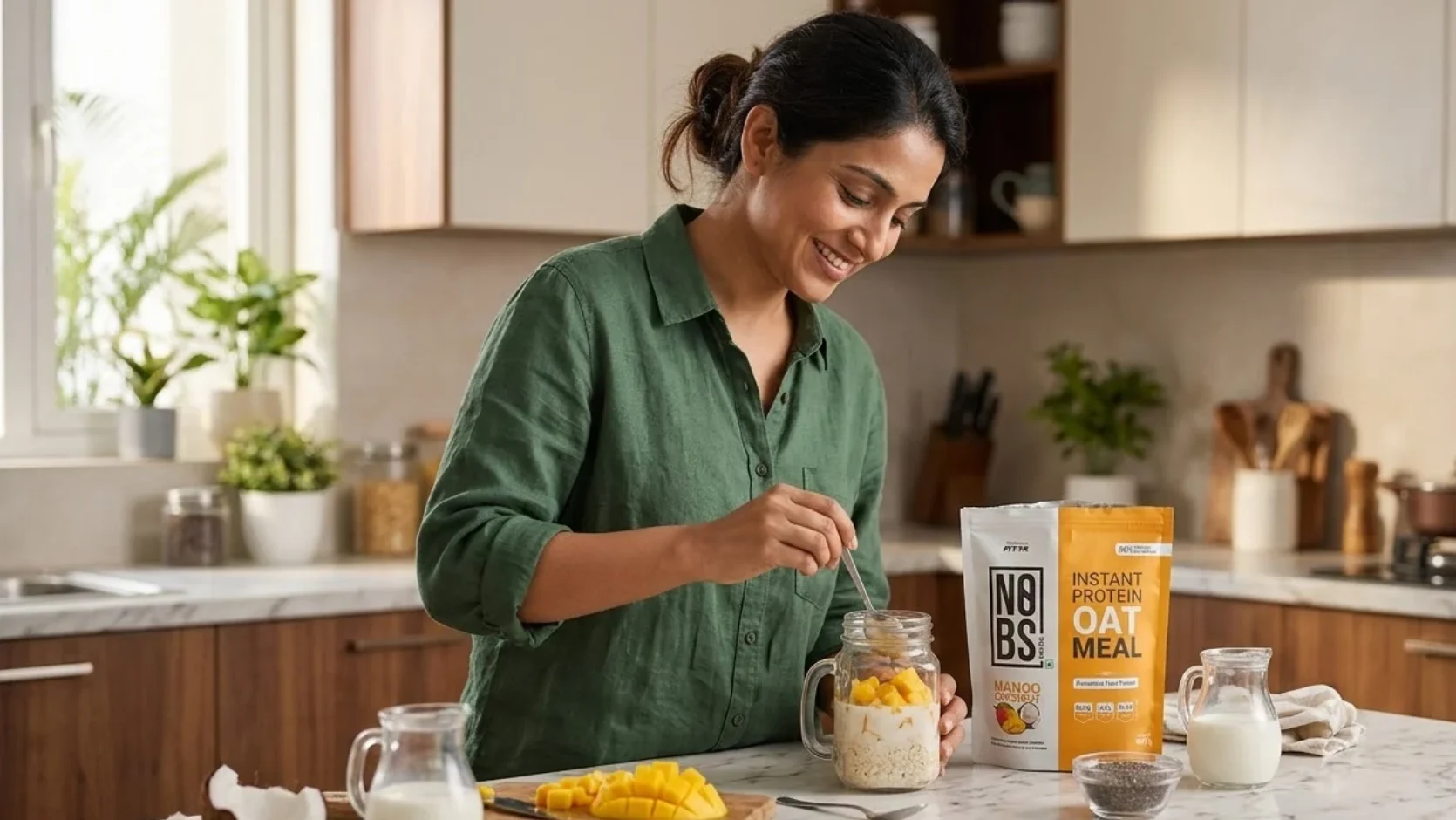
Fruity flavours like Mango Coconut make portioning easy because each serving already carries its protein – no extra scoops to measure.
Track the Result, Not Just the Serving
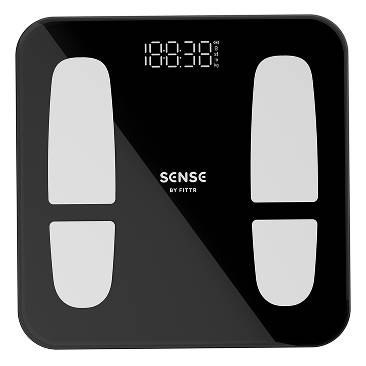
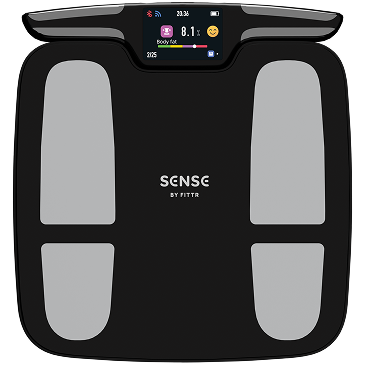
A serving size is a starting point. Whether 50g is right for you shows up over a few weeks in your weight trend and body composition. A body composition scale such as the SENSE Smart Scale helps you see whether changes in weight are coming from fat or muscle, so you can adjust your oats portion with confidence.
Five Ways to Build a 50g Oats Breakfast
A 50g serving is a flexible base. What you build on top decides whether it becomes a light 250 kcal meal or a 550 kcal recovery bowl. These five builds use the reference numbers for 50g of dry oats (195 kcal, 8.5g protein).
Builds With Approximate Totals
| Build | Add-ons | Approx. calories | Approx. protein |
| Light milk bowl | 200ml toned milk, cinnamon | ~311 kcal | ~15 g |
| Curd and fruit | 100g curd, 1 small apple, 1 tbsp chia | ~385 kcal | ~14 g |
| Savoury masala | Vegetables, 1 tsp ghee, 1 egg | ~340 kcal | ~15 g |
| Protein bowl | 200ml toned milk, 1 scoop whey | ~431 kcal | ~39 g |
| Bulking bowl | 250ml full cream milk, 1 banana, 1 tbsp peanut butter | ~615 kcal | ~21 g |
If you want the protein of the fourth build without dairy, a protein oatmeal with 26-32g protein per serving gets you there in one step.
50g Oats Through the Week: A Simple Rotation
Eating the same serving every day only works if the bowl does not get boring. Rotating the build keeps your 50g oats calories predictable while the taste changes.
A Seven-Day Example
- Monday: Light milk bowl with cardamom.
- Tuesday: Savoury vegetable oats with an egg on the side.
- Wednesday: Overnight oats with curd and chia.
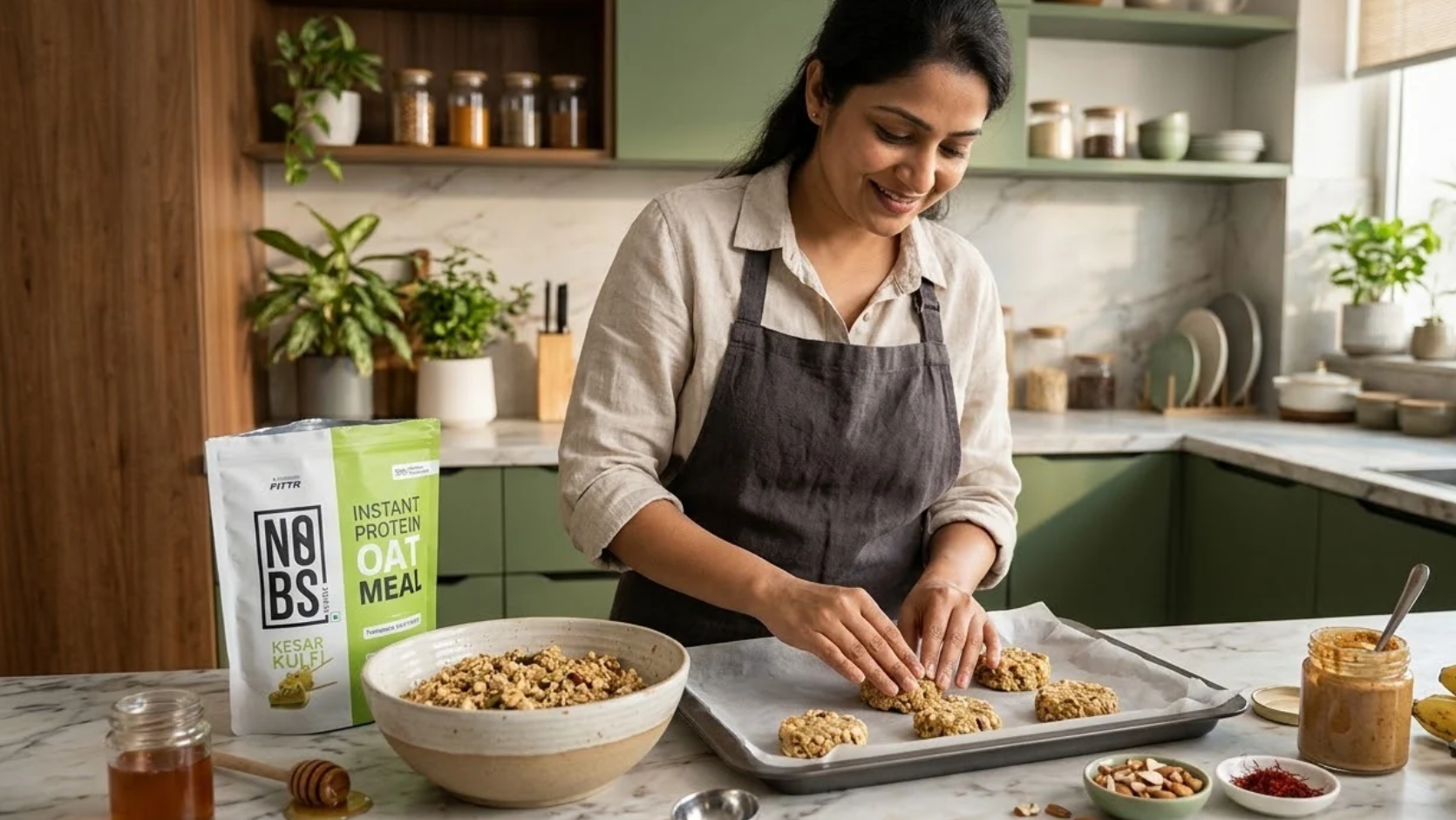
- Thursday: Protein bowl with whey or a Kesar Kulfi protein oats serving.
- Friday: Oats chilla made with 50g oats and besan.
- Saturday: Fruit and curd bowl.
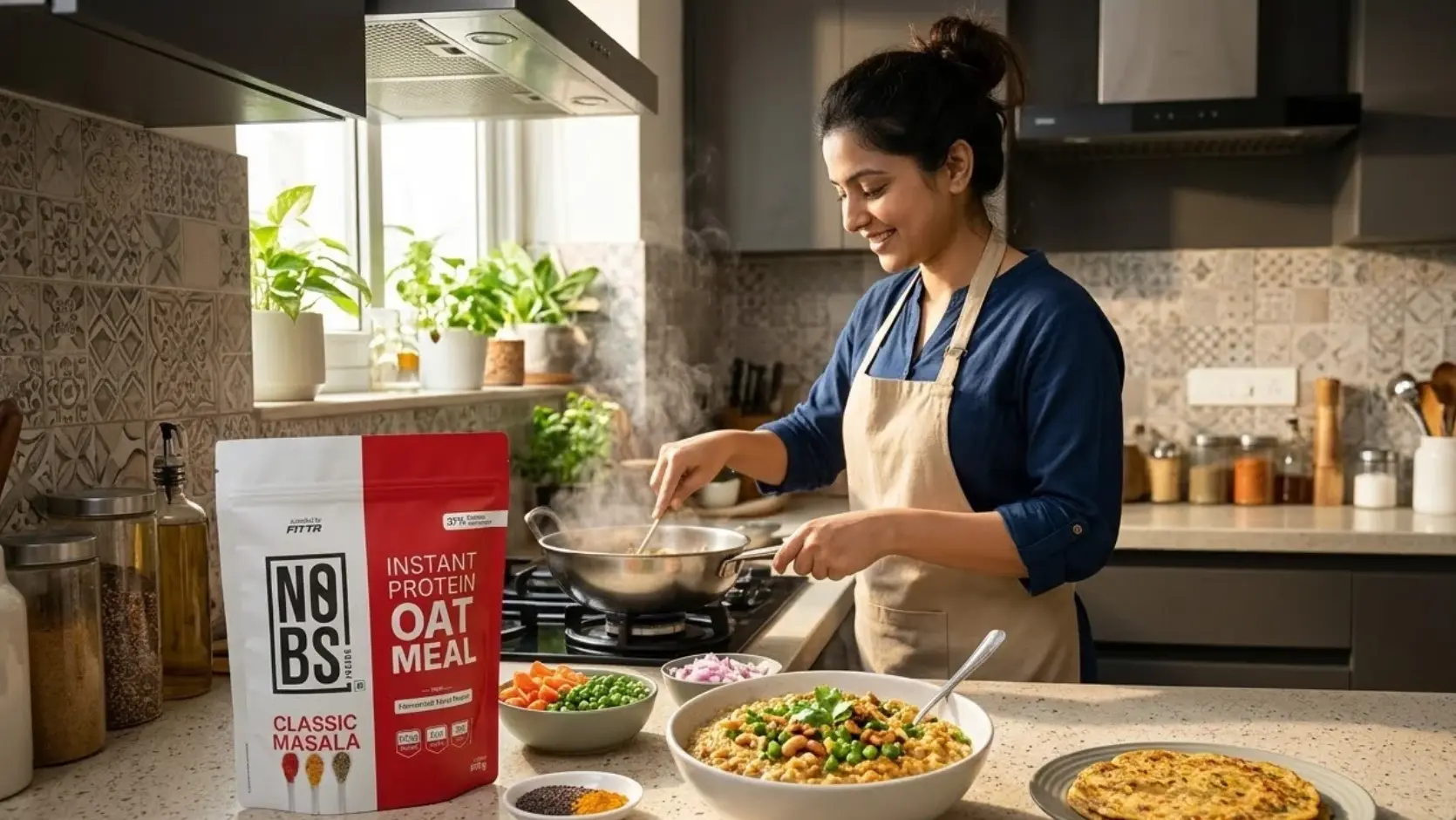
- Sunday: Oats upma with peas and peanuts.
Common Mistakes With 50g Oats Portions
A 50g serving sounds precise, but small habits can quietly change the numbers.
What to Watch For
- Eyeballing the oats instead of weighing them for the first week – “half a cup” can be 40g or 60g depending on the scoop.
- Logging cooked weight as if it were dry weight, which badly underestimates calories.
- Forgetting cooking oil, ghee or sugar in the final count.
- Adding several toppings “just a little” – nuts, seeds, honey and dried fruit can add 200 kcal together.
- Keeping 50g fixed even when your goal changes from fat loss to muscle gain.
The Bottom Line
50g of oats gives about 195 kcal, 8.5g protein, 33g carbs and 5.3g fiber. It is a sensible default for maintenance, slightly generous for fat loss and often too little for muscle gain. The portion matters less than what surrounds it – liquid, toppings and especially protein.
Pick your serving based on your goal, measure it consistently and build in 20-30g of protein, and your oats bowl will work for you rather than against you.
Frequently Asked Questions
How many calories are in 50g of oats?
50g of dry rolled oats contains about 195 kcal. Cooking it in 250ml toned milk brings the bowl to roughly 340 kcal.
How much protein is in 50g of oats?
About 8.5g according to standard food data, though many Indian brand labels show 6-7g. Adding milk, curd or whey can raise it to 20-40g.
Is 50g of oats enough for breakfast?
For most people at maintenance, yes – especially with milk and a protein source. For fat loss 30-40g may be enough; for muscle gain, 60-80g often works better.
Is 50g of oats good for weight loss?
It can be, if the full bowl fits your calorie deficit. Many people do better with 40g of oats plus more protein, which improves fullness for fewer calories.
How do I measure 50g of oats without a scale?
50g of rolled oats is roughly half a cup plus a tablespoon, or 7-8 level tablespoons. Weigh it once to calibrate your own cup or scoop.
Can I eat 50g of oats twice a day?
Yes, if it fits your calorie and fiber targets. Two 50g servings give about 390 kcal and 17g protein from oats alone, so balance the rest of the day with protein-rich foods and vegetables.
Measure Smart, Eat Well
50g oats calories, 50 gm oats protein or calories in 50g oats – however you search, the answer is the same: 50g is a solid starting point, and the right serving is the one that fits your goal.
Make every portion count with No BS Protein Oats, or stock up with the combo pack so your measured, high-protein breakfast is always ready.