





A weighing scale is one of the most familiar objects in any home, yet most of us never think about how to choose one, how to use it properly, or how much more a modern scale can actually tell us. The humble bathroom scale has quietly evolved into a genuine health tool – and picking the right one makes a real difference to your fitness journey. This guide walks through everything that matters: the types of weighing scales, what to look for, how to use one accurately, and how a smart scale goes far beyond a simple number on a display. Whether you want a basic scale for occasional checks or a smart scale to track your body composition over months, by the end of this you will know exactly what to buy and how to get the most from it.
What Is a Weighing Scale?
A weighing scale is a device that measures weight. In a health and fitness context, a body weighing scale measures your body weight, while a smart scale goes further and estimates your body composition – things like body fat, muscle mass and body water – alongside your weight. The broad category also includes kitchen scales, industrial scales and laboratory balances, but for personal health it is the body scale that matters, and that is the focus of this guide. The key shift in recent years is that scales have become connected. Where an old scale simply showed a number and forgot it, a modern smart scale records every reading, syncs it to an app, and turns scattered measurements into a trend you can actually learn from.
Types of Weighing Scales
It helps to know the main options before you choose. Different weighing scales are designed for different needs, from basic weight measurement to advanced body composition tracking. Understanding these differences can help you choose a scale that best matches your health and fitness goals.
Analog Scales
The classic spring-and-dial design. Affordable, battery-free, and simple to use, analog scales are suitable for basic weight measurement. However, they are generally less precise than digital models and display only body weight without any additional tracking features.
Digital Body Scales
Electronic load sensors with a clear digital display. They are more accurate and consistent than analog scales, making them ideal for regular weight tracking. Many models also offer features like automatic calibration and easy-to-read displays for greater convenience.
Smart Body-Composition Scales
Digital scales that estimate body fat, muscle mass, body water, and other body composition metrics in addition to weight. Most smart scales sync with a mobile app, allowing you to monitor trends over time and gain better insights into your overall health and fitness progress.
Kitchen and Industrial Scales
Designed for measuring food ingredients, packages, or commercial loads rather than body weight. While they are highly accurate for their intended purpose, they are not suitable for tracking personal health or fitness metrics.
What to Look for When Choosing a Weighing Scale
A few factors separate a scale you will trust from one you will ignore. Accuracy and consistency come first, because a scale that wanders is worse than useless for tracking progress. Capacity matters if anyone in the household is heavier than a basic scale’s limit. A clear, well-lit display makes daily use pleasant. And if your goals go beyond weight, app features and body-composition tracking become the deciding factors. Build quality, a non-slip surface and a sensible footprint round out the practical considerations.
Basic Scale vs Smart Scale
This is the central choice for most buyers. While both types measure body weight, the right option depends on whether you simply want to check your weight or gain deeper insights into your overall health and fitness progress.
Basic Scale
A basic scale shows only your weight – useful, but just one dimension of a much bigger health picture. It is ideal for users who want a simple, affordable solution without additional features or app connectivity.
Smart Scale
A smart scale measures your weight and estimates body fat, muscle mass, body water, and more, then syncs everything to a companion app so you can track long-term trends. For anyone working towards weight loss, muscle gain, or overall fitness, these additional insights make it easier to monitor progress beyond the number on the scale.
What a Smart Scale Measures
A good smart scale provides a much more complete picture of your health than weight alone. By tracking multiple body composition metrics over time, it helps you better understand how your body is changing and whether you’re moving closer to your fitness goals.
Body Weight
The headline number, recorded automatically and tracked over time to help monitor progress.
Body Fat Percentage
Often the single most useful metric for fitness goals, helping you understand how much of your body weight comes from fat.
Muscle Mass
Helps you confirm whether you are maintaining or building muscle, especially during strength training or weight loss.
Body Water
Provides additional context for normal day-to-day weight fluctuations caused by hydration levels.
BMI and More
Calculated from your data for an at-a-glance reference. Many smart scales also estimate additional metrics such as bone mass, protein percentage, and basal metabolic rate (BMR), depending on the model.
These estimates pair naturally with calculators like Fittr’s body fat percentage calculator and BMR calculator, which help you turn the numbers into a plan.
How to Use a Weighing Scale Accurately
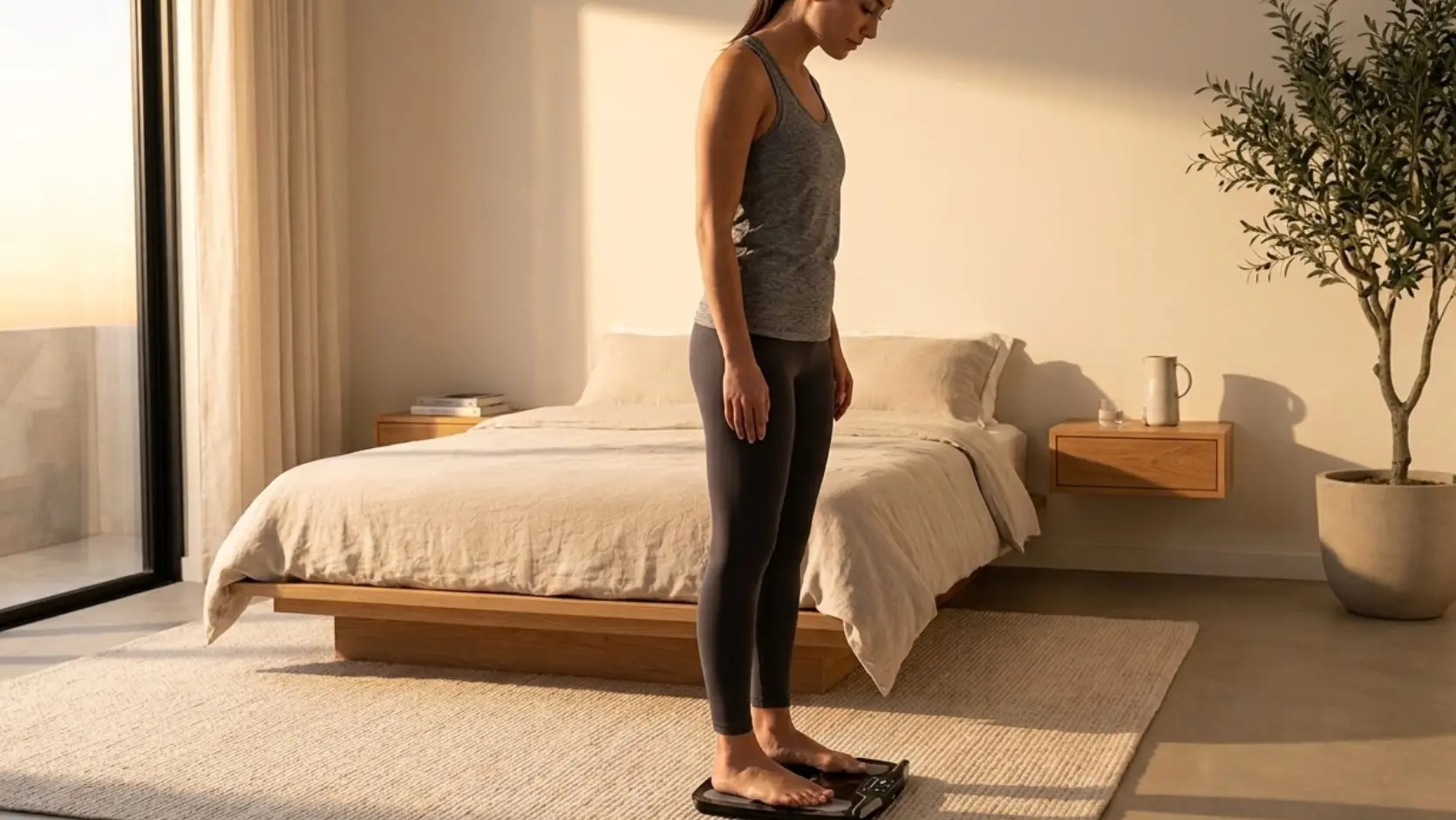
Accuracy is as much about how you weigh as which scale you own. Place the scale on a hard, flat, level surface – carpet throws readings off. Weigh yourself at the same time of day, ideally first thing in the morning after using the bathroom and before eating or drinking, wearing similar clothing each time. These small habits remove most of the noise, so the changes you see reflect real shifts rather than the time of day or a heavy meal.
Why the Trend Matters More Than One Reading
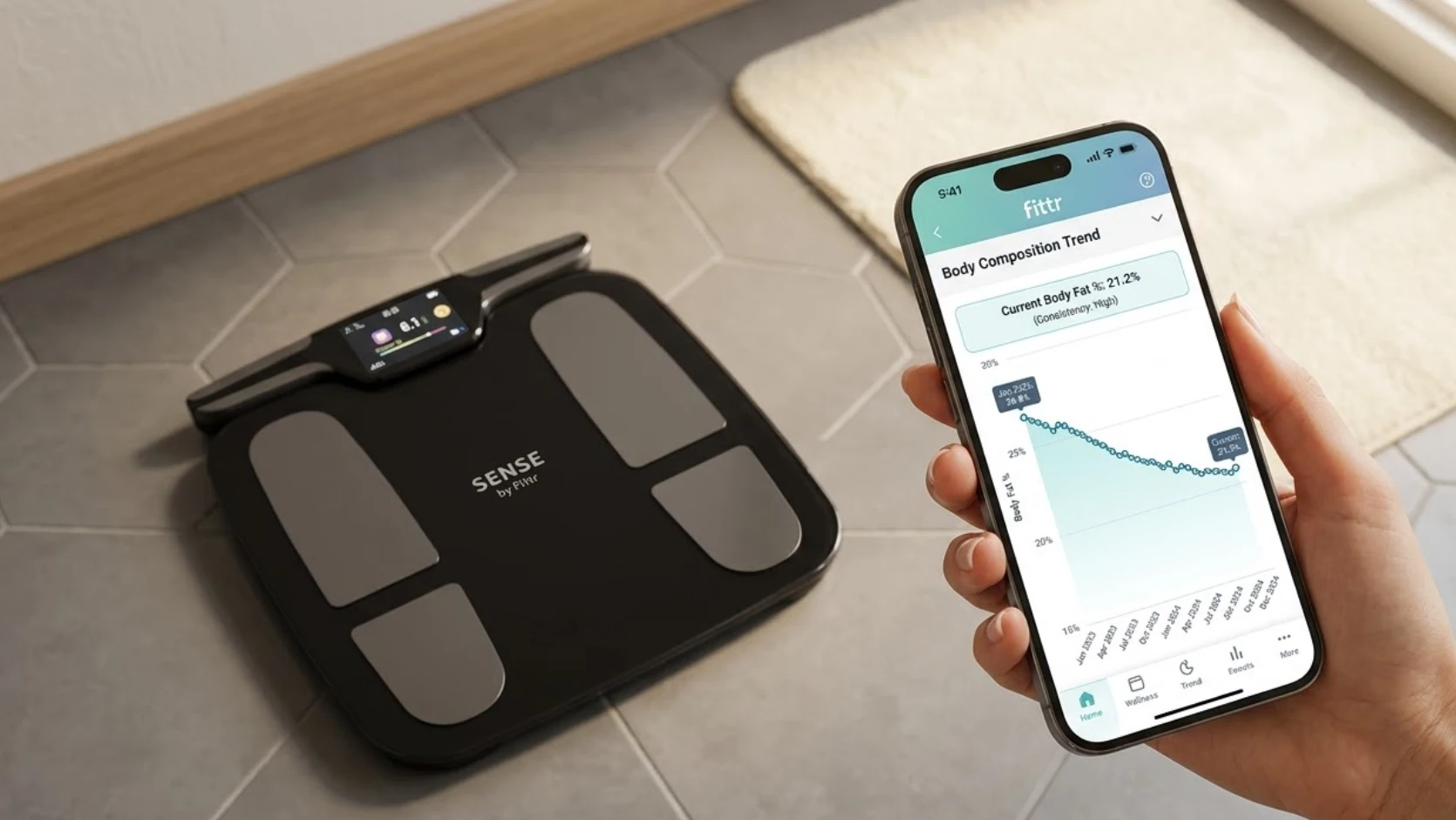
Your weight naturally fluctuates by a kilogram or two across a single day, driven by food, water, salt and hormones. That is why reacting to a single reading is a recipe for frustration. The real signal is the trend over days and weeks: a line that drifts down, holds steady or climbs tells you whether your plan is working, while any one morning’s number is just noise. A smart scale’s app makes this trend visible, which is half the value of owning one.
Common Weighing Mistakes
A handful of mistakes undermine most people’s weighing. Weighing on carpet or an uneven floor distorts the reading. Weighing at random times of day compares apples to oranges. Weighing daily and panicking at every wobble destroys motivation. And judging progress by weight alone misses body-composition changes – you can lose fat and gain muscle while the scale barely moves. Avoid these, and the scale becomes an ally rather than a source of stress.
Weighing Scales and Your Health Goals
How you use a scale depends on your goal. For fat loss, body fat percentage and the weight trend together tell the real story. For muscle gain, muscle mass matters more than scale climbing. For maintenance, a steady trend is the win. Pairing your scale data with an understanding of your total daily energy expenditure helps you set the calorie targets that move those numbers in the right direction.
Where a Scale Fits With Other Tools
A scale is one instrument in a larger health toolkit. It tells you what your body weighs and, if it’s a smart scale, provides an estimate of your body composition. Pairing it with a lean mass estimate gives you a better understanding of how much of your weight comes from muscle rather than fat.
It’s also helpful to understand the difference between BMI and BMR, as they measure different aspects of health. Alongside these metrics, a wearable like the FITTR HART ring can track sleep and recovery, giving you a more complete picture of both how your body is changing and how it is functioning.
Caring for Your Weighing Scale
A scale asks little maintenance, but a few habits keep it accurate. Keep it on a hard surface, wipe it clean of dust and moisture, replace batteries before they fade, and avoid dropping or overloading it. Store it flat rather than propped against a wall, which can stress the sensors. Looked after lightly, a quality scale stays accurate for years of daily use.
Weighing Scales in India
For Indian buyers, value and support are the deciding factors. Basic scales are inexpensive and widely available, while smart body-composition scales cost more but deliver far more insight. India-available brands offer local pricing, warranty and easier service than imports.
Example: The FITTR Sense Smart Scale
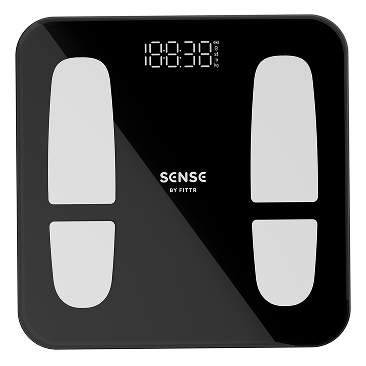
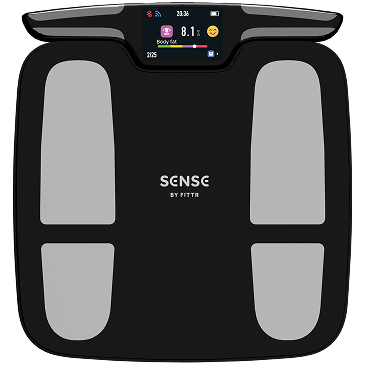
As an example of the smart category, the FITTR Sense smart scale measures your weight and estimates body composition, then syncs to the FITTR app so you can track fat, muscle and your weight trend over time rather than staring at a single number. For anyone serious about a fitness goal, that connected, body-composition view is exactly what turns a scale from a number-teller into a progress tracker.
Weighing Scales for the Whole Family
If several people will use the scale, a couple of features matter more. Multi-user smart scales recognise different individuals and keep each person’s history separate in the app, which is far more useful than everyone sharing one jumbled record. A higher weight capacity ensures the scale suits every member of the household, and a large, clear display helps older users. For families, these conveniences turn a single gadget into a shared health tool that everyone actually benefits from.
When to Weigh and When to Step Back
Weighing has a healthy frequency, and it is not constant. For most people, weighing a few times a week at the same time of day captures the trend without inviting obsession over normal daily swings. If you find the number affecting your mood, it is perfectly fine to weigh less often and lean on other markers like how your clothes fit and how you feel. The scale is a tool to inform you, never a verdict on your worth, and stepping back when it stops helping is a sign of a healthy relationship with it.
Reading Body-Composition Numbers Sensibly
Smart scales estimate body fat and muscle rather than measuring them with laboratory precision, so the right way to read them is as trends, not absolutes. The exact body-fat figure may differ from a clinical test, but if the scale shows your fat trending down and muscle holding steady over weeks, that direction is reliable and meaningful. Judge progress by the movement of these numbers over time, taken under consistent conditions, rather than fixating on any single day’s estimate.
A Quick Buyer’s Checklist
Before you buy, run through this:
- Do you want weight only, or body composition too?
- Will more than one person use it – do you need multi-user support?
- Is the weight capacity right for everyone in the home?
- Does it sync to an app you will actually use?
- Is there local warranty and support where you are buying?
Frequently Asked Questions
What is a weighing scale?
A weighing scale is a device that measures weight. For health, a body weighing scale measures your body weight, and a smart scale also estimates body composition like fat and muscle.
How do I choose a weighing scale?
Decide whether you want a simple weight reading or body composition too, then weigh accuracy, capacity, display, app features and budget. Smart scales add the most insight for health goals.
How do I use a weighing scale accurately?
Place it on a hard, flat surface, weigh yourself at the same time of day under similar conditions, and track the trend over days rather than reacting to single readings.
What is the difference between a weighing scale and a smart scale?
A basic scale shows only weight; a smart scale also estimates body fat, muscle and more, and syncs to an app to track trends over time.
Are digital weighing scales accurate?
Quality digital scales are accurate and consistent for tracking trends. Consistency matters more than a single absolute figure when monitoring your health.
Choose the Right Scale, Track the Right Progress
A weighing scale, weight scale, or weighing balance is far more than a number under your feet – chosen well and used consistently, it becomes a window into your health. Pick the type that matches your goals, weigh accurately at the same time each day, and follow the trend rather than the daily wobble. And if you want to see not just your weight but what your body is made of, a smart option like the FITTR Sense turns every step on the scale into real, trackable progress.