




Why Oats Nutrition Is Worth Understanding
Oats are one of the most recommended breakfast foods in India, and for good reason. But “oats are healthy” is only half the story. Understanding oats nutrition – how many calories, how much protein, what kind of carbs and how much fiber sit in a bowl – is what lets you use oats properly, whether your goal is fat loss, muscle gain or simply steadier energy through the morning.
This guide breaks down the full nutritional content of oats per 100g and per realistic serving, explains what each nutrient does for you, and shows how to turn a plain bowl into a balanced, high-protein meal.
If you have ever wondered why a bowl of oats keeps one person full until lunch and leaves another hungry by 10am, the answer usually lies in these numbers and in what gets added to the bowl.
Oats Nutritional Value Per 100g
Plain rolled oats are a whole grain, so you get the bran, germ and endosperm together. Here is the oats nutritional value per 100g of dry rolled oats, based on standard food-composition data.
| Nutrient (per 100g dry) | Amount |
| Calories | 389 kcal |
| Protein | 16.9 g |
| Total carbohydrates | 66.3 g |
| Dietary fiber | 10.6 g |
| Net carbs | ~56 g |
| Sugars | ~1 g |
| Fat | 6.9 g |
| Beta-glucan (soluble fiber) | ~3-5 g |
Indian brand labels usually show 370-390 kcal and 12-14 g protein per 100g, depending on the variety and processing, so always check the pack you buy. The overall pattern stays the same: oats are carbohydrate-led, with more protein and fiber than most breakfast cereals.
Oats Nutrition Per Serving
Nobody eats 100g of dry oats in one go. A typical bowl uses 30-50g, so the numbers per serving look like this.
| Serving (dry) | Calories | Protein | Carbs | Fiber | Fat |
| 30 g | 117 kcal | 5.1 g | 19.9 g | 3.2 g | 2.1 g |
| 40 g | 156 kcal | 6.8 g | 26.5 g | 4.2 g | 2.8 g |
| 50 g | 195 kcal | 8.5 g | 33.2 g | 5.3 g | 3.5 g |
For a deeper look at portions, see our guides to oats calories by serving size and 50g oats calories.
Calories in Oats: Energy Without the Crash
At roughly 390 kcal per 100g, oats are not a low-calorie food on their own – they are energy-dense in their dry form. What makes them useful is how that energy is delivered. The combination of complex carbohydrate and soluble fiber means digestion is slower than with refined cereals, so energy arrives gradually rather than in a spike.
Why Portion Size Matters More Than the Food
Oats rarely make or break a diet. The portion and the add-ons do. A 40g bowl cooked in water is about 156 kcal; the same bowl cooked in full-cream milk with honey, banana and nut butter can cross 500 kcal. Both can be the right choice – the first suits a fat-loss phase, the second a muscle-gain phase – as long as you know which one you are eating.
Protein in Oats: Good for a Grain, Not Enough on Its Own
Oats have more protein than rice, wheat flakes or cornflakes. Still, 40g of oats gives under 7g of protein, which is far below the 25-30g many people aim for at each main meal when training or trying to lose fat.
How to Raise the Protein in Your Bowl
- Cook oats in milk or soy milk instead of water (adds about 6-7g per 200ml).
- Stir in a scoop of whey or plant protein after cooking (about 24g per scoop).
- Top with Greek yogurt, hung curd or a handful of seeds.
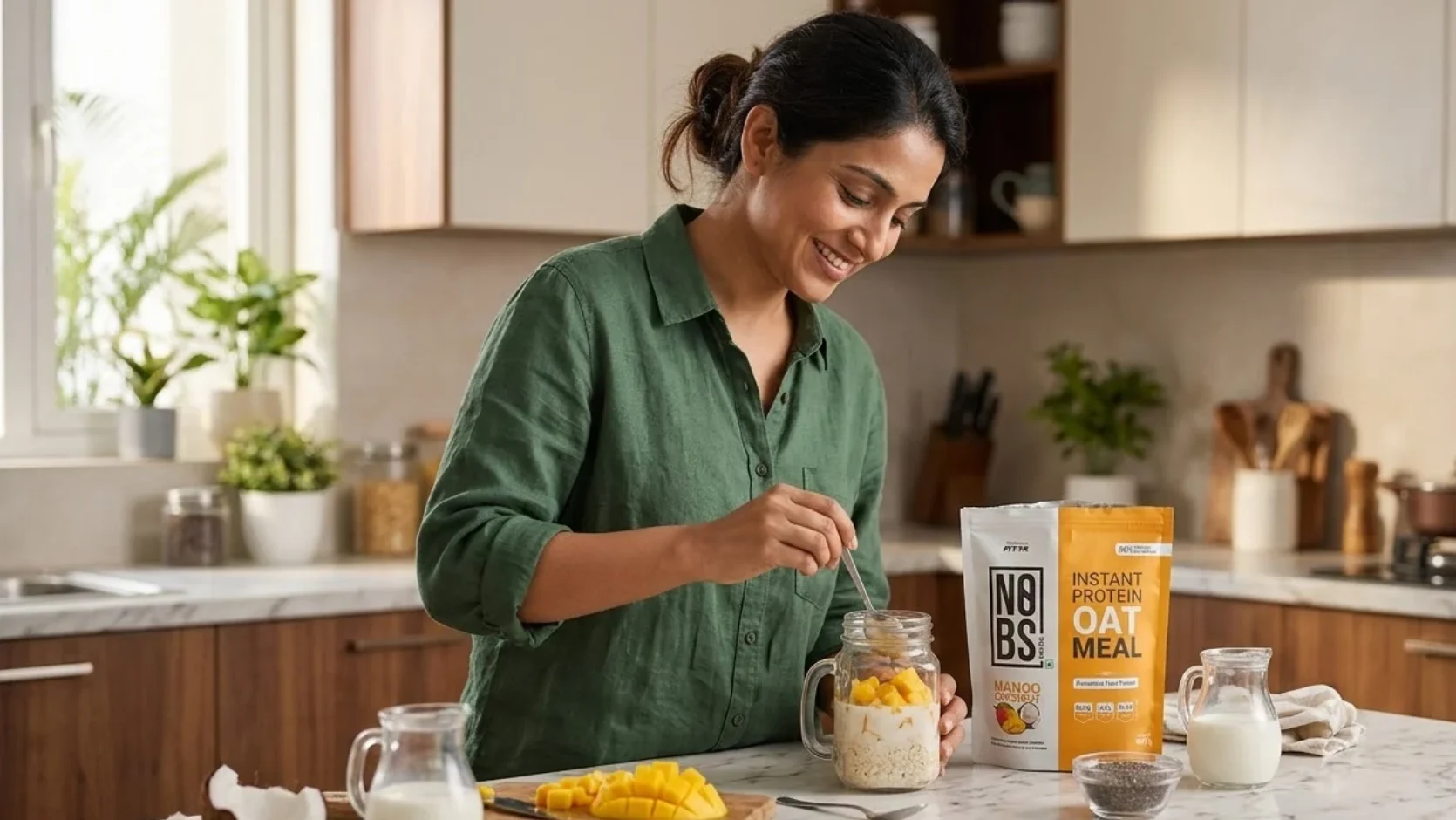
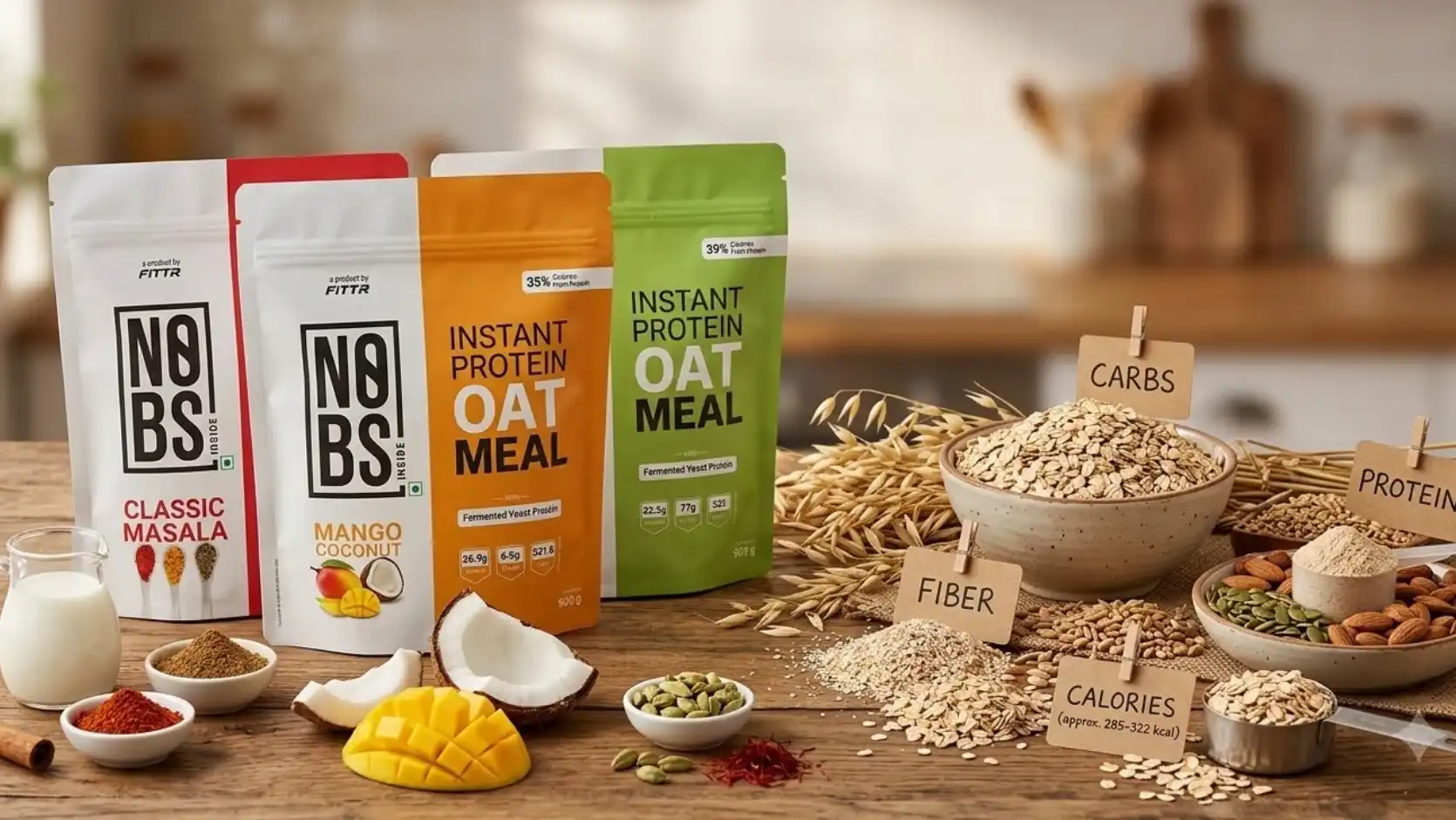
- Choose a ready protein oatmeal such as No BS Protein Oats, which delivers 26-32g of complete yeast protein (PDCAAS 1.0) per serving without dairy.
Our full breakdown of how much protein is in oats and oats protein per 100g compares rolled, steel-cut and instant varieties in detail.
Carbs in Oats: Complex, Slow and Fiber-Rich
Carbohydrate makes up about two-thirds of oats by weight. Most of that is starch, with very little sugar – around 1g per 100g in plain oats. Flavoured instant packs are a different story, and some carry several teaspoons of added sugar per sachet.
Oats and Blood Sugar
Steel-cut and rolled oats sit in the low to medium glycemic index range, while finely processed instant oats are higher. Pairing oats with protein, fat or extra fiber lowers the overall glycemic response of the meal. Our guide to carbs in oats and the oats glycemic index explain this in more depth.
Fiber and Beta-Glucan: The Real Star of Oats Nutrition
The standout feature of the nutritional content of oats is fiber – over 10g per 100g – and especially beta-glucan, a soluble fiber that forms a gel in the gut.
- Beta-glucan slows stomach emptying, which helps you feel full for longer.
- About 3g of oat beta-glucan a day is linked to lower LDL (“bad”) cholesterol, a benefit recognised by food regulators in the US and Europe.
- It blunts the rise in blood sugar after a meal.
- It feeds beneficial gut bacteria as a prebiotic fiber.
Reaching 3g of beta-glucan typically takes 60-80g of oats spread across the day, or a regular daily bowl alongside other whole grains, pulses and vegetables.
Fat in Oats: Small but Useful
Oats contain more fat than most grains – about 7g per 100g – and most of it is unsaturated. That small fat content contributes to satiety and helps the bowl feel more like a meal than a snack.
Vitamins and Minerals in Oats
Oats food is often discussed only in terms of macros, but the micronutrient profile is strong for a cereal.
| Micronutrient (per 100g) | Amount | Why it matters |
| Manganese | 4.9 mg | Bone health and metabolism |
| Phosphorus | 523 mg | Bones, teeth, energy production |
| Magnesium | 177 mg | Muscle and nerve function |
| Iron | 4.7 mg | Oxygen transport |
| Zinc | 4 mg | Immunity and recovery |
| Thiamin (B1) | 0.76 mg | Turning carbs into energy |
Oats also contain avenanthramides, antioxidants found almost only in oats, which have anti-inflammatory properties.
Does the Type of Oats Change the Nutrition?
Per gram, steel-cut, rolled and instant oats have nearly the same calories, protein and fiber. The difference is processing. Steel-cut oats are chopped groats, rolled oats are steamed and flattened, and instant oats are rolled thinner and pre-cooked. The more processed the oats, the faster they cook – and the faster they digest.
Watch the Label, Not the Name
Masala and flavoured oats can add sodium, sugar and oil. Compare the label against plain oats before assuming the nutritional value is the same. For a side-by-side comparison, read rolled vs steel cut vs instant oats.
How to Build a Balanced Bowl From Oats Nutrition
Knowing the numbers makes building a better bowl simple. Use this framework:
- Base: 30-50g oats, depending on your calorie target.
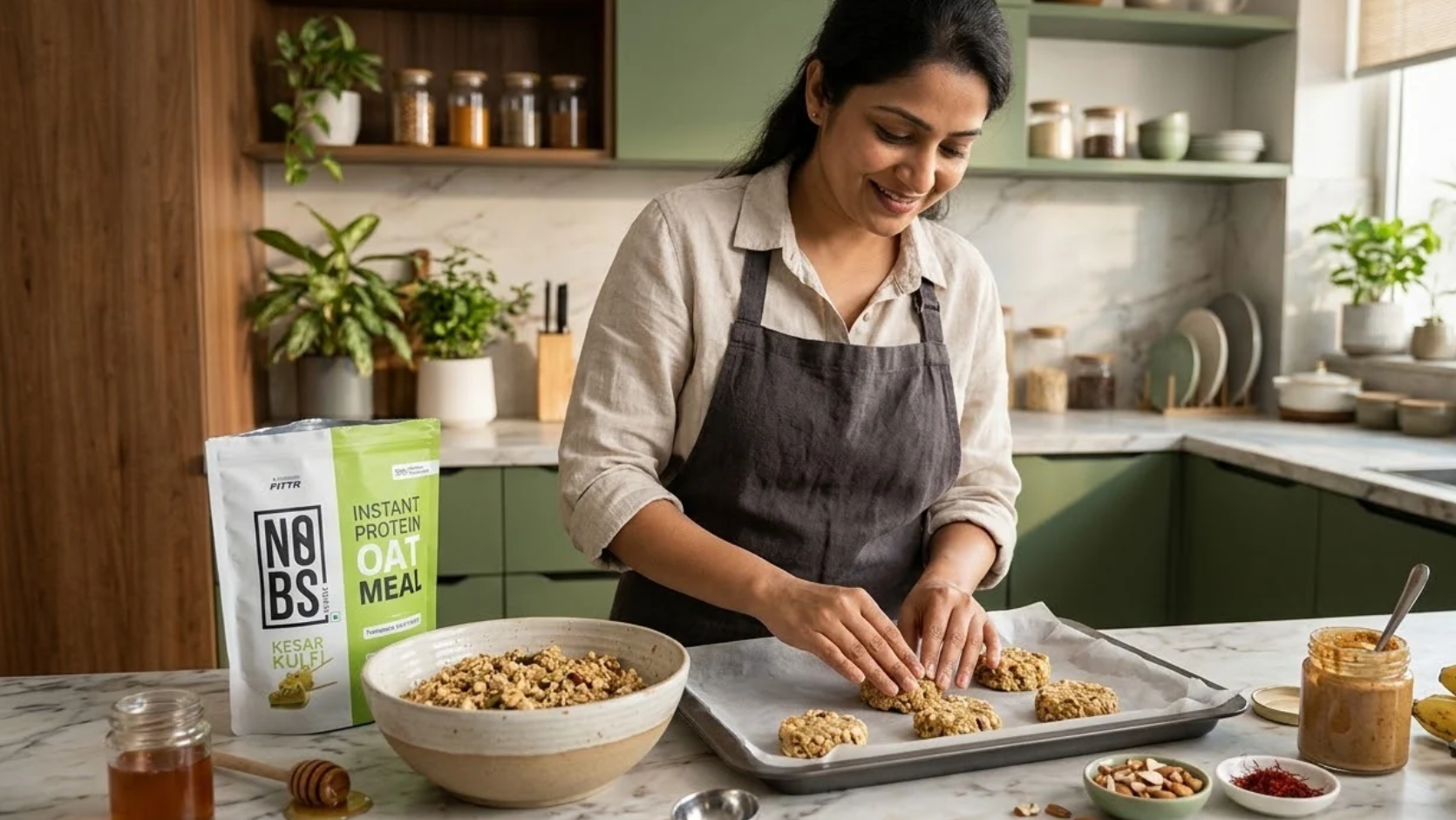
- Protein: add 15-25g from milk, whey, curd, eggs or a protein oatmeal like the Kesar Kulfi flavour.
- Fiber and micronutrients: fruit, vegetables (for savoury oats) or chia and flax seeds.
- Healthy fat: a few nuts or a teaspoon of nut butter or ghee – measured, not poured.
- Flavour without sugar: cinnamon, cardamom, vanilla, jeera, curry leaves.
Use the Fittr macro calculator to see how your bowl fits your daily protein and calorie targets.
Tracking Whether Your Oats Routine Is Working
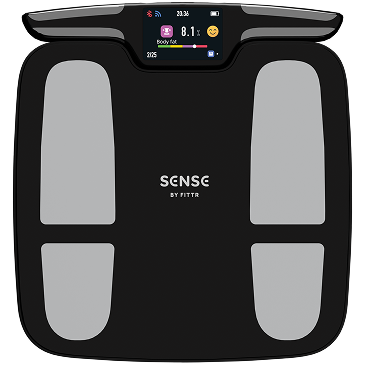
Nutrition labels tell you what goes in; your body tells you what is working. Weekly weigh-ins and periodic body composition checks show whether your oats-based breakfast supports fat loss or lean gain. A body composition scale such as the SENSE Smart Scale tracks weight alongside fat and muscle trends, so you can adjust portions with data rather than guesswork.
Oats Nutrition Myths vs Facts
Oats attract plenty of half-truths. Here are the common ones.
Four Common Myths
- Myth: oats are a complete protein. Fact: oat protein is good for a grain, but it is lower in the amino acid lysine. Pairing oats with milk, curd, pulses or a complete protein source covers the gap.
- Myth: flavoured oats have the same nutrition as plain oats. Fact: the oat base is similar, but flavoured packs can add sugar, salt and oil. The label decides, not the picture on the front.
- Myth: oats “detox” the body. Fact: your liver and kidneys handle that. Oats help in a more practical way – through fiber, steadier energy and better fullness.
- Myth: more oats always means more benefit. Fact: beyond your calorie needs, extra oats simply means extra energy. Portion still matters.
A Sample Day Using Oats Nutrition Well
Here is how one balanced day might use oats without letting them crowd out other foods:
| Meal | What to eat | Why it works |
| Breakfast | 40 g oats cooked in 200 ml toned milk, topped with seeds | About 272 kcal and 13 g protein with slow carbs and fiber |
| Lunch | Dal, 2 rotis, sabzi, salad | Pulses and vegetables add different fibers and minerals |
| Snack | Curd or a protein shake | Tops up protein for the day |
| Dinner | Paneer, tofu, eggs or chicken with vegetables | Keeps protein high and the meal lighter |
One serving of oats a day is plenty for most people to benefit from its beta-glucan, while the rest of the plate brings variety.
The Bottom Line
Oats nutrition is strong for a grain: around 389 kcal, 17g protein, 66g carbs and over 10g fiber per 100g, with useful minerals and cholesterol-friendly beta-glucan. Their weak spot is protein per serving, which is easy to fix with milk, curd, whey or a dedicated protein oatmeal.
Choose your portion based on your goal, keep added sugar low and build every bowl with a protein source, and oats become one of the most dependable foods in an Indian fitness diet.
Frequently Asked Questions
What is the nutritional value of oats per 100g?
Per 100g of dry rolled oats you get about 389 kcal, 16.9g protein, 66.3g carbohydrates, 10.6g fiber and 6.9g fat. Indian brand labels may show slightly lower protein, around 12-14g.
Are oats high in protein?
Oats have more protein than most grains, but a typical 40g serving gives under 7g. Add milk, curd, whey or choose a protein oatmeal to reach 20-30g per bowl.
Is it healthy to eat oats every day?
Yes, for most people a daily bowl of plain oats fits a balanced diet well, providing fiber, beta-glucan and minerals. Keep portions sensible and avoid sugary flavoured packs.
Do instant oats have the same nutrition as rolled oats?
Per gram the calories, protein and fiber are nearly identical. Instant oats are more processed, so they digest faster and have a higher glycemic index.
Which nutrient in oats keeps you full?
Beta-glucan, a soluble fiber in oats, forms a gel in the gut that slows digestion and helps keep you full for longer.
How much oats should I eat in a day?
Most people do well with 30-50g dry oats per meal. Your exact portion depends on your calorie target, which you can estimate with a BMR or macro calculator.
Every Bowl Starts With the Numbers
Oats nutrition, oats nutritional value per 100g or the nutritional content of oats per bowl – however you search for it, the takeaway is the same: oats bring fiber, slow carbs and minerals, and you bring the protein.
Make that step easy with No BS Protein Oats, or stock up with the combo pack and build a breakfast habit that fits your goals.