


Why Oats Dosa Deserves a Spot in Your Breakfast Rotation
Dosa is the breakfast many South Indian homes wake up to, but the traditional version needs soaking, grinding and an overnight ferment. Oats dosa skips all of that. With a powdered-oats batter you can go from craving to crisp, golden dosa in about 20 minutes, and you get the fiber of a whole grain in the bargain.
This oats dosa recipe walks you through the instant method, the exact calories and macros per dosa, and simple upgrades that turn it into a high-protein breakfast. It also covers the small technique details – batter thickness, tawa heat, how you pour – that decide whether your dosa turns out lacy and crisp or thick and soft.
If you already like rava dosa, you will feel at home here: the batter behaves almost the same way.
What Makes an Instant Oats Dosa Work
The magic of an instant oats dosa comes from balancing three dry ingredients. Each one has a job.
- Powdered oats give body, fiber and that nutty flavour. Rolled or quick oats both work once ground.
- Rava (sooji) brings crunch and the classic lacy holes.
- Rice flour makes the edges crisp and helps the dosa release from the tawa.
- Curd adds a light tang that mimics fermentation, plus a little protein.
Use oats on their own and you get a soft, slightly gummy pancake. The rava and rice flour are what make it a dosa.
Rolled Oats vs Instant Oats for Dosa
Since everything gets ground, the type of oats matters less here than in a porridge. Rolled oats give a slightly nuttier flavour after roasting; quick or instant oats grind faster. Avoid flavoured masala oats sachets, which add salt, oil and seasoning you cannot control. Our comparison of rolled vs steel cut vs instant oats explains how processing changes digestion.
Oats Dosa Recipe: Ingredients (Makes 3 Dosas)
- 40 g rolled oats, dry-roasted and powdered
- 20 g fine rava (sooji)
- 20 g rice flour
- 50 g curd
- 1 small onion, finely chopped
- 1 green chilli, 1 tsp grated ginger, 6-8 curry leaves
- 2 tbsp coriander leaves, 1/2 tsp cumin seeds
- Salt to taste
- 200-250 ml water
- 1 tsp oil for the tawa
How to Make Oats Dosa: Step by Step
- Dry-roast the oats on low heat for 2-3 minutes until lightly fragrant. Cool and grind to a fine powder.
- In a bowl, mix the oats powder, rava, rice flour, salt and cumin.
- Whisk in the curd, then add water a little at a time until you have a thin, flowing batter – closer to buttermilk than to idli batter.
- Stir in the onion, chilli, ginger, curry leaves and coriander. Rest for 10-15 minutes so the rava and oats absorb water.
- Heat a cast-iron or non-stick tawa until very hot. Grease lightly and wipe off the excess.
- Stir the batter (the flours settle), then pour it from a height, starting at the outer edge and filling inwards. Do not spread it with a ladle.
- Drizzle a few drops of oil around the edges and cook on medium heat for 3-4 minutes until the base is golden and crisp.
- Fold and serve straight away.
Tips for a Crispy Dosa Every Time
- If the batter thickens while resting, add 2-3 tbsp water before each dosa.
- The tawa must be hot. Sprinkle a few drops of water – they should sizzle and vanish instantly.
- Cook only one side. Flipping softens the crust.
- Use a cast-iron tawa if you have one; it holds heat better for a crisp finish.
Oats Dosa Calories and Macros
Here are the calories in oats dosa made with the recipe above, calculated from standard values for each ingredient.
| Per serving | Calories | Protein | Carbs | Fiber | Fat |
| 1 oats dosa | ~130 kcal | 4.3 g | 20.7 g | 2.1 g | 3.3 g |
| 3 oats dosas (full recipe) | ~390 kcal | 12.8 g | 62 g | 6.3 g | 9.9 g |
Oats dosa calories depend heavily on oil. Each extra teaspoon on the tawa adds about 45 kcal, which is why restaurant versions are often 200+ kcal per dosa. The coconut chutney you serve it with can add another 80-150 kcal, so measure it if you are tracking.
How Oats Dosa Compares to a Regular Dosa
A plain rice-and-urad dosa has a similar calorie count per piece, but less fiber. The oats version gives you around 2g fiber per dosa from the whole grain, plus the beta-glucan that helps keep you full. The bigger win is convenience: no overnight planning needed. For the full nutrient picture of the grain itself, read our oats nutrition guide.
Making Oats Dosa Higher in Protein
At about 13g protein for three dosas, this is a good start but not a complete breakfast for someone training or losing fat. These swaps raise the protein without changing the taste much.
- Replace the rice flour with besan. 20g besan adds about 4.4g protein and keeps the dosa crisp.
- Add a paneer or egg filling. 50g crumbled paneer with onions and chilli adds about 9g protein; an egg cracked onto the dosa and spread out adds 6g.
- Serve with sambar, not just chutney. A katori of dal-rich sambar brings 5-7g protein and extra fiber.
- Pair with a protein drink. A glass of milk or a whey shake on the side rounds the meal to 25-30g protein.
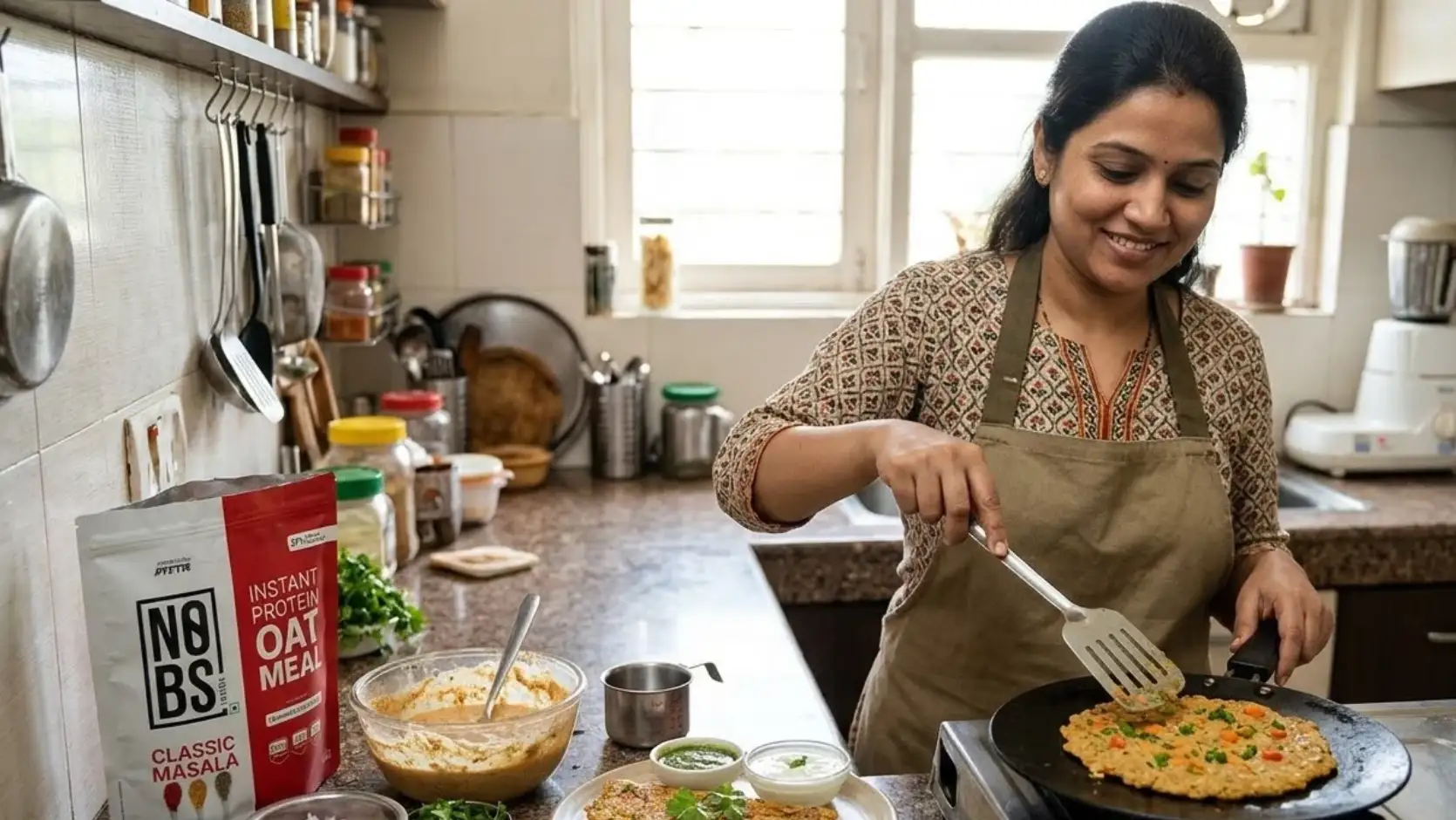
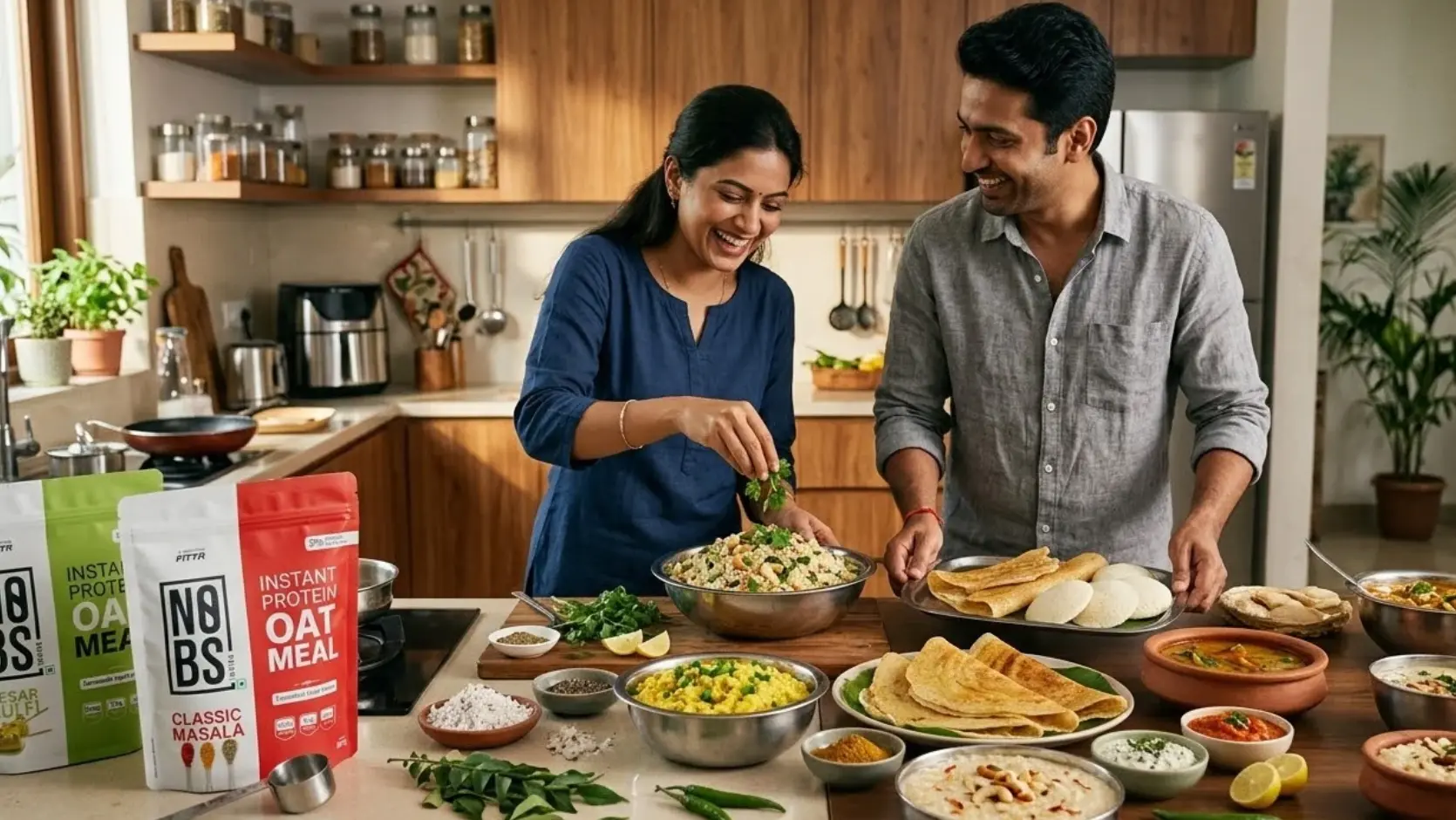
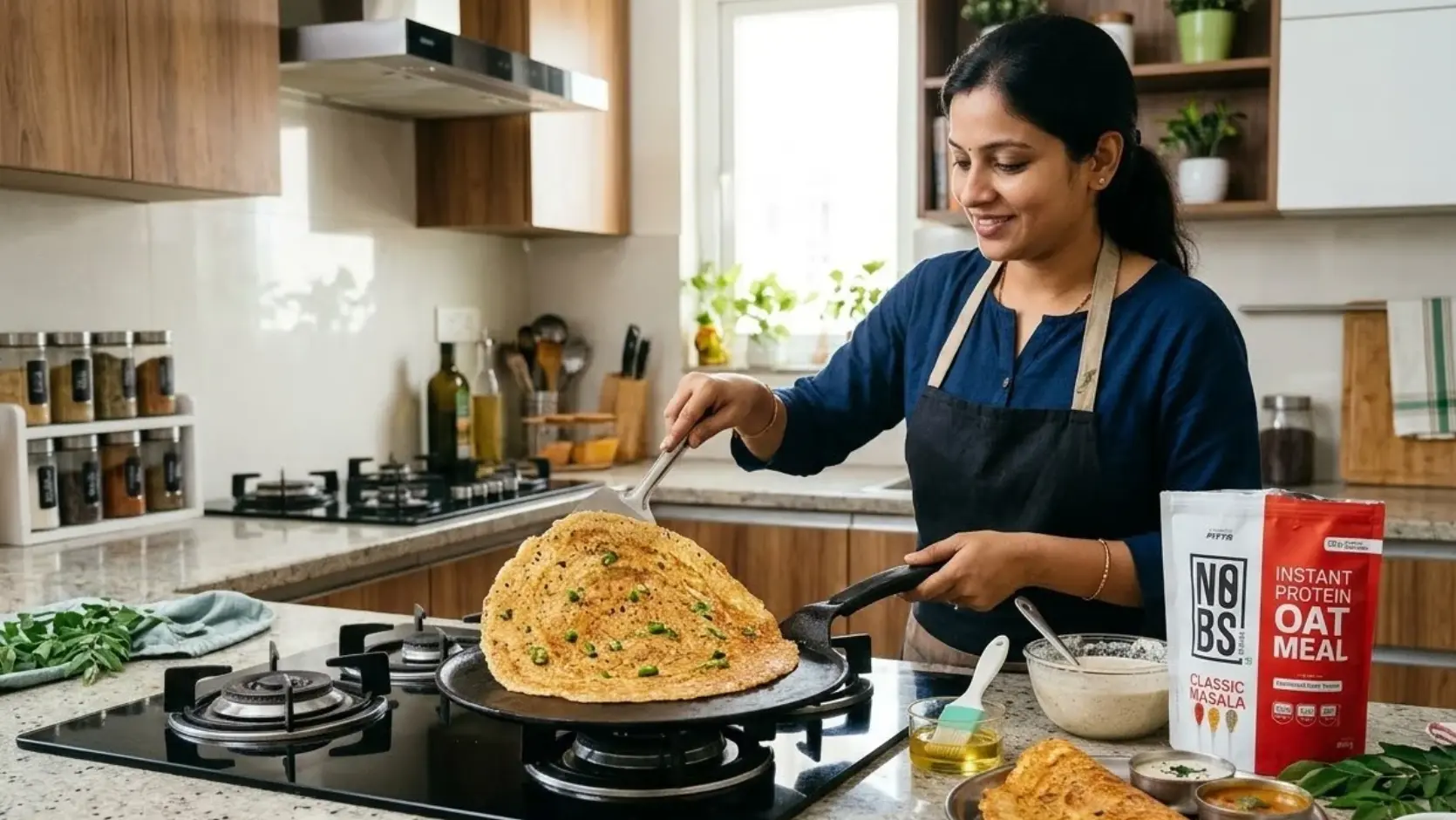
- Use a protein oatmeal in the batter. Swap the plain oats for No BS Protein Oats, whose Classic Masala flavour suits savoury batters and delivers 26-32g of dairy-free yeast protein per serving.
Use the Fittr macro calculator to see where your breakfast should land for your goal.
Is Oats Dosa Good for Weight Loss?
Yes, oats dosa fits a fat-loss diet well when the oil and accompaniments are kept in check. It is filling for its calories thanks to fiber, it replaces refined-flour breakfasts, and it is easy to make often – which matters more for results than any single “superfood”.
Keeping Oats Dosa Light
- Grease the tawa with a brush or tissue rather than pouring oil.
- Choose tomato or mint chutney over a heavy coconut one.
- Add a protein side so you stay full until lunch.
- Eat two dosas with sambar instead of four with chutney.
For more on fitting oats into a calorie deficit, see how to eat oats for weight loss.
What to Serve With Oats Dosa
- Sambar for protein and vegetables
- Tomato, mint or peanut chutney
- Coconut chutney in a measured portion
- A bowl of curd or a glass of buttermilk
- A dry vegetable masala filling of carrots, beans and capsicum
Common Mistakes With Oats Dosa
- Batter too thick. You end up with an uttapam. Thin it until it flows freely.
- Skipping the rest. Ten minutes lets the rava hydrate; without it the dosa breaks.
- A lukewarm tawa. The batter sticks and stays pale.
- Spreading the batter. Pouring from a height is what creates the lacy texture.
- Using flavoured oats sachets. They add sodium and make the batter pasty.
Track How Your Breakfast Habits Add Up
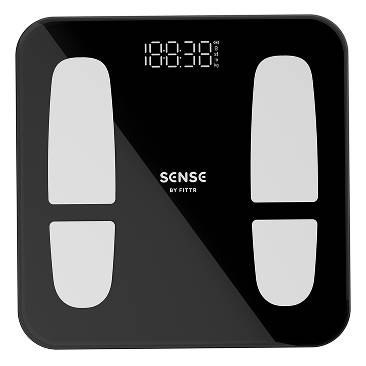
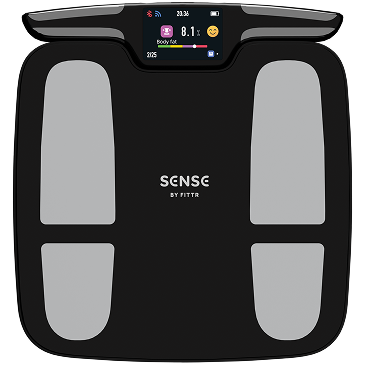
A better breakfast only shows up in results if you track the trend. Weekly weigh-ins on a body composition scale like the SENSE Smart Scale show whether you are losing fat while keeping muscle – far more useful than a single number on a basic scale.
Oats Dosa by Goal: How Many to Eat
Oats dosa fits both a fat-loss and a muscle-gain plan. What changes is how many dosas you eat and what you serve with them.
Portions for Fat Loss and Muscle Gain
| Goal | Plate | Approx. calories | Approx. protein |
| Fat loss | 2 oats dosas + green chutney + 100 g hung curd | ~330-370 kcal | ~16-18 g |
| Maintenance | 3 oats dosas + sambar + coconut chutney | ~480-520 kcal | ~16-18 g |
| Muscle gain | 3 oats dosas + paneer filling + 1 boiled egg or Greek yogurt | ~650-700 kcal | ~30-35 g |
Treat these as starting points. Your actual needs depend on your weight, activity and goal, which you can estimate with the Fittr BMR calculator. If you are in a fat-loss phase, the oats for weight loss guide covers how to fit oats into a calorie deficit.
Three Oats Dosa Variations to Try
Once the basic instant oats dosa feels easy, these variations keep breakfast interesting without changing the method much.
1. Oats Rava Dosa
Replace half the rice flour with fine sooji and thin the batter slightly. You get the lacy, crisp texture of a restaurant rava dosa with the fiber of oats.
2. Ragi Oats Dosa
Swap the rice flour for ragi flour. The dosa turns darker and earthier, and ragi adds calcium. It is softer than a rice-based dosa, so cook it on medium heat and flip gently.
3. Podi Oats Dosa
Sprinkle a teaspoon of gunpowder (podi) and a few drops of ghee on the dosa while it cooks. It brings bold flavour with very few extra calories – about 20-25 kcal for a teaspoon of podi.
Storing the Batter and Leftover Dosa
Instant oats dosa batter is best fresh, but it can be stored for a short time if you plan ahead.
Storage Tips
- Keep the batter in an airtight container in the fridge for up to 24 hours.
- Oats keep absorbing water, so the batter thickens overnight – add a few spoons of water and stir before using.
- Add salt and any onions just before cooking, so the batter does not turn watery.
- Leftover dosas can be reheated on a hot tawa for 30-40 seconds per side to bring back some crispness.
The Bottom Line
Oats dosa gives you a crisp, South Indian breakfast in about 20 minutes, without grinding or fermenting. Three dosas come to roughly 390 kcal and 13g protein, with over 6g fiber. Keep the oil measured, serve it with sambar and add a protein side, and it works for weight loss and everyday healthy eating alike.
Frequently Asked Questions
How many calories are in one oats dosa?
One oats dosa made with this recipe has about 130 kcal, 4.3g protein and 2g fiber. Extra oil on the tawa or a large portion of coconut chutney can raise this considerably.
Can I make instant oats dosa without rice flour?
Yes. Replace rice flour with besan for more protein or with extra rava for crunch. The dosa will be slightly less crisp without any rice flour.
Do I need to ferment oats dosa batter?
No. The curd provides a mild tang, and the batter only needs a 10-15 minute rest for the rava to absorb water.
Is oats dosa healthy for daily breakfast?
Yes, oats dosa is a fiber-rich whole-grain breakfast. Rotate fillings and sides, and add a protein source so it keeps you full.
Why is my oats dosa not crispy?
The usual reasons are a thick batter, a tawa that is not hot enough, or flipping the dosa. Thin the batter, heat the tawa well and cook one side only.
Crisp Dosa, Smarter Breakfast
Oats dosa, instant oats dosa or an oats dosa recipe for busy mornings – whichever you searched for, the method stays the same: a thin batter, a hot tawa and a protein-rich side.
Want more protein in every plate? Try No BS Protein Oats, or stock up with the combo pack and explore more ideas in our healthy oats recipes collection.